Bitcoin Social Sentiment Hits 4-Year Low: Unpacking the Potential Market Bottom Signal
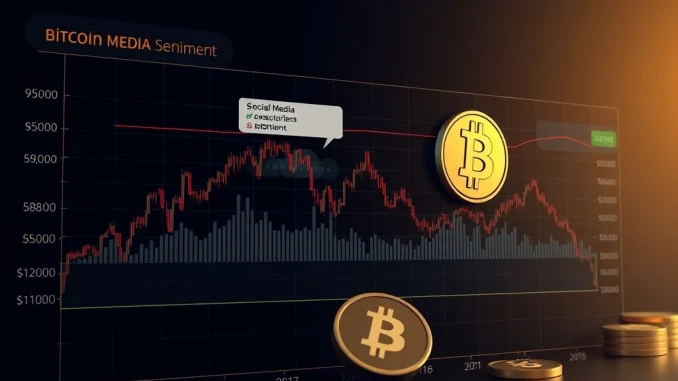
Global, May 2025: Bitcoin social sentiment has reached its lowest point in four years, according to multiple market analytics platforms. This significant decline in online discussion and positive sentiment surrounding the world’s largest cryptocurrency coincides with what market analysts describe as elevated capitulation levels among traders and investors. The convergence of these psychological indicators often precedes major market turning points, though experts caution against interpreting any single metric as a definitive signal.
Understanding Bitcoin Social Sentiment Metrics
Social sentiment analysis measures the tone, volume, and emotion of online conversations about Bitcoin across platforms like Twitter, Reddit, Telegram, and specialized crypto forums. Analytics firms aggregate this data using natural language processing and machine learning algorithms to generate quantitative scores. These scores typically range from extreme fear to extreme greed, providing a real-time gauge of market psychology. The current readings show a pronounced shift toward fear and negativity not seen since the bear market of 2021. Several factors contribute to this decline, including prolonged price consolidation, regulatory uncertainty in key markets, and macroeconomic pressures affecting risk assets globally. Market participants appear to be exhibiting classic signs of exhaustion after multiple failed rally attempts throughout the first quarter of 2025.
The Capitulation Phase and Historical Context
Capitulation refers to the period when investors surrender to market pressure and sell their holdings, often at significant losses. This phase typically marks the final stage of a bear market cycle before a potential recovery begins. Historical Bitcoin data reveals interesting patterns:
- 2018-2019 Bear Market: Social sentiment lows preceded the market bottom by approximately 3-4 months
- 2020 COVID Crash: Extreme fear readings coincided with the March 2020 bottom
- 2022-2023 Cycle: Sentiment reached multi-year lows before the January 2023 rally
The current sentiment reading of 18 on the Crypto Fear & Greed Index represents the lowest level since November 2021. This index, which incorporates social media sentiment alongside other metrics like volatility and market momentum, has proven to be a reliable contrarian indicator at extreme values. However, analysts emphasize that sentiment alone doesn’t guarantee an immediate reversal. Market structure, on-chain metrics, and macroeconomic conditions must align for a sustainable recovery to materialize.
Expert Perspectives on Market Psychology
Dr. Elena Rodriguez, behavioral economist at Stanford University’s Digital Assets Research Center, explains the psychological dynamics at play. “When social sentiment reaches extreme lows, we’re witnessing what behavioral finance calls ‘recency bias’ in its most pronounced form. Investors become so focused on recent losses that they extrapolate them indefinitely into the future. This creates opportunities for disciplined investors who can separate emotion from analysis.” Rodriguez notes that while sentiment indicators provide valuable context, they should be combined with fundamental analysis of Bitcoin’s network health. Key metrics to monitor include hash rate stability, active address growth, and long-term holder behavior. These fundamentals currently show resilience despite the negative sentiment, suggesting underlying strength in the Bitcoin network.
Technical Analysis and Market Structure
From a technical perspective, Bitcoin’s price action reveals several important developments. The cryptocurrency has been trading within a defined range for the past six months, with multiple tests of both support and resistance levels. Current price levels represent a critical juncture where several long-term moving averages converge. This technical setup often precedes significant volatility and potential trend changes. Market analysts point to decreasing trading volume during sell-offs as a potentially positive sign, suggesting that selling pressure may be exhausting itself. The derivatives market shows reduced leverage and more conservative positioning compared to previous cycles, indicating that speculative excess has been largely purged from the system.
Institutional Behavior During Sentiment Extremes
While retail sentiment reaches pessimistic extremes, institutional behavior tells a different story. Data from regulated investment products and corporate treasury allocations shows continued accumulation at current price levels. This divergence between retail panic and institutional accumulation has been a characteristic feature of previous market bottoms. Michael Chen, portfolio manager at Horizon Digital Assets, observes this pattern. “Our firm’s flow data indicates that sophisticated investors are using sentiment extremes as accumulation opportunities. They understand that crypto markets are inherently cyclical and that extreme pessimism often creates the best long-term entry points.” Chen emphasizes the importance of distinguishing between price and value, noting that Bitcoin’s fundamental value proposition remains intact despite short-term price volatility.
Regulatory Environment and Macroeconomic Factors
The current sentiment decline occurs against a backdrop of evolving regulatory frameworks and challenging macroeconomic conditions. Several major economies are implementing comprehensive cryptocurrency regulations, creating short-term uncertainty but potentially long-term clarity. Meanwhile, global interest rate policies and inflation trends continue to influence risk asset performance across all markets. These external factors contribute to the cautious sentiment among market participants. However, Bitcoin’s historical performance during periods of monetary expansion and currency debasement suggests it may serve as a hedge against certain macroeconomic risks. This fundamental characteristic continues to attract institutional interest despite near-term sentiment challenges.
Conclusion
Bitcoin social sentiment reaching a four-year low represents a significant psychological milestone for cryptocurrency markets. While extreme pessimism often precedes market bottoms, investors should approach this signal with appropriate context and risk management. The combination of negative sentiment, elevated capitulation, and resilient network fundamentals creates an environment where disciplined accumulation strategies may prove rewarding over the long term. However, market participants must remember that sentiment indicators work best when combined with comprehensive fundamental and technical analysis. The current Bitcoin market structure suggests we may be approaching an important inflection point, though the timing and magnitude of any potential reversal remain uncertain. As always in volatile markets, prudent position sizing and risk management should take precedence over attempts to perfectly time market turns.
FAQs
Q1: What exactly is Bitcoin social sentiment?
Bitcoin social sentiment refers to the collective mood, emotion, and opinion expressed about Bitcoin across social media platforms and online forums. Analytics firms measure this using natural language processing to quantify whether discussions are predominantly positive, negative, or neutral.
Q2: How reliable are social sentiment indicators for predicting market bottoms?
Social sentiment indicators have shown historical correlation with market extremes, often serving as effective contrarian signals. However, they should not be used in isolation. Most analysts recommend combining sentiment data with technical analysis, on-chain metrics, and fundamental factors for more reliable market assessment.
Q3: What is capitulation in cryptocurrency markets?
Capitulation occurs when investors surrender to downward price pressure and sell their holdings, often at significant losses. This typically happens after prolonged declines and represents the final phase of panic selling before a potential market recovery.
Q4: How does current sentiment compare to previous Bitcoin cycles?
Current sentiment readings are similar to levels seen during the 2018-2019 bear market bottom and the March 2020 COVID crash. The four-year low indicates extreme pessimism comparable to other significant market turning points in Bitcoin’s history.
Q5: Should investors buy Bitcoin when social sentiment is extremely low?
Extremely low sentiment can present contrarian buying opportunities, but investment decisions should be based on individual risk tolerance, investment horizon, and comprehensive research. Many successful investors use dollar-cost averaging strategies during periods of negative sentiment to accumulate positions gradually rather than trying to time exact market bottoms.
Related News
- Cetus Exploit: Shocking $220M Loss & Urgent Recovery Plan on Sui
- Binance MKR Swap: Crucial Update on Maker Token Rebranding to Sky
- Pump.fun Pump Fund: The Strategic Pivot Transforming Crypto Platform Economics
Related: Best Presale Crypto of 2026: Essential Analysis of ZKP, Digitap, BlockchainFX, and BMIC
Related: Crypto Finance: The Essential Foundation for a Broader Digital Future, Says a16z's Chris Dixon
Related: DeFi Staking Platforms: CRO, ATOM, SEI, INJ, TIA Lead by Total Value Locked