Best Crypto to Buy Today: Analyzing ADA, XRP Market Pressures and BlockDAG’s Technical Approach
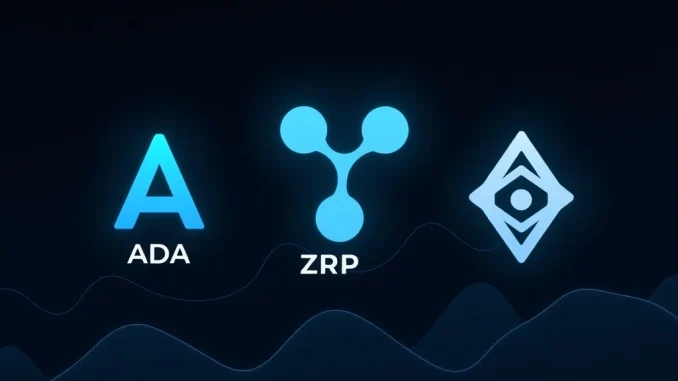
Global, February 2025: The cryptocurrency market continues to present a complex landscape for investors, with established assets like Cardano (ADA) and Ripple (XRP) facing distinct challenges while newer projects like BlockDAG approach their network launch. Understanding the technical fundamentals, market context, and developmental milestones of these cryptocurrencies provides essential perspective for anyone evaluating digital asset opportunities today.
Current Market Dynamics for Cardano (ADA) and Ripple (XRP)
Cardano and Ripple represent two of the most recognized blockchain projects outside of the Bitcoin and Ethereum ecosystems. Both have experienced significant price volatility in recent months, which analysts attribute to a combination of broader market sentiment, regulatory developments, and project-specific milestones.
Cardano’s development team continues to advance its roadmap, with recent focus on scaling solutions and smart contract optimization. The network’s proof-of-stake consensus mechanism, Ouroboros, has maintained security while keeping energy consumption relatively low compared to proof-of-work systems. However, ADA’s market price has faced downward pressure alongside other altcoins, reflecting decreased risk appetite among some institutional and retail investors during periods of macroeconomic uncertainty.
Ripple’s ongoing legal proceedings with the U.S. Securities and Exchange Commission continue to influence XRP’s market performance. While recent court developments have provided some clarity, regulatory uncertainty remains a factor for investors. From a utility perspective, Ripple’s payment network and On-Demand Liquidity service continue to see adoption by financial institutions for cross-border transactions, providing fundamental use case support for the XRP token.
Technical Analysis of Blockchain Architectures
Different blockchain projects employ distinct technical architectures that influence their scalability, security, and potential use cases. Understanding these differences is crucial for evaluating long-term viability.
- Cardano’s Layered Architecture: Cardano separates settlement and computation layers, allowing for more flexible upgrades and specialized optimization.
- Ripple’s Consensus Protocol: The XRP Ledger uses a Federated Byzantine Agreement system that enables fast transaction finality suited for financial settlements.
- Directed Acyclic Graph (DAG) Approach: Some newer projects explore DAG-based structures that allow for parallel transaction processing rather than linear block formation.
Each architecture presents trade-offs between decentralization, throughput, and development complexity that investors should consider alongside market factors.
Evaluating Development Roadmaps and Milestones
Beyond price movements, the progress of development roadmaps provides insight into a project’s technical health. Cardano’s development team publishes regular peer-reviewed research and has a transparent multi-phase rollout plan. Ripple focuses on expanding its institutional network and compliance infrastructure. Newer projects like BlockDAG, which references a February 16 launch date, typically emphasize their technical whitepapers, early testing phases, and initial exchange access plans as indicators of progress.
Investors examining development timelines should consider whether teams deliver on promised features, the quality of documentation, and community engagement metrics. These factors often correlate with long-term project sustainability more directly than short-term price movements.
Risk Assessment in Cryptocurrency Investment
All cryptocurrency investments carry inherent risks that vary by project maturity, regulatory environment, and technological approach. Established projects like ADA and XRP face different challenges than newer entrants.
| Risk Category | Established Projects (ADA/XRP) | Newer Projects |
|---|---|---|
| Regulatory | Ongoing classification debates, existing legal proceedings | Uncertain regulatory treatment, potential future compliance costs |
| Technological | Proven but potentially legacy architecture, upgrade challenges | Unproven at scale, potential undiscovered vulnerabilities |
| Market | Correlation with broader crypto markets, liquidity dependent | Extreme volatility, lower liquidity, higher manipulation risk |
| Adoption | Existing developer ecosystems and institutional partnerships | Need to attract developers and users from established alternatives |
This comparative framework helps investors align projects with their individual risk tolerance and investment horizon.
The Role of Early Access and Network Launches
Some blockchain projects offer early access phases or private sales before public trading begins. These periods allow interested participants to examine technical documentation, initial community formation, and development activity before broader market availability. The February 16 date referenced for BlockDAG’s launch represents such a milestone event where a project transitions from development to live network operation.
Historically, network launches have produced significant price volatility as markets assess initial usage metrics, technical performance, and developer interest. Investors considering participation in such events should research the team’s background, code audit history, and initial governance structures rather than focusing exclusively on potential returns.
Conclusion
Determining the best crypto to buy today requires careful analysis of both established projects like ADA and XRP and newer technological approaches. Cardano’s continued development and Ripple’s regulatory progress provide fundamental narratives for their respective tokens, while upcoming network launches represent high-risk, high-potential opportunities for investors with appropriate risk tolerance. Successful cryptocurrency investment ultimately depends on understanding technological differentiation, regulatory landscapes, and market cycles rather than chasing short-term price movements or promotional claims.
FAQs
Q1: What are the main technical differences between Cardano, Ripple, and DAG-based blockchains?
Cardano uses a layered proof-of-stake architecture, Ripple employs a federated consensus system for payments, while Directed Acyclic Graph structures enable parallel transaction processing without traditional blocks.
Q2: How do regulatory developments affect cryptocurrencies like XRP?
Regulatory clarity or uncertainty significantly impacts institutional adoption, exchange listings, and investor confidence, particularly for projects like Ripple that interface with traditional financial systems.
Q3: What should investors look for in a blockchain project’s development roadmap?
Transparent milestone tracking, peer-reviewed research, regular progress updates, and on-schedule delivery of promised features indicate healthy development practices.
Q4: Why do new blockchain projects often reference specific launch dates?
Launch dates mark the transition from testing to mainnet operation, representing a technical milestone where the network becomes publicly accessible and functional.
Q5: How can investors assess risk when evaluating newer cryptocurrency projects?
Examine team experience, code audit results, technological innovation versus existing solutions, tokenomics design, and initial community engagement rather than promotional return projections.
Related News
- Binance Launches Exciting BDXN Perpetual Futures Trading
- SEC Review Casts Doubt on Spot Ethereum ETFs
- Universal Ambition: BlackRock CEO's Push for 'One Blockchain' Standard Ignites Tokenization Debate
Related: Bitcoin and Ethereum Outflows Reveal Aggressive Accumulation Strategy
Related: Meme Coins 2026: ChatGPT's Analysis Projects APEMARS, Dogecoin Among Top Contenders
Related: Best Presale Crypto of 2026: Essential Analysis of ZKP, Digitap, BlockchainFX, and BMIC