Strategic Alliance: How Coinbase’s Sui Token Standard Integration Simplifies Web3 Access
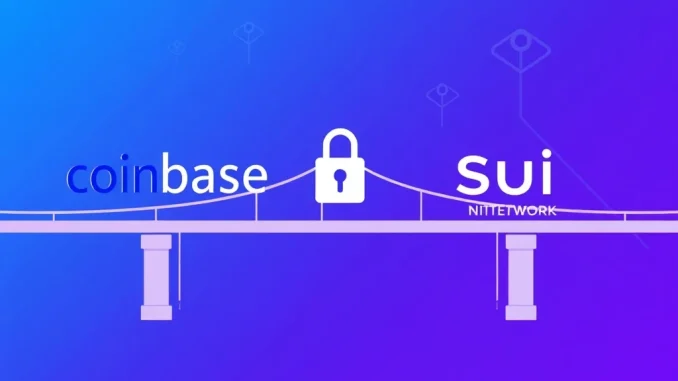
San Francisco, April 2025: In a significant move for institutional cryptocurrency adoption, Coinbase has announced a strategic technical integration with the Sui Network. The collaboration focuses on incorporating the Sui token standard into Coinbase’s institutional-grade infrastructure. This integration aims to streamline access to the growing Sui ecosystem for professional investors and significantly enhance liquidity for Web3 applications built on the network. The development marks a pivotal step in bridging traditional finance pathways with next-generation blockchain architectures.
Coinbase Sui Token Standard Integration: A Technical Breakdown
The core of this alliance is the integration of Sui’s native token standard into Coinbase’s exchange and custody systems. Unlike the ubiquitous ERC-20 standard on Ethereum, Sui’s token model is built on its object-centric Move programming language. This architecture offers distinct advantages in transaction speed and cost, particularly for complex financial operations. For Coinbase, integrating this standard is not a simple listing of a new asset. It requires deep technical work to support Sui’s unique data structures and security models within its regulated, compliant framework.
Historically, exchanges have faced challenges when integrating novel blockchain standards that diverge from established norms. The process involves ensuring secure wallet generation, reliable transaction broadcasting, and robust consensus verification. Coinbase’s engineering team has likely spent months adapting its systems to natively understand and process Sui-based tokens. This work paves the way for seamless deposits, withdrawals, and trading of SUI and any future tokens issued on the Sui blockchain directly through Coinbase’s interface.
Streamlining Institutional Access to Web3 Ecosystems
The primary stated goal of this integration is to simplify institutional entry into the Sui ecosystem. For asset managers, hedge funds, and corporate treasuries, navigating the technical complexities of direct blockchain interaction presents a major barrier. Custody solutions, regulatory reporting, and operational security are paramount concerns. By offering a familiar, regulated gateway via Coinbase, these institutions can gain exposure to Sui’s DeFi, gaming, and NFT projects without managing private keys or interacting with decentralized applications directly.
This model follows a trend observed since 2023, where major exchanges act as curated on-ramps for institutional capital. The process typically involves several stages:
- Custody Integration: Securely holding assets on behalf of clients.
- Liquidity Provision: Ensuring deep order books for large trades.
- Staking Services: Offering yield-generating services for proof-of-stake assets.
- Analytics and Reporting: Providing tax and performance tools tailored for professionals.
Coinbase’s integration with Sui checks these boxes, effectively lowering the technical and operational friction for large-scale investors. This access is critical for the Sui Network, as institutional liquidity can stabilize markets and fund further ecosystem development.
The Evolution of Blockchain Interoperability and Standards
To understand the significance of this move, one must consider the history of token standards. The ERC-20 standard, introduced in 2015, became the bedrock of the initial coin offering (ICO) boom and decentralized finance (DeFi). Its success was partly due to widespread exchange support. However, its limitations on Ethereum, such as high gas fees during congestion, spurred innovation. Newer blockchains like Sui, Aptos, and Solana have developed their own standards, optimized for their respective architectures.
The challenge for any new standard is achieving critical mass and liquidity. Exchanges play a kingmaker role. A listing on a top-tier exchange like Coinbase provides immediate legitimacy, visibility, and access to a massive user base. For Sui, this integration is a validation of its technical approach and a major milestone in its quest to compete with established Layer 1 blockchains. It signals to developers that building on Sui can lead to mainstream financial channels for their users.
Boosting Liquidity for the Broader Web3 Ecosystem
Enhanced liquidity is the most direct market consequence of this alliance. Liquidity refers to the ease with which an asset can be bought or sold without affecting its price. For the Sui ecosystem, deeper liquidity on Coinbase translates to several benefits:
- Tighter Bid-Ask Spreads: Lower costs for traders entering and exiting positions.
- Price Stability: Reduced volatility from large institutional orders.
- Developer Attraction: Projects are more likely to build on a chain where their tokens can be easily traded and valued.
- Derivatives Market Potential: Paves the way for futures, options, and other sophisticated financial products.
The integration likely includes plans for Coinbase to act as a validator or staking provider for the Sui network. This deepens the economic relationship, as Coinbase would then have a vested interest in the network’s security and performance. Furthermore, the influx of institutional capital can provide the stable, long-term backing needed for Sui’s decentralized applications (dApps) to scale and reach a global user base. It creates a positive feedback loop: more liquidity attracts more builders, whose applications attract more users, which in turn demands more liquidity.
Regulatory Considerations and the Path Forward
Any move by a publicly-traded, U.S.-regulated company like Coinbase carries regulatory implications. The integration was undoubtedly preceded by extensive legal review. Coinbase must ensure its support for the Sui token standard complies with securities laws, anti-money laundering (AML) rules, and know-your-customer (KYC) requirements. This regulatory clarity, while burdensome, is precisely what institutional investors require. It provides a compliant framework that decentralized exchanges cannot currently match.
The strategic nature of this alliance suggests it is more than a one-off listing. Future collaboration could involve Coinbase Ventures investing in Sui ecosystem projects, joint educational initiatives, or the development of institutional-grade financial products native to the Sui blockchain. The timeline for impact will be measured in quarters, not days, as institutions methodically adjust their mandates and operational procedures to include this new asset class.
Conclusion
The strategic alliance between Coinbase and the Sui Network, centered on the Coinbase Sui token standard integration, represents a maturation point for Web3 infrastructure. It demonstrates how established financial gateways are adapting to accommodate innovative blockchain architectures. By simplifying institutional access and committing to boost ecosystem liquidity, this partnership addresses two of the most significant hurdles facing next-generation networks. While the long-term success of the Sui ecosystem will depend on developer activity and user adoption, this integration provides a powerful catalyst. It underscores a broader industry trend where seamless, secure, and compliant access becomes the critical bridge between traditional finance and the decentralized future.
FAQs
Q1: What exactly is the Sui token standard?
The Sui token standard is a set of rules and functions defined within Sui’s Move programming language that govern how tokens are created, transferred, and managed on the Sui blockchain. It is analogous to the ERC-20 standard on Ethereum but is built for Sui’s high-throughput, object-centric data model.
Q2: How does this integration benefit a regular Coinbase user?
For everyday users, the integration means easier, safer, and more familiar access to buying, selling, and holding SUI and other future Sui-based tokens. It also brings greater liquidity and potentially more stability to the asset’s price. Users benefit from Coinbase’s security, insurance, and user interface without needing to use a separate wallet or decentralized exchange.
Q3: Is this just about listing the SUI token for trading?
No, it is more comprehensive. While trading is a component, the integration involves supporting the underlying token standard at a technical level within Coinbase’s custody and exchange systems. This enables support for a wide array of tokens built on Sui, not just the native SUI coin, and facilitates services like staking and secure storage.
Q4: Why is institutional access considered so important for Web3?
Institutional investors (like hedge funds, pension funds, and corporations) manage trillions of dollars in capital. Their participation brings large-scale, long-term investment, deep liquidity, and a level of market maturity and legitimacy that attracts further development and mainstream adoption. They also demand and help shape the regulatory and compliance frameworks necessary for large-scale use.
Q5: Does this mean Coinbase is endorsing Sui over other blockchains?
Not necessarily. Coinbase supports multiple blockchain networks and their respective standards (e.g., Ethereum’s ERC-20, Solana’s SPL). This integration reflects a strategic business decision based on Sui’s growing ecosystem, technical merits, and user demand. It is an expansion of Coinbase’s multi-chain strategy, not a replacement for other integrations.
Related News
- WLFI Governance Vote Sparks Outrage: USD1 Stablecoin Proposal Passes Amid Restricted Voting
- Bybit ZKC Listing: Unveiling Exciting New Trading Opportunities
- Unleash Rewards: Coinone APEPE Event Kicks Off 3-Day Trading Arena
Related: Crucial: Vitalik Buterin's Latest Donation Fuels Zcash's Crosslink Security Overhaul
Related: Bella Protocol Launches Revolutionary AI Research Bot on HyperGPT in Major Web3 Collaboration