Solana RWA Revolution: $1B Milestone Unlocks Instant Asset Redemptions
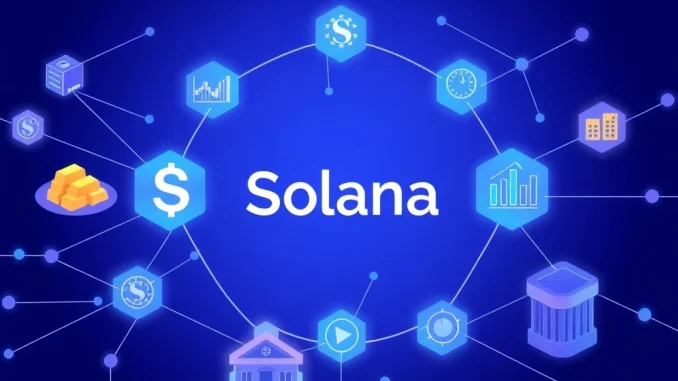
Global, May 2025: The Solana blockchain has crossed a critical threshold in its journey to bridge traditional finance with decentralized technology. The network’s onchain real-world asset (RWA) market has officially surpassed $1 billion in total value locked (TVL), a landmark achievement that coincides with the launch of a groundbreaking 24/7 instant redemption facility. This development, spearheaded by infrastructure providers Multiliquid and Metalayer, fundamentally changes how investors can access liquidity from tokenized assets like treasury funds and private credit, removing traditional barriers of time and issuer availability.
Solana RWA Market Hits $1 Billion Valuation Milestone
The $1 billion TVL figure represents more than just a number; it signifies growing institutional and retail confidence in using blockchain for conventional asset representation. Real-world assets encompass a broad range of financial instruments tokenized on a blockchain. These can include U.S. Treasury bills, private credit funds, real estate equity, and commodities. Solana’s high throughput and low transaction costs have positioned it as a preferred network for developers building in this sector. The rapid growth to this valuation point, from a nascent market just a few years prior, demonstrates accelerating adoption. Analysts point to several factors driving this growth, including clearer regulatory frameworks in key jurisdictions and a proven track record of network stability. This milestone places Solana among the leading blockchains for RWA tokenization, competing directly with other smart contract platforms that have also targeted this multi-trillion-dollar opportunity.
How the New Instant Redemption Facility Works
The core innovation announced alongside the TVL milestone is a liquidity solution that addresses a major pain point in tokenized finance: redemption windows. In traditional and many existing tokenized funds, investors can only convert their shares back to cash during specific, often quarterly, periods dictated by the issuer. The new facility, built by Multiliquid and Metalayer, creates a secondary market that operates continuously. It allows holders of tokenized assets from supported issuers to redeem their tokens for stablecoins at any time. The mechanism uses a model based on the net asset value (NAV) of the underlying fund. To provide immediate liquidity, redemptions are executed at a slight discount to the NAV. This discount compensates liquidity providers who furnish the stablecoins, creating a sustainable economic model. The system is fully automated and onchain, requiring no manual intervention from the original asset issuers, thus decoupling liquidity provision from fund administration.
The Role of NAV Pricing and Liquidity Providers
Net Asset Value (NAV) is a critical concept in traditional finance, representing the per-share value of a fund’s assets minus its liabilities. For the instant redemption system to function fairly, it must accurately reflect this value. Oracles—services that feed external data onto a blockchain—are used to provide regular NAV updates for the supported tokenized funds. When an investor initiates a redemption, the smart contract calculates the value based on the latest NAV and applies a predefined discount. This discounted price attracts professional market makers and decentralized finance (DeFi) protocols to act as liquidity providers. They commit pools of stablecoins, earning the discount as a fee for their service. This structure is similar to secondary trading markets for stocks but is specifically engineered for the unique settlement finality and automation of blockchain networks like Solana.
Initial Issuers and Supported Tokenized Assets
The launch of the redemption facility is not occurring in a vacuum; it is supported by major financial institutions that have already chosen Solana for their tokenization efforts. The initial list of supported issuers provides significant credibility and immediate scale to the new system.
- VanEck: A global investment manager with a long history of innovation, including some of the first Bitcoin ETFs in the United States. On Solana, VanEck has tokenized a short-term Treasury ETF, allowing global investors to gain exposure to U.S. government debt.
- Janus Henderson: Another established asset management giant, Janus Henderson has tokenized segments of its money market and fixed-income offerings, focusing on providing yield-generating products onchain.
- Fasanara Capital: A leading fintech-focused investment firm, Fasanara has been active in tokenizing private credit and venture debt funds, bringing alternative asset classes to the blockchain.
The participation of these firms indicates a maturation of the RWA sector, moving from experimental pilots to operational financial infrastructure serving real clients.
Implications for the Future of Onchain Finance
The combination of a $1 billion market and instant liquidity has profound implications. First, it significantly enhances the capital efficiency of tokenized assets. Investors no longer need to weigh liquidity lock-ups against potential yields; they can access both. This is likely to attract a new wave of capital from institutions that have been cautious due to liquidity concerns. Second, it creates a more robust and competitive financial ecosystem on Solana. The ability to seamlessly move between tokenized RWAs, stablecoins, and other DeFi applications like lending protocols encourages deeper integration and innovation. Finally, it sets a new standard for user experience in digital asset investing. The promise of blockchain finance has always included 24/7 global markets, and this development delivers on that promise for a key asset class. Other blockchain ecosystems are now under pressure to develop similar liquidity solutions or risk falling behind.
Historical Context and Market Evolution
The journey to this point began with the early concepts of “security tokens” nearly a decade ago, which struggled with regulatory and technological hurdles. The modern RWA movement gained real traction post-2020, fueled by rising interest rates that made yield-bearing assets attractive and by advancements in blockchain scalability. Solana’s entry into this space was initially focused on decentralized finance (DeFi) applications like lending and trading. The natural progression was to connect that native DeFi liquidity with tokenized versions of off-chain assets. The $1 billion TVL milestone marks the end of the early adoption phase and the beginning of scaled growth, where network effects and robust infrastructure become the primary drivers.
Conclusion
Solana’s achievement of a $1 billion real-world asset market and the concurrent launch of an instant redemption facility represent a pivotal moment for blockchain’s integration with global finance. This development directly addresses the critical challenge of liquidity, transforming tokenized assets from illiquid digital representations into fluid components of a new financial stack. The participation of established issuers like VanEck and Janus Henderson validates the model, while the underlying technology from Multiliquid and Metalayer provides the necessary infrastructure. As the Solana RWA ecosystem continues to evolve, its focus on solving practical problems like 24/7 redemptions will be crucial for attracting the next billion dollars in value and moving closer to the vision of a fully onchain financial system.
FAQs
Q1: What are real-world assets (RWAs) in crypto?
Real-world assets (RWAs) are traditional financial instruments like bonds, real estate, or commodities that are represented as tokens on a blockchain. This process, called tokenization, allows them to be traded, fractionalized, and integrated with decentralized finance applications.
Q2: How does the instant redemption facility on Solana work?
The facility is a secondary market created by Multiliquid and Metalayer. It allows holders of specific tokenized assets to exchange them for stablecoins at any time. The redemption price is based on the fund’s net asset value (NAV), minus a small discount that compensates liquidity providers for offering immediate cash.
Q3: Why is the $1 billion TVL milestone significant for Solana?
Total Value Locked (TVL) is a key metric of adoption and trust in a blockchain’s financial ecosystem. Surpassing $1 billion in RWA-specific TVL demonstrates substantial institutional and retail capital commitment, validates Solana’s technical infrastructure for this use case, and places it at the forefront of the tokenization trend.
Q4: What is NAV and why is it important for redemptions?
NAV stands for Net Asset Value. It is the per-share value of a fund’s total assets minus its liabilities. Accurate, onchain NAV pricing is essential for the redemption facility to ensure investors receive a fair value for their tokens based on the actual performance of the underlying assets.
Q5: Which companies are currently supported by the instant redemption service?
The initial supported issuers are major asset managers VanEck and Janus Henderson, along with investment firm Fasanara Capital. They have tokenized products like Treasury ETFs, money market funds, and private credit funds on the Solana blockchain.
Related News
- Binance Unveils Exciting New Spot Trading Pairs: CYBER, MAV, SKL Listings Confirmed
- Gold Price Shatters Records with Stunning Rally Past $4,800 Per Ounce
- Benjamin Cowen's Critical Warning: Precious Metals Set to Outperform Cryptocurrency Again in 2025
Related: Crypto Markets Plunge: Bitcoin Drops 7% as U.S. Urges Citizens to Leave Iran
Related: Metaplanet's Defiant Bitcoin Strategy: Why Japan's Corporate Pioneer Keeps Buying at $60K
Related: Cardano's Decisive Test: ADA Confronts Critical $0.24 Support Level