Global, May 2025: The digital art gold rush has hit a startling reality. Across the globe, NFT marketplaces that once symbolized a financial and cultural revolution are now shutting down. This wave of closures follows a catastrophic 93% crash in art trading volume and a dramatic exodus of speculative collectors. The situation exposes fundamental flaws in the NFT ecosystem, moving beyond a simple market correction to question the very permanence of digital ownership and the sustainability of its foundational platforms.
NFT Marketplaces Shutting Down: A Timeline of Contraction
The decline was not instantaneous but a cascading failure. The market peaked in early 2022, with platforms like OpenSea processing billions in monthly volume. However, by late 2023, a combination of macroeconomic pressures, fading speculative hype, and high-profile fraud cases began eroding trader confidence. The data tells a clear story. According to aggregated industry reports, the total trading volume for NFT art collapsed from a quarterly high of over $12 billion to less than $850 million by Q4 2024—a drop exceeding 93%. This evaporation of liquidity rendered the business models of many secondary marketplaces, which rely on transaction fees, completely untenable. Platforms that expanded rapidly during the boom found themselves with unsustainable operational costs and a rapidly shrinking user base, leading directly to the current wave of shutdowns.
The Permanence Crisis: When Your NFT Disappears
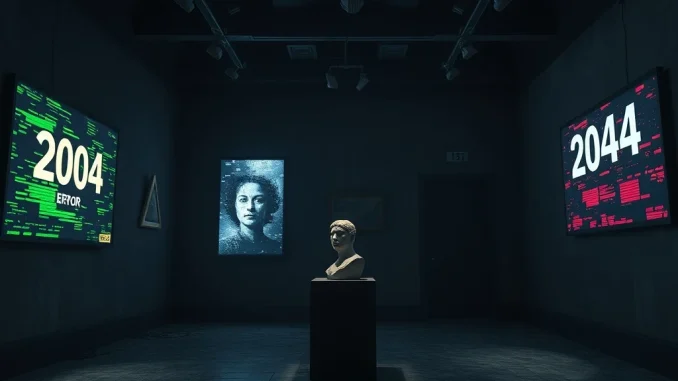
Beyond falling prices, a more insidious threat has emerged: the fragility of NFT permanence. An NFT is essentially a blockchain token pointing to a metadata file (often a JPEG) stored elsewhere. Many early marketplaces and creators used centralized cloud storage or their own servers to host this crucial data. As these platforms shut down, those links are breaking. The result is a growing collection of “broken” or “hollow” NFTs—tokens that still exist on the blockchain but now point to dead links, rendering the associated digital asset inaccessible. This crisis undermines the core promise of NFTs: verifiable, permanent ownership. It has sparked urgent discussions about the necessity of decentralized storage solutions like IPFS (InterPlanetary File System) and Arweave for long-term preservation, a standard that was often overlooked in the initial rush to mint and sell.
- Centralized Storage Risk: NFTs hosted on a platform’s private servers become inaccessible if the company folds.
- Metadata Decay: The link between the immutable token and the mutable art file is the system’s weakest point.
- Collector Wake-Up Call: Buyers are now scrutinizing the underlying storage mechanism as critically as the art itself.
Expert Insight: A Market Returning to First Principles
Industry analysts frame this not as an extinction event, but as a painful maturation. “The initial phase was dominated by financial speculation and status signaling,” explains Dr. Anya Sharma, a digital asset economist. “What we are witnessing now is a market correction that is separating the signal from the noise. The platforms surviving are not those that facilitated the fastest trades, but those that fostered genuine community and artistic value.” This shift represents a return to the original ethos of digital art communities that existed before the 2021 mania. The focus is moving from price floors and rarity metrics to artistic merit, cultural significance, and sustainable collector relationships.
The Survival Strategy: Niche Communities Over Speculative Scale
The surviving NFT marketplaces have largely abandoned the “everything for everyone” model. Instead, they are doubling down on specific niches. Platforms are now catering exclusively to generative art, photography, 3D design, or music. These focused ecosystems provide more than a storefront; they offer curated exhibitions, artist grants, educational content, and dedicated collector forums. By building deeper, slower-growing communities, these platforms create inherent stability. Trading volume may be lower, but engagement and retention are higher. This model prioritizes long-term cultural development over short-term financial extraction, aligning platform success with the sustained success of its artists.
| Feature | Speculative Model (2021-2022) | Niche Community Model (2024-2025) |
|---|---|---|
| Primary Focus | High-volume trading, flipping | Artistic discovery, collecting |
| Revenue Driver | Transaction fees from frequent sales | Primary sales, subscriptions, added-value services |
| User Priority | Speculative traders | Artists and dedicated collectors |
| Technology Emphasis | Fast minting, low gas fees | Decentralized storage, proof-of-preservation |
| Community Structure | Large, anonymous, market-driven | Smaller, curated, interest-driven |
Conclusion
The trend of NFT marketplaces shutting down marks the end of an unsustainable chapter and the difficult birth of a more mature industry. The 93% crash in trading volume was the symptom, not the disease. The underlying causes were over-reliance on speculation, neglect of digital permanence, and platforms built for scale rather than substance. The path forward, as evidenced by the surviving platforms, is narrow but solid: a focus on niche art communities, technological responsibility for asset preservation, and value derived from culture, not just currency. The startling reality of the collapse is now giving way to a more grounded, and potentially more enduring, reality for digital art.
FAQs
Q1: Why are NFT marketplaces really shutting down?
The primary reason is a catastrophic loss of trading volume, which eliminated the transaction fee revenue these platforms depend on. This was caused by a collapse in speculative trading, a broader crypto downturn, and a loss of mainstream collector interest.
Q2: If a marketplace shuts down, do I lose my NFTs?
Your NFT token on the blockchain (e.g., Ethereum) remains in your wallet. However, if the artwork’s image or metadata was stored on the marketplace’s own servers, that link may break, making the visual asset inaccessible. The token becomes a “broken” link.
Q3: What does “NFT permanence” mean and why is it threatened?
Permanence refers to the guarantee that the digital asset an NFT represents will remain accessible forever. It’s threatened because many NFTs rely on centralized web servers that can go offline, unlike the decentralized blockchain where the token itself lives.
Q4: What kind of NFT marketplaces are surviving the downturn?
Platforms that focus on specific artistic niches (e.g., photography, generative art) and build strong, curated communities around them are surviving. They rely less on high-frequency trading and more on primary sales and community engagement.
Q5: Is the NFT market completely dead?
No, it is not dead but is undergoing a severe contraction and maturation. The speculative bubble has popped, but activity continues in focused areas of digital art, collectibles, and utility-based applications. The market is moving from mass speculation to niche cultural development.