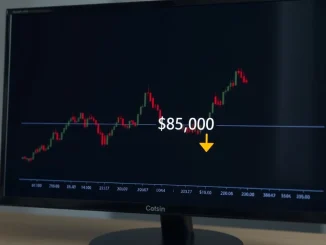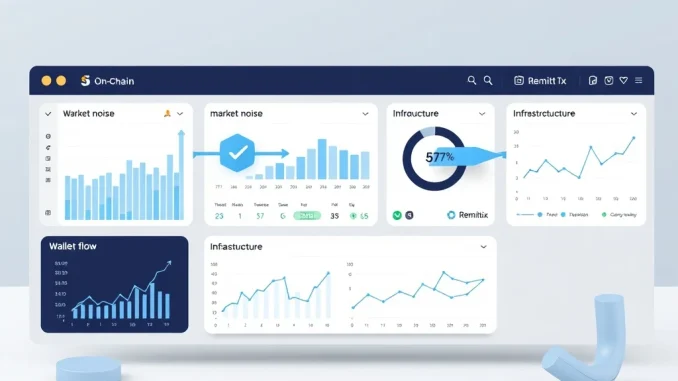
Global, April 2025: In the wake of a significant cryptocurrency market correction, a clear divergence in capital allocation has emerged. Sophisticated investors, often referred to as “smart money,” are not merely waiting for a rebound in speculative assets. Instead, on-chain data reveals a decisive rotation of capital toward blockchain projects that demonstrate tangible utility, sustainable revenue models, and real-world execution. This shift marks a potential maturation point for the industry, where infrastructure plays solving concrete problems, such as cross-border payments, are stealing the spotlight from narratives-driven tokens.
Smart Money Crypto Rotation: A Post-Crash Analysis
The recent market downturn acted as a pressure test, separating projects with robust fundamentals from those reliant on hype. Analysis of wallet flows from large holders, exchange net positions, and accumulation patterns shows a marked decrease in capital chasing highly volatile, meme-driven assets. Instead, liquidity is consolidating around protocols with clear use cases. This behavior aligns with historical market cycles where corrections flush out excess speculation and refocus investment on technological substance. The movement is not about abandoning cryptocurrency but about reallocating within the ecosystem toward higher-probability, value-generating ventures.
Deciphering the On-Chain Data Signals
On-chain analytics provide a transparent, real-time ledger of investor behavior. Key metrics indicating this smart money shift include:
- Exchange Net Flow: A sustained negative net flow for certain tokens, indicating accumulation off exchanges into long-term custody.
- Wallet Concentration: Increasing token holdings in wallets identified as belonging to venture capital firms, foundations, and long-term investors.
- Transaction Purpose Analysis: A higher proportion of transactions interacting with a protocol’s core functions (e.g., making a payment, providing liquidity) versus simple peer-to-peer transfers, signaling actual usage.
- Developer Activity: Sustained or increased commit frequency and contributor count on project repositories, indicating continued build-out despite market conditions.
These data points collectively paint a picture of capital seeking shelter in functionality rather than speculation.
The Rise of Payment Infrastructure and Real-World Assets
The 2024-2025 cycle has seen growing institutional interest in blockchain’s potential to overhaul legacy financial systems, particularly cross-border payments and settlement. Projects that bridge traditional finance (TradFi) and decentralized finance (DeFi), or that offer measurable efficiency gains, are attracting disciplined capital. This trend reflects a broader industry thesis: the next phase of crypto adoption will be driven by utility, not just store-of-value narratives. Investors are scrutinizing business models, revenue-sharing mechanisms, partnership pipelines, and regulatory compliance—factors often overlooked in bull market frenzies.
Remittix: A Case Study in Investor Rotation
Within this infrastructure-focused rotation, Remittix (RTX) has emerged as a project garnering notable attention from data analysts. Remittix positions itself as a blockchain-based platform aiming to streamline and reduce the cost of international remittances—a market historically plagued by high fees and slow processing times. The project’s apparent traction with investors post-crash can be attributed to several observable factors:
- Problem-Solution Fit: It targets a massive, existing market with a clear pain point.
- Token Utility Logic: The RTX token is designed to be used within the platform for fees, incentives, and governance, tying its potential value to platform adoption and transaction volume.
- Execution Milestones: Reported progress toward licensing, partner integrations, and testnet launches provides verifiable development checkpoints.
It is critical to note that increased on-chain activity and presale interest do not guarantee success. They represent a vote of confidence from a segment of the market that is currently prioritizing fundamentals. The ultimate test for Remittix, and similar projects, will be achieving scalable, compliant, and user-friendly adoption.
Historical Context and Market Psychology
This capital rotation mirrors patterns seen after previous crypto winters, such as the shift from initial coin offerings (ICOs) to decentralized finance (DeFi) infrastructure after 2018, and later to layer-1 and layer-2 scaling solutions. Each cycle’s recovery has been led by a new technological paradigm that solves limitations of the previous cycle. The current movement toward payment rails and real-world asset tokenization suggests the market is betting on blockchain’s integration with global commerce. This psychological shift from “get rich quick” to “build value slowly” is a hallmark of a maturing asset class.
Implications for the Broader Cryptocurrency Ecosystem
The concentration of smart money in infrastructure has several potential consequences. First, it may lead to a “K-shaped” recovery, where fundamentally strong projects regain and exceed previous valuations while purely speculative assets languish. Second, it could accelerate regulatory clarity, as serious projects engage with policymakers. Third, it raises the bar for new entrants, demanding clearer utility and sustainable models from the outset. For retail investors, this environment underscores the importance of due diligence beyond price charts, focusing on technology, team, tokenomics, and traction.
Conclusion
The latest crypto market correction has acted as a catalyst, compelling smart money crypto investors to re-evaluate their portfolios based on utility and execution. On-chain data provides compelling evidence that capital is rotating decisively away from noise and toward infrastructure projects with defined use cases and revenue logic. While projects like Remittix exemplify this trend in the payments sector, the broader takeaway is a market increasingly driven by fundamentals. This evolution toward a utility-based valuation framework represents a healthy and necessary step for the long-term maturation and stability of the cryptocurrency industry.
FAQs
Q1: What is “smart money” in cryptocurrency?
In crypto markets, “smart money” typically refers to the capital controlled by sophisticated investors such as institutional funds, venture capital firms, experienced traders, and project insiders. Their actions are often analyzed because they are presumed to conduct deeper due diligence and have longer investment horizons.
Q2: How does on-chain data show where money is moving?
On-chain data is the public record of all transactions on a blockchain. Analysts track metrics like large wallet inflows/outflows, exchange balances, transaction counts, and network activity to infer the behavior of different investor cohorts and identify accumulation or distribution trends.
Q3: Why are infrastructure projects gaining favor after a crash?
Market downturns often expose projects with weak fundamentals. Infrastructure projects that provide essential services (like payments, scaling, or security) are seen as having more resilient, utility-driven demand. Investors view them as foundational bets on the ecosystem’s long-term growth rather than short-term speculative plays.
Q4: What are the key risks of investing based on this capital rotation trend?
Key risks include misinterpreting on-chain data (which can be manipulated), overestimating a project’s ability to execute its roadmap, regulatory changes affecting the sector, and the general volatility of the crypto market. Past trends do not guarantee future results.
Q5: Does interest from smart money guarantee a project’s success?
No. While it is a significant positive signal, it is not a guarantee. Project success depends on numerous factors including technological execution, market adoption, competitive landscape, team performance, and regulatory environment. Smart money can be wrong, and its involvement does not eliminate risk.