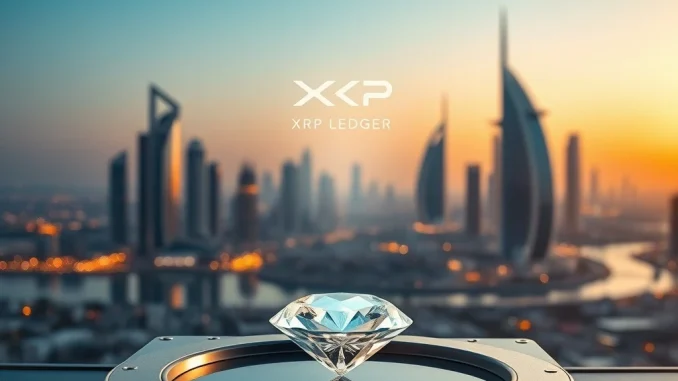
Dubai, UAE, April 2025: The XRP Ledger (XRPL) has cemented its role in high-value asset digitization by facilitating a landmark $280 million diamond tokenization initiative. This enterprise-grade transaction, orchestrated by Ripple in partnership with Billiton Diamond and UAE-based Ctrl Alt, marks a pivotal shift for Dubai’s luxury asset market, bringing physical diamonds onto a secure, transparent blockchain for institutional custody and trade.
XRP Ledger Diamond Tokenization: A $280 Million Milestone
The announcement represents one of the single largest tokenizations of physical diamonds to date. Billiton Diamond, a firm with deep expertise in the sourcing and valuation of high-grade stones, partnered with Ctrl Alt, a specialist in digital asset custody and blockchain integration. Together, they selected the XRP Ledger as the foundational technology for this ambitious project. The ledger’s inherent features, including its low-cost, high-speed transaction settlement (3-5 seconds) and built-in decentralized exchange (DEX) functionality, provided a compelling technical framework. This move is not merely a proof-of-concept but a full-scale commercial deployment, signaling robust institutional confidence in the XRPL’s capability to handle assets of extreme value and requiring impeccable provenance.
The Mechanics of Tokenizing Luxury Assets on Blockchain
Tokenization converts the ownership rights of a physical asset into a digital token on a blockchain. For luxury diamonds, this process involves several critical, verifiable steps that the XRP Ledger ecosystem supports.
- Asset Valuation & Certification: Each diamond undergoes rigorous assessment by gemological institutes like the GIA. The certification details—cut, color, clarity, carat, and unique inscription—are hashed and immutably recorded.
- Issuance of Tokens: Using the XRPL’s native Issued Currencies functionality, a digital token (e.g., BDTK for Billiton Diamond Token) is created for each diamond or a basket of stones. Each token is directly backed 1:1 by the physical asset held in insured, audited vaults.
- Custody & Compliance: Ctrl Alt provides the enterprise-grade custody solution, managing private keys and ensuring compliance with UAE financial regulations. This layer bridges the gap between the physical custodians and the digital ledger.
- Liquidity & Trading: Tokenized diamonds can be traded peer-to-peer or on the XRPL DEX in fractions or whole units, enabling liquidity in a traditionally illiquid market without moving the physical stone.
Why Dubai is the Epicenter for Asset Digitization
Dubai’s strategic vision, encapsulated in its Dubai Blockchain Strategy and Virtual Assets Regulatory Authority (VARA) framework, has created a uniquely permissive yet secure environment for financial innovation. The emirate has actively courted fintech and blockchain enterprises, positioning itself as a global hub for the future of finance. This $280 million diamond tokenization deal directly aligns with Dubai’s goals to digitize and democratize access to luxury markets, attract foreign investment, and establish clear regulatory precedents for real-world asset (RWA) tokenization. The involvement of local entity Ctrl Alt underscores the domestic expertise driving this transformation.
Ripple’s Enterprise Strategy and the XRP Ledger’s Evolution
While Ripple is often associated with cross-border payments using its XRP cryptocurrency, the company has consistently invested in the broader utility of the open-source XRP Ledger. This diamond tokenization deal is a flagship example of Ripple’s enterprise strategy, which focuses on providing the underlying blockchain infrastructure for institutional use cases beyond payments. The XRPL’s design, emphasizing speed, low cost, and native asset issuance, makes it particularly suited for tokenizing commodities, carbon credits, and now, luxury goods. This deal provides tangible evidence of the ledger’s scalability and security under real-world, high-stakes conditions.
Implications for the Global Luxury and Finance Sectors
The successful execution of this deal carries significant implications. For the diamond industry, it introduces unprecedented liquidity, transparency in provenance to combat conflict diamonds, and access to a new class of digital-native investors. For the finance sector, it demonstrates a viable model for bringing other high-value illiquid assets—fine art, real estate, vintage automobiles—onto blockchain rails. Furthermore, it validates a specific technological stack: the XRP Ledger for settlement and issuance, coupled with specialized regulated custodians. This could set a de facto standard for future RWA projects, influencing technology selection across the industry.
Conclusion
The $280 million diamond tokenization on the XRP Ledger is a watershed moment for blockchain’s application in high finance. It moves beyond theoretical potential into demonstrable, large-scale utility. By leveraging the XRP Ledger’s robust architecture within Dubai’s progressive regulatory sandbox, the partnership between Ripple, Billiton Diamond, and Ctrl Alt has successfully bridged the physical and digital worlds of value. This deal not only secures a massive volume of luxury assets on-chain but also solidifies the XRP Ledger’s position as a leading enterprise blockchain for the tokenization of real-world assets, paving the way for broader institutional adoption.
FAQs
Q1: What does it mean to tokenize a diamond?
Tokenization is the process of creating a digital representation of ownership of a physical asset on a blockchain. For a diamond, a digital token is issued that corresponds to a specific, certified stone held in secure vaulting. This token can then be traded or used as collateral digitally.
Q2: Why was the XRP Ledger chosen for this project?
The XRP Ledger was likely selected for its proven ability to settle transactions in 3-5 seconds at minimal cost, its built-in decentralized exchange for trading tokenized assets, and its robust history of operating without significant downtime since 2012, which is critical for high-value enterprise use.
Q3: Who owns the physical diamonds after tokenization?
The legal ownership remains with the entity that tokenized them (or a custodian acting on their behalf). The digital tokens represent a claim on that ownership. In this case, Billiton Diamond, with custody managed by Ctrl Alt, retains control of the physical assets in insured facilities.
Q4: How does this benefit the diamond market?
Tokenization can increase market liquidity by allowing fractional ownership and easier transfer of diamonds without physical movement. It also enhances transparency and trust by providing an immutable record of a diamond’s provenance and certification history on the blockchain.
Q5: Is this related to Ripple’s XRP cryptocurrency?
While both utilize the same underlying XRP Ledger, they are distinct. This diamond tokenization uses the ledger’s “Issued Currencies” feature to create custom tokens (like BDTK). The XRP cryptocurrency is the ledger’s native digital asset, used primarily to pay for transaction fees and facilitate cross-border payments. The project demonstrates utility for the ledger itself, not necessarily direct use of the XRP token.