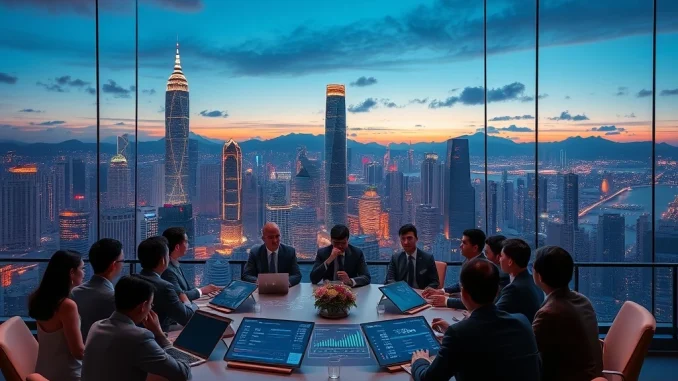
Hong Kong, February 12, 2026: The global financial community converges on Hong Kong today for the highly anticipated HSC Asset Management Conference. This pivotal event serves as a critical nexus, connecting institutional capital, visionary founders, and the architects of tomorrow’s financial systems. Focused squarely on the transformative sectors of artificial intelligence, decentralized finance (DeFi), real-world assets (RWA), and fintech, the conference aims to bridge traditional finance with frontier innovation.
The Strategic Role of the HSC Asset Management Conference
Asset management conferences have long functioned as vital market thermostats, gauging sentiment and directing capital flows. The HSC conference distinguishes itself by moving beyond traditional portfolio discussions. It deliberately constructs a dialogue between the established pillars of global finance and the disruptive forces reshaping them. Hong Kong’s selection as the host city is not incidental. The city maintains its unique position as a gateway between East and West, boasting a mature regulatory framework that is increasingly engaging with digital asset innovation. This setting provides a neutral, yet sophisticated, ground for complex conversations about risk, regulation, and return in emerging technology sectors. The conference’s timing in early 2026 is also strategic, allowing participants to set agendas after annual reviews and before major annual investment cycles.
Core Pillars: AI, DeFi, RWA, and Fintech Convergence
The agenda’s focus on four interconnected domains reflects a clear industry thesis: the future of finance is hybrid. Artificial intelligence now drives everything from algorithmic trading and risk modeling to personalized banking and regulatory compliance (RegTech). Its integration with blockchain-based DeFi protocols promises more efficient, transparent, and accessible financial markets. However, the volatility and insular nature of some crypto-native assets have spurred the rapid growth of the real-world asset (RWA) tokenization sector. This involves creating digital tokens on a blockchain that represent ownership of tangible assets like treasury bonds, real estate, or commodities.
- Artificial Intelligence: Sessions explore AI’s role in predictive analytics for asset management and automating smart contract execution in DeFi.
- Decentralized Finance (DeFi): Discussions center on institutional-grade protocols, liquidity solutions, and interoperability with traditional payment rails.
- Real-World Assets (RWA): This track addresses the legal, technical, and market challenges of tokenizing physical and financial assets to unlock liquidity.
- Fintech: Panels examine embedded finance, central bank digital currencies (CBDCs), and the evolving digital payments landscape.
The interplay between these fields is where the most significant investment theses are now being formed. For instance, AI can manage a tokenized real estate portfolio, while DeFi protocols can provide the liquidity pool for its fractional shares.
Connecting Capital and Founders in a Complex Landscape
The “connecting” mandate of the HSC conference addresses a specific market need. Institutional investors often possess capital but seek vetted, compliant entry points into nascent technologies. Founders building in AI or DeFi possess technical expertise but require guidance on governance, regulatory navigation, and scalable business models. This conference facilitates that matchmaking within a context that acknowledges real-world constraints. It moves past theoretical potential to address practical implementation, due diligence, and partnership structures. The presence of global finance leaders ensures conversations are grounded in the realities of market size, liability, and fiduciary duty, while founders provide insights into technological scalability and user adoption curves.
Hong Kong’s Evolving Position in Global Digital Finance
Hong Kong provides a compelling backdrop for this dialogue. In recent years, the Hong Kong Monetary Authority (HKMA) and the Securities and Futures Commission (SFC) have implemented a regulatory regime for virtual asset trading and fund management. This clear, if stringent, framework offers a level of certainty that many other jurisdictions lack. By hosting the HSC conference, Hong Kong reinforces its commitment to being a responsible innovator in the digital asset space. It signals to global capital that the city is open for business in the next generation of finance, but on terms that prioritize investor protection and systemic stability. The conference serves as a live barometer for the success of this policy approach, as attendees gauge on-the-ground sentiment and regulatory engagement.
The Ripple Effects: Implications for Broader Markets
The outcomes of such a concentrated gathering of financial intelligence have tangible implications. Deal flow initiated here can influence venture capital funding rounds for fintech and AI startups in the coming quarters. Insights shared on regulatory trends can shape product development roadmaps. Furthermore, the cross-pollination of ideas between traditional asset managers and crypto-native funds can accelerate the development of hybrid financial products. These might include tokenized versions of traditional funds or new derivatives that hedge risks across both digital and physical asset classes. The conference acts as a catalyst, compressing the networking and discovery process that might otherwise take months into a focused series of interactions.
Conclusion
The HSC Asset Management Conference in Hong Kong represents more than a single industry event. It is a microcosm of the broader transition occurring within global finance. By systematically connecting capital, founders, and regulatory perspectives across the critical fields of AI, DeFi, RWA, and fintech, the conference provides an essential forum for shaping the market’s trajectory. The discussions held and relationships forged on February 12, 2026, will undoubtedly influence investment allocations, startup valuations, and policy considerations throughout the year. As the boundaries between traditional and digital finance continue to blur, such focused, high-caliber convergence points become indispensable for navigating the future of asset management.
FAQs
Q1: What is the primary goal of the HSC Asset Management Conference?
The primary goal is to facilitate direct connections and substantive dialogue between global institutional investors and founders/executives operating in the fields of artificial intelligence, decentralized finance (DeFi), real-world asset (RWA) tokenization, and fintech, within the context of Hong Kong’s financial ecosystem.
Q2: Why is Hong Kong a significant location for this conference?
Hong Kong is a major global financial hub with a developing regulatory framework for digital assets. Its position bridging Eastern and Western markets makes it a strategic neutral ground for discussions on the future of finance, attracting a diverse international audience.
Q3: What are Real-World Assets (RWA) in the context of this conference?
RWAs refer to tangible or traditional financial assets (like bonds, real estate, or commodities) that are represented as digital tokens on a blockchain. The conference explores the tokenization process, its benefits for liquidity, and the integration of these assets into broader digital finance platforms.
Q4: How does this conference differ from a typical tech or crypto event?
This conference has a specific asset management and institutional capital focus. It emphasizes investment theses, risk management, regulatory compliance, and the practical challenges of deploying large-scale capital into emerging technologies, rather than just technological speculation.
Q5: Who typically attends the HSC Asset Management Conference?
Attendees include institutional asset managers, family office representatives, venture capital and private equity investors, founders of AI/DeFi/RWA/fintech startups, investment bankers, legal and compliance experts specializing in digital assets, and financial technology executives.