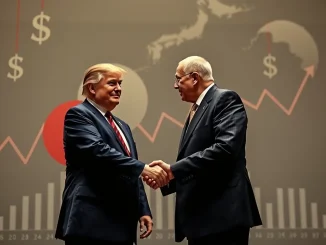
Washington D.C., March 2025: Former President Donald Trump has publicly denied any personal awareness of a reported $500 million investment from Abu Dhabi into World Liberty Financial, a financial entity linked to his family. This denial comes as the timing, structure, and governance implications of the alleged transaction face intense scrutiny from financial analysts, political observers, and ethics watchdogs. The situation highlights ongoing debates about transparency, political finance, and the complex web of global capital flows.
Trump Denies Knowledge of Abu Dhabi’s World Liberty Financial Stake
In a brief statement issued through a spokesperson, Donald Trump stated he had “no knowledge” of the reported transaction involving a major stake purchase in World Liberty Financial by a member of Abu Dhabi’s royal family. The original report, which surfaced in financial intelligence circles, suggested the investment was structured as a private acquisition of a significant ownership share. Trump’s denial attempts to distance himself from the deal, but it has inadvertently fueled further questions. Analysts note that such a substantial foreign investment into a company connected to a former U.S. president and current political figure inherently attracts regulatory and public interest. The core issue extends beyond simple awareness to the broader context of permissible financial engagements for individuals with Trump’s political profile and the due diligence expected of international financial institutions.
Scrutiny Grows Over Timing and Governance Concerns
The reported investment is not being examined in a vacuum. Scrutiny focuses on two primary, interlinked areas: the precise timing of the deal and the governance protocols of World Liberty Financial. Investigative journalists and compliance experts are piecing together a timeline to determine when negotiations began, when funds were transferred, and how these dates correlate with Trump’s political activities and public statements on Middle Eastern policy. Concurrently, governance concerns are paramount. Key questions include:
- Board Oversight: What level of disclosure was required for such a major shareholder change?
- Source of Funds: What due diligence was performed on the origin of the $500 million?
- Conflict of Interest: Are there existing or potential conflicts between the company’s operations and U.S. foreign policy interests?
- Regulatory Filings: Have all necessary disclosures been made to relevant U.S. and international financial authorities?
This scrutiny reflects a heightened global focus on financial transparency, especially concerning politically exposed persons (PEPs).
The Complex Landscape of Global Political Finance
To understand the implications, one must consider the modern landscape of political finance. Over the past two decades, the lines between personal wealth, corporate holdings, and political influence have become increasingly blurred globally. Entities like sovereign wealth funds—such as those managed by Abu Dhabi—are major players in international investment, but their transactions with politically linked firms are subject to exceptional scrutiny. Experts in financial law point to frameworks like the Foreign Agents Registration Act (FARA) and anti-money laundering (AML) regulations as key lenses through which such deals are examined. The primary concern is not the investment itself, which may be perfectly legal, but the adequacy of the systems in place to ensure it does not represent undue influence, a vehicle for sanctions evasion, or a breach of fiduciary duty to other stakeholders.
Historical Context and Precedents in Financial Scrutiny
This incident echoes previous episodes where the finances of high-profile political families faced examination. Historical precedents, such as congressional inquiries into foreign dealings or Securities and Exchange Commission (SEC) investigations into disclosure failures, provide a framework for potential outcomes. A comparative analysis shows that the speed and depth of institutional response often depend on the clarity of existing evidence and the political climate. Furthermore, the role of media and financial intelligence firms in uncovering such reports has grown exponentially, meaning similar stories are likely to continue emerging, placing a premium on proactive and transparent corporate governance.
Potential Consequences and Market Implications
The immediate consequence of Trump’s denial and the ensuing scrutiny is reputational risk for World Liberty Financial. Potential partners or clients may hesitate until the air is cleared. From a market perspective, uncertainty is a key driver of volatility. If regulatory bodies in the U.S. or abroad open formal inquiries, it could lead to audits, fines, or mandated changes in ownership structure. For Abu Dhabi, the situation presents a diplomatic and financial sensitivity, potentially affecting perceptions of its investment vehicles’ neutrality. The long-term implication is a reinforcing of the trend toward stricter enforcement of transparency rules for investments that intersect with political power, potentially chilling some forms of legitimate capital flow.
Conclusion
Donald Trump’s denial of knowledge regarding the reported $500 million Abu Dhabi stake in World Liberty Financial is a significant development, but it marks the beginning of a process, not the end. The statement has amplified scrutiny on the deal’s timing and the underlying governance concerns within the financial entity. This story matters because it sits at the critical intersection of global finance, political influence, and public accountability. It tests the robustness of systems designed to prevent corruption and ensure market integrity. As facts continue to emerge, the response from regulatory institutions and the financial market itself will provide a clear indicator of the effectiveness of contemporary governance safeguards in an era of complex, globally interconnected capital.
FAQs
Q1: What is World Liberty Financial?
World Liberty Financial is a private financial services company that has been reported to have business connections to the Trump family. Specific details about its exact structure, holdings, and operations are part of the ongoing scrutiny following the investment report.
Q2: Why is a foreign investment from Abu Dhabi scrutinized?
Any large foreign investment, especially from a sovereign wealth fund or royal entity, into a company linked to a major U.S. political figure is scrutinized for potential conflicts of interest, violations of lobbying or disclosure laws, and risks to national security or foreign policy coherence.
Q3: What does Trump’s denial mean legally?
A denial of knowledge is a factual claim. Its legal significance depends on what an investigation might uncover regarding his actual involvement or the obligations to be informed. It does not, by itself, absolve the underlying transaction of potential regulatory issues.
Q4: What are the main governance concerns?
The primary concerns revolve around whether proper due diligence was conducted on the source of funds, if all regulatory disclosures were made, if board oversight was sufficient, and whether the investment creates any conflicts of interest for individuals associated with the company.
Q5: What happens next?
Financial journalists and intelligence firms will likely continue investigating. Regulatory bodies like the SEC or Treasury Department may review the case for any breaches of law. Congress could potentially hold hearings. The company and the investor may issue further statements or documentation to clarify the deal.