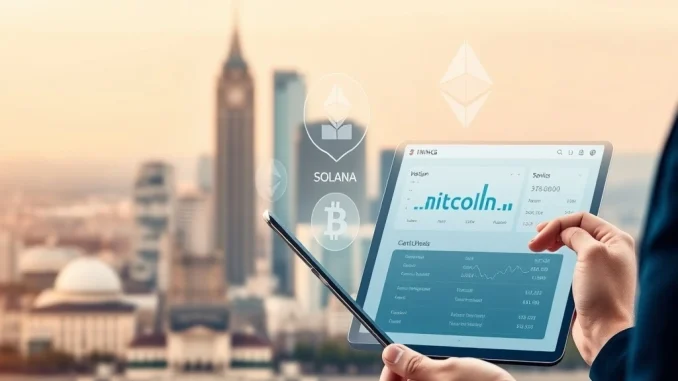
Frankfurt, Germany – April 2025: In a pivotal move for the German financial sector, ING Deutschland has officially opened regulated cryptocurrency investing to its retail client base. The bank now allows customers to gain exposure to Bitcoin, Ethereum, and Solana through exchange-traded notes (ETNs) directly via their standard securities accounts. This strategic expansion bridges traditional finance with the digital asset ecosystem, offering a familiar and supervised pathway for mainstream investors.
ING Deutschland’s Strategic Crypto ETN Expansion
ING Deutschland, the German arm of the Dutch multinational banking giant ING Group, has integrated cryptocurrency-linked exchange-traded notes into its retail investment platform. This initiative enables clients to buy and sell these regulated financial instruments just like any other stock or bond. The available ETNs track the performance of three major digital assets: Bitcoin (BTC), Ethereum (ETH), and Solana (SOL). The bank executes this service through its existing partnership with a licensed broker, ensuring all transactions occur on regulated European Union markets. This approach provides a layer of oversight and investor protection not always present in direct crypto trading on external exchanges.
Understanding Crypto ETNs and Their Regulatory Framework
An Exchange-Traded Note (ETN) is a senior, unsecured debt instrument issued by a financial institution. Unlike an ETF, which holds underlying assets, an ETN is a promise to pay the return of a specific index, minus fees. In this case, the index is the price of a cryptocurrency. For German retail investors, this structure offers distinct advantages within the country’s strict regulatory environment.
- Regulated Access: These ETNs trade on regulated EU markets like the Deutsche Börse, falling under the supervision of German financial authority BaFin.
- Familiar Process: Investors use their existing ING securities account (Depot), with no need to create accounts on separate crypto exchanges or manage private keys.
- Tax Clarity: Gains from ETNs are subject to Germany’s standard capital gains tax (Abgeltungssteuer), providing clear tax treatment compared to the more complex rules for direct crypto ownership.
- Counterparty Risk: Investors assume the credit risk of the ETN issuer, making the issuer’s stability a crucial factor.
This model contrasts with direct ownership, where the investor holds the asset in a private wallet. The ETN route prioritizes convenience and regulatory safety over direct control.
The German Context: A Gradual Embrace of Digital Assets
ING’s move is not an isolated event but part of a broader, cautious trend within the German financial establishment. Germany has positioned itself as one of the more progressive yet prudent jurisdictions for crypto assets in Europe. In 2020, BaFin began allowing licensed banks to custody cryptocurrencies. Major German banks like Sparkasse have previously explored crypto services, and Deutsche Börse has listed various crypto ETNs and ETFs. ING’s decision to offer this directly to retail clients through a mainstream banking interface represents a significant normalization step. It signals a growing institutional confidence in the asset class’s longevity and a response to demonstrable client demand.
Analyzing the Target Assets: Bitcoin, Ethereum, and Solana
ING’s selection of Bitcoin, Ethereum, and Solana provides a tiered exposure to the crypto market. The choice reflects a balance between established dominance and high-growth potential.
| Asset | Role & Profile | Why It’s Included |
|---|---|---|
| Bitcoin (BTC) | The original cryptocurrency, viewed primarily as a decentralized digital store of value or "digital gold." | Market cornerstone, highest liquidity, and broadest institutional recognition. |
| Ethereum (ETH) | A programmable blockchain platform that enables smart contracts and decentralized applications (dApps). | Represents the "utility" and Web3 ecosystem segment of the market. |
| Solana (SOL) | A high-throughput blockchain known for fast transaction speeds and lower costs, often positioned for scaling. | Offers exposure to a leading "Ethereum alternative" and the layer-1 blockchain competition narrative. |
This tri-asset offering allows retail investors to build a basic, diversified crypto portfolio through a single, familiar banking interface.
Implications for Retail Investors and the German Market
The immediate consequence is lowered friction for German savers. Investors curious about crypto no longer need to navigate the technical and security hurdles of non-custodial wallets or the regulatory gray areas of some international exchanges. They can allocate a portion of their portfolio within the same environment where they hold their stocks and funds. For the broader market, ING’s credibility lends legitimacy. It may prompt other traditional banks in the DACH region (Germany, Austria, Switzerland) to follow suit, accelerating institutional adoption. However, experts caution that ETNs are still volatile instruments tied to highly volatile underlying assets. The familiar interface should not obscure the fundamental risk profile of the investment.
Risk Considerations and Investor Education
While regulated, crypto ETNs carry specific risks that ING is obligated to communicate. Price volatility remains extreme compared to traditional assets. The ETN structure adds issuer credit risk—if the institution behind the ETN fails, investors could lose their capital. Furthermore, the ETN tracks the price but does not confer ownership of the cryptocurrency itself, meaning investors cannot use the assets in decentralized finance (DeFi) protocols or for payments. This service is best understood as a speculative investment or hedging tool within a diversified portfolio, not a direct replacement for currency or a guaranteed store of value.
Conclusion
ING Deutschland’s decision to open retail access to Bitcoin, Ethereum, and Solana ETNs marks a pivotal moment in the convergence of traditional and digital finance in Europe’s largest economy. By leveraging the regulated ETN framework, the bank provides a secure, familiar gateway for mainstream investors while adhering to Germany’s stringent financial compliance standards. This move validates the growing demand for crypto exposure and will likely influence the strategic direction of other retail banks. It underscores a clear trend: regulated crypto investment products are becoming a standard offering in comprehensive retail banking, with ING Deutschland positioning itself at the forefront of this transformation.
FAQs
Q1: What exactly is a crypto ETN, and how is it different from buying Bitcoin directly?
An ETN is a debt security that tracks an asset’s price. Buying a Bitcoin ETN means you own a note promising Bitcoin’s return, not the actual Bitcoin. Direct purchase involves holding the asset in a wallet, with full control but more responsibility.
Q2: Can I buy these ING Deutschland crypto ETNs from outside Germany?
Typically, access to these specific products is tied to holding an ING Deutschland retail securities account, which requires German residency. Non-residents should check with their local ING branch or broker for similar offerings.
Q3: How does the risk of a crypto ETN compare to a stock ETF?
Both carry market risk, but a crypto ETN has significantly higher volatility due to its underlying asset. It also adds counterparty (issuer) risk, which a physically-backed ETF may not have.
Q4: Are there ongoing fees for holding these ETNs at ING?
Yes. Like most financial products, ETNs have an annual management fee (expense ratio) that is deducted from the fund’s assets. ING may also charge standard order execution fees for buying and selling.
Q5: What happens if the issuer of the ETN goes bankrupt?
ETN investors are unsecured creditors of the issuer. In a bankruptcy, they would stand in line with other creditors to recover funds, which could result in a total loss. This is a key risk distinguishing ETNs from directly owned assets.