Global, May 2025: Cryptocurrency markets are experiencing a profound shift in investor psychology. A sharp 38% decline in Bitcoin’s value over recent weeks has pushed market sentiment into what analysts term ‘extreme fear.’ This downturn has sparked intense discussion, with veteran traders and social media commentators drawing comparisons to previous crypto winters, the COVID-19 market panic, and the collapse of FTX. The current climate raises a critical question: is this a moment of emotional capitulation or the precursor to a deeper structural crisis?
Crypto Sentiment Hits Historic Lows: Measuring the Fear
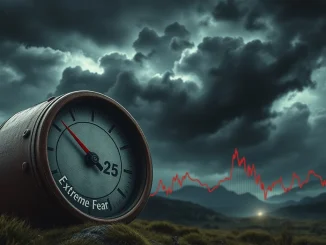
The Crypto Fear & Greed Index, a widely-referenced sentiment gauge, has plunged to levels not seen in years. This tool aggregates data from volatility, market momentum, social media, surveys, and dominance to produce a single score. Currently, the index reflects a market dominated by panic and pessimism. The primary driver is Bitcoin’s significant price correction, which has erased gains from the previous quarter and triggered a cascade of liquidations across derivative platforms. This selling pressure creates a negative feedback loop, where falling prices beget more fear, which begets more selling. Market data shows a notable decrease in active addresses and transaction volumes for major assets, indicating a withdrawal of retail participation. This behavioral shift is a classic hallmark of bearish sentiment phases, where uncertainty leads to capital preservation strategies.
A Comparative Analysis: 2018, COVID, and FTX
To understand the present, one must examine past crises. The 2018 bear market was characterized by a slow, grinding decline following the speculative bubble of 2017. It was a period of disillusionment as projects failed and interest waned. The COVID-19 crash of March 2020 was a violent, global liquidity event that saw Bitcoin lose over 50% of its value in days, mirroring traditional finance. The FTX collapse in late 2022 was a catastrophic loss of trust within the crypto ecosystem itself, exposing fraud and poor custodianship.
The current environment shares traits with all three but presents a unique combination:
- Macroeconomic Pressure: Unlike 2018 or the FTX event, today’s market faces persistent high-interest rates and tightening financial conditions globally, reducing risk appetite across all asset classes.
- Institutional Caution: While institutional infrastructure is stronger than in 2018, the post-FTX regulatory scrutiny has made large, traditional investors more cautious, slowing the inflow of new capital.
- Emotional Exhaustion: The rapid cycles of boom and bust have led to what some analysts call ‘narrative fatigue,’ where even positive technological developments fail to spark sustained bullish momentum.
The Mechanics of a Sentiment-Driven Selloff
This downturn is being amplified by specific market mechanics. High leverage in the system means that even modest price drops can force automatic liquidations. These liquidations, often executed by trading algorithms, create sudden spikes in selling volume that push prices lower, triggering more liquidations. This phenomenon is less about a fundamental breakdown in blockchain technology and more about the unwinding of risky financial positions built during more optimistic times. Furthermore, the concentration of Bitcoin holdings—both in large exchange-traded funds and in wallets held by long-term investors—can create illiquidity during stress, exacerbating price moves when these entities transact.
Is This Capitulation or a Structural Breakdown?
A key distinction in market analysis is between emotional capitulation and structural failure. Capitulation refers to the point where the last bulls give up and sell, often marking a potential bottom as selling pressure exhausts itself. Indicators of capitulation include extreme fear readings, high-volume sell-offs, and negative funding rates in perpetual swap markets—all currently present. Structural breakdown, however, implies a fundamental flaw, such as a critical protocol failure, irreversible regulatory action, or a collapse in core utility.
Current evidence leans toward the former. On-chain data shows long-term holders are not distributing their coins en masse, suggesting a belief in the underlying asset’s long-term value. Network security for major blockchains like Bitcoin and Ethereum remains at all-time highs. Developer activity, a leading indicator of ecosystem health, continues steadily across major protocol repositories. The pain appears concentrated in financial markets and sentiment, not in the foundational technology’s operation.
Historical Context and Potential Pathways
Financial markets are cyclical, and cryptocurrency markets are notoriously volatile. Periods of extreme fear have consistently preceded periods of opportunity for disciplined investors. The depth of negative sentiment itself can become a contrarian indicator. However, navigating this phase requires an understanding of potential triggers for a sentiment shift. These could include a softening of macroeconomic policy, clarity on key regulatory frameworks, or the successful deployment and adoption of a major blockchain upgrade. Conversely, a continuation or worsening of global economic conditions could prolong the fear phase.
The table below summarizes key differences between current sentiment and past crises:
| Event | Primary Catalyst | Sentiment Driver | Recovery Timeframe |
|---|---|---|---|
| 2018 Bear Market | Post-Bubble Speculation | Disillusionment & Apathy | ~24 months |
| COVID-19 Crash (Mar 2020) | Global Macro Liquidity Shock | Panic & Uncertainty | ~3 months |
| FTX Collapse (Nov 2022) | Industry-Specific Fraud | Trust Crisis | ~9 months |
| Current Environment (2025) | Macro Pressure + Sentiment Cycle | Extreme Fear & Exhaustion | To be determined |
Conclusion
The cryptocurrency market is undeniably gripped by extreme fear, with sentiment indicators reaching historic lows following a significant Bitcoin price drop. While comparisons to the crises of 2018, 2020, and 2022 are valid, the current environment possesses its own unique blend of macroeconomic headwinds and market-specific leverage dynamics. The critical takeaway is that this appears to be a phase of intense emotional capitulation rather than a fundamental structural breakdown of the asset class. For observers and participants, understanding this distinction is paramount. History suggests that such depths of negative crypto sentiment, while painful, have often marked transitional periods rather than endpoints. The focus now shifts to the underlying health of blockchain networks and the macroeconomic factors that will ultimately dictate the duration of this fear-driven cycle.
FAQs
Q1: What is the Crypto Fear & Greed Index?
The Crypto Fear & Greed Index is a composite metric that analyzes multiple data points—including volatility, trading volume, social media sentiment, and market momentum—to quantify the overall emotional state of cryptocurrency investors on a scale from 0 (Extreme Fear) to 100 (Extreme Greed).
Q2: How does the current ‘extreme fear’ sentiment compare to the FTX collapse?
While both periods show deep fear, the FTX collapse was driven by a specific, catastrophic loss of trust within a central crypto entity. The current sentiment is more broadly tied to macroeconomic conditions and a cyclical market downturn, affecting the entire digital asset space in correlation with other risk assets.
Q3: Does extreme fear always mean the market is about to bottom?
Not necessarily. While extreme fear can indicate capitulation and a potential local bottom, it is not a precise timing tool. Markets can remain in fearful or depressed states for extended periods, especially if the underlying causes (like high interest rates) persist. It is best used as a context-setting indicator, not a standalone buy signal.
Q4: What are the signs of true market capitulation?
Classic signs include a high-volume, sharp price decline on bad news, a surge in put option buying or negative funding rates, overwhelming negative media coverage, and a measurable drop in active trading addresses as participants exit the market entirely.
Q5: Are blockchain networks still functioning during this period of low sentiment?
Yes. Core blockchain operations like transaction processing, block validation, and smart contract execution continue normally. High sentiment often correlates with high transaction fees due to network congestion, but the fundamental technology’s operation is separate from financial market sentiment.