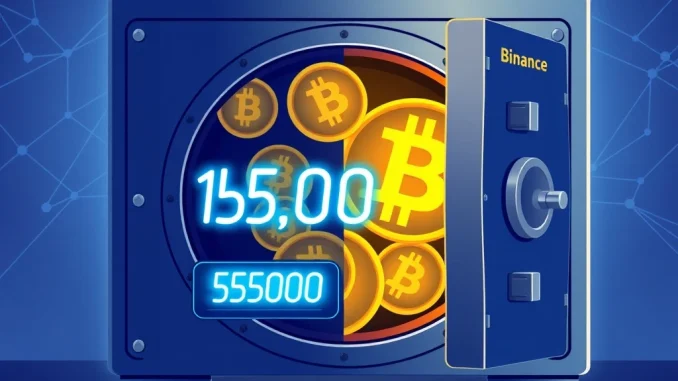
Global, May 2025: In a significant move that underscores the evolving security strategies of major cryptocurrency exchanges, Binance’s Secure Asset Fund for Users (SAFU) has executed a substantial purchase of 1,315 Bitcoin, valued at approximately $100.7 million. This transaction, first identified by blockchain analytics platform Lookonchain, represents a concrete step in Binance’s previously announced plan to adjust the asset composition of its billion-dollar user protection fund. The purchase arrives at a pivotal moment for cryptocurrency market infrastructure and institutional adoption patterns.
Binance SAFU’s Strategic Bitcoin Acquisition
The blockchain transaction occurred on May 15, 2025, transferring 1,315 BTC from an unidentified wallet to an address associated with Binance’s SAFU fund. At current market valuations, this positions the newly acquired Bitcoin as a substantial component of the exchange’s user protection reserves. Binance originally established the SAFU fund in July 2018, committing 10% of all trading fees to build a reserve that would protect users in extreme situations, such as exchange hacks or unexpected financial irregularities. The fund reached its initial $1 billion valuation in stablecoins during 2023, making it one of the largest dedicated protection funds in the cryptocurrency industry.
This recent Bitcoin purchase follows Binance’s March 2025 announcement that it would gradually convert portions of its $1 billion stablecoin reserve into Bitcoin. Company representatives cited several strategic reasons for this shift during their initial announcement. The primary rationale involves reducing counterparty risk associated with stablecoin issuers and embracing Bitcoin’s established position as a decentralized store of value within the cryptocurrency ecosystem. Industry analysts have noted that this move aligns with broader trends of institutional entities increasing their Bitcoin allocations as both a treasury reserve asset and a hedge against traditional financial system volatility.
Blockchain Analysis Reveals Transaction Details
Blockchain investigators have provided detailed examination of the SAFU transaction. Lookonchain, the analytics platform that first reported the movement, confirmed the transfer through multiple verification methods including address clustering and transaction pattern analysis. However, on-chain analyst ai_9684xtpa highlighted an important technical detail: the receiving address for the 1,315 BTC does not match the previously identified SAFU address (starting with 0x420ef) that holds the fund’s original $1 billion in stablecoin reserves.
This discrepancy raises several possibilities that industry experts are considering:
- New wallet structure: Binance may have established separate wallets for different asset types within the SAFU fund for enhanced security and accounting clarity
- Gradual transition: The exchange might be executing the stablecoin-to-Bitcoin conversion through intermediate addresses before final settlement
- Operational security: Large cryptocurrency custodians often rotate addresses and utilize complex wallet structures to minimize security risks
ai_9684xtpa emphasized that definitive clarification would require an official statement from Binance regarding their updated wallet architecture and fund management procedures. This transparency would help the cryptocurrency community verify that the purchased Bitcoin indeed represents an addition to the SAFU fund rather than a separate corporate treasury allocation.
The Evolution of Exchange Security Funds
Binance’s SAFU fund represents a significant development in cryptocurrency exchange security practices. Following major exchange failures and security breaches in the industry’s early years, including the Mt. Gox collapse in 2014 and various exchange hacks throughout the 2010s, user protection mechanisms have become increasingly sophisticated. The SAFU model has inspired similar initiatives across the industry, with multiple exchanges now maintaining substantial insurance funds or proof-of-reserves systems.
The strategic shift from stablecoins to Bitcoin within these protection funds reflects changing perceptions of asset security within the cryptocurrency space. While stablecoins offer price stability, they introduce centralized counterparty risk through their issuers. Bitcoin, despite its price volatility, provides cryptographic certainty of ownership without reliance on third-party promises of redemption. This philosophical shift toward maximizing cryptographic guarantees represents an important maturation in how cryptocurrency institutions approach risk management.
Market Implications of Institutional Bitcoin Accumulation
The SAFU Bitcoin purchase occurs within a broader context of institutional accumulation patterns. Throughout 2024 and into 2025, multiple indicators have pointed toward increasing institutional participation in Bitcoin markets:
| Indicator | Trend | Significance |
|---|---|---|
| Bitcoin ETF Holdings | Steady accumulation | Traditional finance exposure increasing |
| Corporate Treasury Allocations | Growing adoption | Balance sheet diversification |
| Exchange Reserve Changes | Decreasing available supply | Reduced selling pressure |
| Mining Hash Rate | All-time highs | Infrastructure investment confidence |
Binance’s decision to allocate a portion of its user protection fund to Bitcoin may influence other exchanges and cryptocurrency custodians to reconsider their reserve asset strategies. As the industry’s largest exchange by trading volume, Binance often establishes trends that smaller platforms subsequently follow. If multiple exchanges begin converting portions of their insurance funds to Bitcoin, the cumulative effect could represent meaningful buying pressure on available Bitcoin supply, particularly when combined with ongoing institutional accumulation through other channels.
Technical Execution and Timing Considerations
The execution of a $100 million Bitcoin purchase requires careful planning to minimize market impact. Large over-the-counter (OTC) desks typically facilitate transactions of this magnitude to prevent substantial price movements that could occur if the entire order were placed on public exchanges. While the exact execution method for the SAFU purchase remains undisclosed, blockchain timestamps indicate the transaction occurred during Asian trading hours when liquidity patterns differ from European and American sessions.
Market analysts note that the purchase timing coincides with what some technical analysts describe as a consolidation phase for Bitcoin following its most recent halving event in April 2024. Historical patterns suggest that post-halving periods often feature accumulation phases as market participants position themselves for potential supply-driven appreciation cycles. Binance’s substantial purchase during this period may reflect both strategic asset allocation decisions and considerations of favorable entry points within broader market cycles.
Regulatory Context and Compliance Considerations
Cryptocurrency exchange insurance funds operate within an increasingly defined regulatory framework across multiple jurisdictions. Financial authorities in the United States, European Union, United Kingdom, and Asia have all issued guidance or regulations concerning user asset protection on digital asset platforms. These regulatory developments create important context for understanding Binance’s SAFU strategy adjustments.
Key regulatory considerations affecting exchange protection funds include:
- Asset segregation requirements: Many jurisdictions now mandate clear separation between exchange operational funds and user assets
- Reserve composition rules: Some regulators specify acceptable asset types for protection funds, though Bitcoin typically receives approval
- Transparency obligations: Proof-of-reserve requirements are becoming more common, necessitating regular verification of fund holdings
- Custody standards: Enhanced security protocols for large cryptocurrency holdings, including multi-signature arrangements and institutional-grade custody solutions
Binance’s decision to convert stablecoin reserves to Bitcoin may reflect both strategic preference and regulatory compliance considerations, as Bitcoin’s status as a non-security digital commodity provides clearer regulatory treatment in many jurisdictions compared to stablecoins, which face ongoing regulatory scrutiny regarding their classification and oversight.
Conclusion: A Strategic Shift in Cryptocurrency Protection
Binance’s $100 million Bitcoin purchase for its SAFU fund represents more than a simple asset reallocation—it signifies an important evolution in how cryptocurrency institutions conceptualize and implement user protection mechanisms. By shifting from stablecoins to Bitcoin, Binance is embracing the cryptographic certainty and decentralized nature that originally defined the cryptocurrency movement while maintaining its commitment to user security. This Binance SAFU transaction demonstrates the continuing maturation of cryptocurrency market infrastructure as it adapts to both market realities and regulatory expectations. As the industry progresses, such strategic decisions by major participants will likely influence security standards, reserve management practices, and institutional adoption patterns across the global digital asset ecosystem.
FAQs
Q1: What is the Binance SAFU fund?
The Secure Asset Fund for Users (SAFU) is Binance’s emergency insurance fund established in 2018. It allocates 10% of trading fees to build reserves that protect users against potential losses from extreme situations like exchange hacks or unexpected financial issues.
Q2: Why is Binance converting SAFU stablecoins to Bitcoin?
Binance announced this strategic shift to reduce counterparty risk associated with stablecoin issuers and to embrace Bitcoin’s position as a decentralized store of value. The move aligns with broader institutional trends toward Bitcoin as a treasury reserve asset.
Q3: How much Bitcoin did Binance SAFU purchase?
The fund purchased 1,315 Bitcoin worth approximately $100.7 million at the time of transaction. This represents a portion of the fund’s total $1 billion valuation as Binance gradually converts its stablecoin reserves.
Q4: What does the different wallet address mean?
Blockchain analysts noted the receiving address differs from the known SAFU stablecoin wallet. This could indicate new wallet structures for different asset types, intermediate steps in the conversion process, or enhanced security measures through address rotation.
Q5: How does this affect Bitcoin’s market dynamics?
Large institutional purchases reduce available Bitcoin supply on exchanges, potentially creating buying pressure. As the industry’s largest exchange, Binance’s actions may influence other platforms to consider similar reserve strategies, potentially amplifying this effect.
Q6: Is user fund security affected by this change?
Binance maintains that shifting to Bitcoin enhances the fund’s security by reducing reliance on centralized stablecoin issuers. The cryptographic nature of Bitcoin provides verifiable ownership without third-party redemption promises, though price volatility remains a consideration.