Global, April 2025: In a firm rebuttal to swirling industry speculation, Binance founder Changpeng Zhao has categorically denied that the world’s largest cryptocurrency exchange was responsible for the severe market downturn last October. Labeling the accusations as “absurd,” Zhao’s statements directly address one of the most significant and debated events in recent crypto history—a $19 billion liquidation cascade that rattled investor confidence globally. This defense comes as Binance continues to navigate a complex regulatory landscape, emphasizing its operations in Abu Dhabi and oversight by U.S. authorities while highlighting a completed $600 million user compensation program.
Changpeng Zhao Denies Binance Caused October Crypto Crash
Changpeng Zhao, commonly known as CZ, publicly addressed the allegations via social media commentary on reports from Walter Bloomberg. His response was unequivocal. “Binance bears no responsibility for the $19 billion liquidation event,” Zhao stated, framing the claim of the exchange’s culpability as not just incorrect but fundamentally illogical. To understand the weight of this denial, one must examine the context of the October crash. The cryptocurrency market, known for its volatility, experienced a perfect storm of macroeconomic pressures, including rising interest rates and risk-off sentiment across traditional finance. These external factors triggered massive liquidations in highly leveraged positions across all major trading platforms, not just Binance. Market analysts consistently point to the interconnected nature of crypto derivatives—where a price drop on one exchange can trigger automatic sell-offs on others—as a primary amplifier of the crash, rather than the actions of a single entity.
Analyzing the $19 Billion Liquidation Event
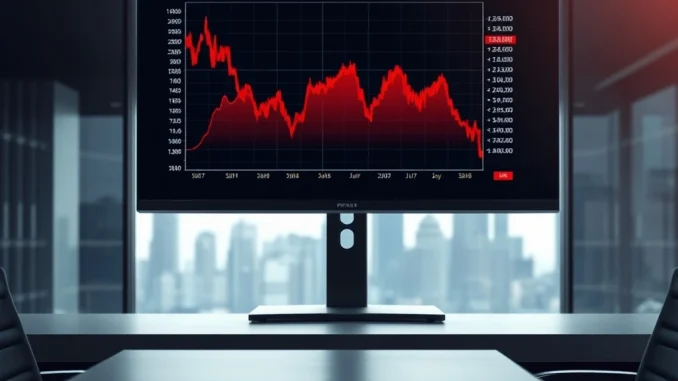
The scale of the October liquidation was unprecedented. A liquidation event occurs when an exchange automatically closes a trader’s leveraged position due to a partial or total loss of the trader’s initial margin. This happens to prevent further losses. In a falling market, these forced sales can create a vicious cycle, driving prices down further and triggering more liquidations.
- Market-Wide Phenomenon: Data from blockchain analytics firms like CoinGlass showed that liquidations occurred across every major exchange, including FTX (prior to its collapse), Bybit, OKX, and others. Binance, as the largest platform by volume, naturally saw a significant portion of this activity.
- Leverage as a Catalyst: The crash was fueled by excessive leverage. Many traders were using 10x, 20x, or even higher leverage. A mere 5-10% price move against their position was enough to wipe them out. The initial price drop likely stemmed from broader financial anxieties, which then activated these leveraged traps.
- Technical vs. Causative: While Binance’s systems processed a large volume of these liquidations, Zhao argues this is a technical result of being the largest marketplace, not evidence of causation. The exchange was the venue for the event, not its originator.
The $600 Million Compensation and Technical Issues
Separate from the market-wide crash, Zhao confirmed that Binance compensated users approximately $600 million for losses stemming from technical issues on its platform. It is crucial to distinguish this from the liquidation event. These technical issues, which can include order book glitches, delayed executions, or system outages during high volatility, can exacerbate individual user losses. By compensating affected users, Binance addressed specific failures in its service delivery. Zhao emphasized this process is “now complete,” positioning it as a matter of customer restitution and platform integrity, rather than an admission of guilt for the broader market collapse. This move is part of a longer-term effort by Binance to improve its risk management and operational resilience following past criticisms.
Binance’s Regulatory Posture in Abu Dhabi and the U.S.
A key pillar of Zhao’s response involved highlighting Binance’s regulatory engagements. He noted the exchange is “regulated in Abu Dhabi and is under the supervision of U.S. authorities.” This statement is strategically significant.
- Abu Dhabi Global Market (ADGM): Binance has secured licensing in this progressive financial free zone, which is seen as a stamp of legitimacy and a commitment to complying with anti-money laundering (AML) and know-your-customer (KYC) standards.
- U.S. Oversight: This is a clear reference to Binance’s ongoing settlements and monitoring requirements with U.S. agencies like the Commodity Futures Trading Commission (CFTC) and the Department of Justice (DOJ). While these agreements resulted in hefty fines and mandated compliance overhauls, they also represent a formalized, supervised relationship with American regulators.
By citing this oversight, Zhao aims to shift the narrative from an unaccountable offshore platform to a globally scrutinized financial institution, thereby lending credence to his denial of reckless behavior that could cause a market crash.
Historical Context of Exchange Blame in Market Downturns
The tendency to blame major exchanges for market crashes is not new. Following the Mt. Gox collapse in 2014, the exchange was rightly identified as the direct cause due to fraud and theft. However, in broad market downturns like the 2018 bear market or the May 2021 crash, blame often gets attributed to the largest players like Binance or Coinbase by association. Experts in market microstructure argue that while large exchanges can have technical issues that worsen conditions, systemic crashes are almost always driven by macroeconomic triggers, sector-wide over-leverage, and cascading liquidations across the entire ecosystem. The concentration of trading volume does not equate to market manipulation or causation.
Conclusion
Changpeng Zhao’s forceful rejection of the claim that Binance caused the October cryptocurrency market crash underscores the complex, multi-faceted nature of major market corrections. While Binance, as the dominant exchange, was at the center of the $19 billion liquidation storm, available data and mainstream financial theory suggest the roots of the crash were systemic. The completion of a $600 million user compensation program addresses specific technical failures, and the emphasis on Abu Dhabi regulation and U.S. supervision reflects an exchange in a protracted transition from a crypto startup to a regulated global entity. For investors and observers, the episode serves as a stark reminder of the inherent risks of leveraged trading in volatile markets, where the line between correlation and causation is often blurred in the search for a simple explanation.
FAQs
Q1: What exactly did Changpeng Zhao say about Binance and the October crash?
Changpeng Zhao refuted claims that Binance was responsible for the October cryptocurrency market crash, calling the allegations “absurd.” He stated Binance bore no responsibility for the $19 billion liquidation event that occurred.
Q2: What was the $19 billion liquidation event in October?
In October of last year, a sharp downturn in cryptocurrency prices triggered the forced closure of billions of dollars worth of leveraged trades across all major exchanges. This created a selling cascade, totaling approximately $19 billion in liquidations, which accelerated the price decline.
Q3: What is the $600 million compensation Zhao mentioned?
This refers to funds Binance paid to users who suffered losses due to specific technical issues on the Binance platform (like system glitches or delays) during periods of high volatility. Zhao clarified this compensation process is separate from the market crash and is now complete.
Q4: How is Binance regulated, according to Zhao?
Zhao noted that Binance is regulated in the Abu Dhabi Global Market (ADGM) and remains under the supervision of U.S. authorities as part of its ongoing settlements with agencies like the CFTC and DOJ.
Q5: Do most analysts think one exchange can cause a broad market crash?
Most market structure analysts believe broad crypto market crashes are caused by macroeconomic factors and systemic over-leverage across the entire industry. While a major exchange’s technical failure can worsen conditions, it is rarely seen as the sole cause of a widespread downturn.