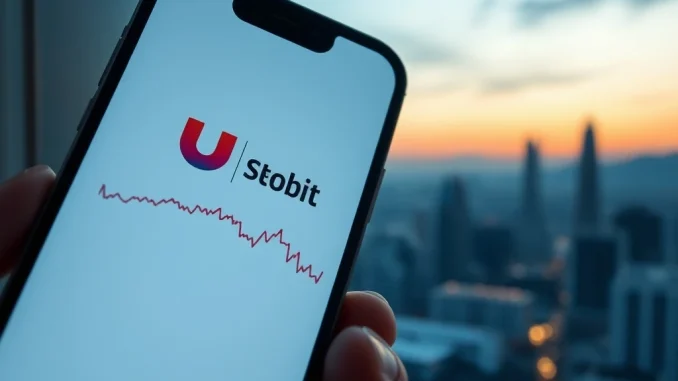
Seoul, South Korea, February 27, 2025: In a significant move for the regional crypto market, leading South Korean exchange Upbit has announced it will delist the GoChain (GO) token. The delisting is scheduled for 6:00 a.m. UTC on March 3. Consequently, this decision follows a comprehensive review where Upbit identified “numerous shortcomings” and a “potential for harm to users” related to the asset’s trading and adoption status. This development marks a pivotal moment for exchange governance and token viability standards.
Upbit Delists GoChain: The Official Rationale and Process
Upbit’s announcement was direct and cited specific operational concerns. The exchange stated its decision resulted from a periodic review of listed virtual assets, a standard practice for major platforms. Upbit’s review framework typically assesses several critical factors, including trading volume stability, network security, development activity, regulatory compliance, and community health. According to the notice, GoChain failed to meet the necessary benchmarks across multiple categories, prompting the protective action. The official timeline for users is clear. Deposit services for GO on the Upbit wallet ceased immediately following the announcement. Trading for all GO/KRW and GO/BTC pairs will halt precisely at the designated time on March 3. After that, users have a withdrawal grace period until 6:00 a.m. UTC on April 3, 2025, to remove any remaining GO tokens from their Upbit wallets. Failure to withdraw by this deadline may result in complex recovery procedures.
Understanding the GoChain Project and Its Market Context
To grasp the implications, one must understand what Upbit is delisting. GoChain launched in 2018 as a scalable, Ethereum-compatible blockchain platform aiming to offer faster transactions and lower fees. It positioned itself as an enterprise-friendly solution. However, the blockchain landscape has evolved dramatically since its inception. The rise of Layer-2 scaling solutions on Ethereum itself, alongside robust competitors like Polygon, Avalanche, and Solana, created intense competition. Market data reveals a telling story. Over the past year, GO’s trading volume and price experienced a consistent decline. Its market capitalization fell significantly from previous highs, reducing its overall rank among thousands of cryptocurrencies. Furthermore, observable on-chain metrics, such as developer commits and network activity, showed reduced momentum compared to more active chains. This context is crucial for understanding Upbit’s risk assessment.
The Ripple Effect: Market Impact and Investor Implications
The immediate market reaction was predictable. Following the announcement, the price of GO plummeted on Upbit and other supporting exchanges. This is a common phenomenon known as a “delisting shock,” where sell pressure intensifies as traders exit positions. The impact extends beyond GO holders. This event signals Upbit’s continued commitment to stringent listing standards, which may influence other exchanges to conduct similar reviews. For investors, the action serves as a stark reminder of the non-financial risks inherent in cryptocurrency investing. Token viability depends not just on market speculation but on sustained technological development, community engagement, and exchange support. Investors now face a critical decision: hold the token on a private wallet in hopes of a future revival or exchange it before liquidity dries up on the platform.
Exchange Governance and the Evolving Standard of Care
Upbit’s move is not an isolated incident but part of a broader industry trend. Major global exchanges like Binance, Coinbase, and Kraken regularly review and delist assets that no longer meet their evolving criteria. These criteria have tightened significantly since the early days of crypto trading. Today, exchanges bear greater de facto responsibility for protecting users from projects with security flaws, abandoned development, or low liquidity that enables market manipulation. South Korean exchanges, operating under the strict oversight of the Financial Services Commission (FSC) and the Financial Intelligence Unit (FIU), are particularly cautious. The regulatory environment in South Korea emphasizes investor protection, anti-money laundering (AML) compliance, and market stability. Upbit’s proactive delisting can be seen as a measure to align with these regulatory expectations and maintain its operating license.
A Comparative Look: Notable Crypto Delistings and Outcomes
History provides context for potential outcomes. Other projects have faced similar delistings from major platforms. The results vary. Some projects, like Bitcoin Gold after its 2018 delisting from Bittrex, continued to trade on other exchanges but with permanently diminished stature and liquidity. Others faded into obscurity. A key differentiator is often the strength and responsiveness of the project’s core team. A delisting can sometimes catalyze a project to address its shortcomings, reinvigorate development, and seek re-listing. However, the more common outcome is a gradual decline, as losing a major on-ramp like Upbit severely limits accessibility for a key retail market, in this case, South Korea.
Practical Steps for GO Token Holders on Upbit
For affected users, action is required. The process is straightforward but time-sensitive. First, users must cease any attempts to deposit GO to their Upbit wallet, as these transactions will fail. Second, they must decide whether to sell their GO for Bitcoin (BTC) or Korean Won (KRW) before the March 3 trading halt. Third, if holding the token elsewhere is the chosen path, users must withdraw their GO to a private, compatible wallet like MetaMask before the April 3 withdrawal deadline. It is critical to verify the wallet address and network compatibility (GoChain network) to avoid irreversible loss of funds. Upbit will not support the token after the deadline, making self-custody the only option.
Conclusion
The decision by Upbit to delist GoChain underscores a mature phase in cryptocurrency market regulation and exchange responsibility. While disruptive for current holders, the move highlights the increasing importance of fundamental project health over speculative trading. The Upbit delist of GO reflects a protective stance aligned with both global exchange trends and stringent South Korean financial regulations. As the market evolves, such reviews will likely become more frequent, serving as a natural selection mechanism that separates viable, long-term projects from those that cannot maintain minimum standards of adoption, security, and development.
FAQs
Q1: Why is Upbit delisting GoChain (GO)?
Upbit is delisting GO after a periodic review found the project had “numerous shortcomings” and posed a “potential for harm to users” based on its trading activity and adoption status, failing to meet the exchange’s listing standards.
Q2: What is the exact date and time of the GoChain delisting?
Trading for GO on Upbit will stop at 6:00 a.m. UTC on March 3, 2025. The final deadline to withdraw GO tokens from the exchange is 6:00 a.m. UTC on April 3, 2025.
Q3: What should I do if I hold GO on Upbit?
You have two main options: sell your GO for BTC or KRW before March 3, or withdraw your GO to a private, compatible wallet before the April 3 withdrawal deadline. Do not attempt to deposit more GO to Upbit.
Q4: Will GoChain still be traded on other exchanges?
Yes, GoChain may still be available on other, smaller exchanges that continue to support it. However, losing a major platform like Upbit significantly reduces its liquidity and accessibility, particularly in the South Korean market.
Q5: Does this delisting mean the GoChain project is shutting down?
Not necessarily. The delisting is an action by one exchange. The GoChain network itself could continue to operate. However, it is a major setback that indicates the project is struggling to meet the minimum requirements of a top-tier trading platform.