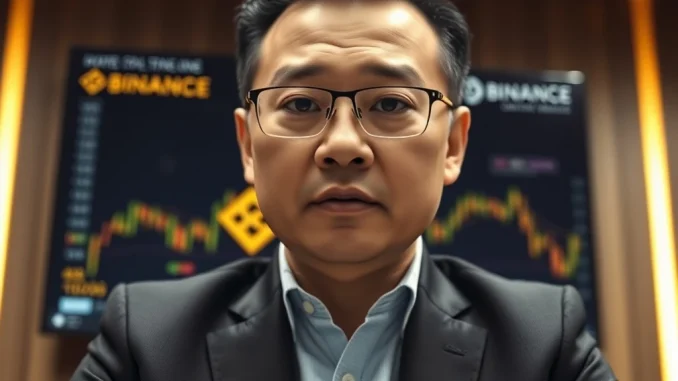
Global, November 2025: In a move signaling a robust defense of his exchange’s reputation, Binance founder Changpeng Zhao announced a pivotal Ask Me Anything session. The Changpeng Zhao AMA, scheduled for later today, aims directly to counter what he labels as Fear, Uncertainty, and Doubt (FUD) propagated by competitors. This development follows pointed public criticism from rival exchange leaders, casting a spotlight on deepening fissures within the global cryptocurrency industry regarding governance and market stability.
Changpeng Zhao AMA Sets Stage for Industry Rebuttal
Changpeng Zhao, commonly known as CZ, utilized his substantial platform on X to announce the live session. He framed the upcoming discussion as a necessary response to recurring attacks. “This is not the first such attack and likely will not be the last,” Zhao stated, adding a promise to delve into the specific reasons behind the market events of October 10. His core message emphasized resilience: while competitors focus their efforts on Binance, the exchange intends to maintain its growth trajectory. Industry analysts immediately interpreted this as a classic CZ strategy—transparent, direct communication with the user base to preempt narrative control by critics.
The decision to host an AMA is a tactical one. For years, CZ has used this format to build trust, demystify complex situations, and project stability during periods of volatility. Unlike prepared statements or press releases, an AMA carries an element of real-time accountability, though questions are typically vetted. This session’s announced focus on “competitor FUD” marks a notably aggressive posture, shifting from general market education to targeted rebuttal.
Contextualizing the Criticism: The OKX Perspective
The catalyst for Zhao’s announcement is widely understood to be recent commentary from Star Xu, founder and CEO of major global crypto exchange OKX. While Xu did not name Binance or Zhao directly, the context and timing of his statements left little room for alternative interpretation. Xu argued that the cryptocurrency sector is underestimating the severe and lasting damage caused by the October 10 market crash. He described it as an event that caused “real and lasting damage” to investor portfolios and ecosystem projects.
More critically, Xu levied accusations about leadership failings. He claimed some industry leaders are neglecting their role in setting a positive example. Instead, he alleged a pursuit of short-term profits through harmful practices. Specifically, Xu’s statement included three grave charges:
- Repeated use of Ponzi-like economic schemes.
- Promotion of unsustainable get-rich-quick narratives.
- Manipulation of prices for low-quality tokens to lure unsuspecting users.
Xu concluded with a stark warning: such practices fundamentally erode user trust and, if left unchecked, will inflict harm on the entire digital asset industry. This rhetoric transcends typical competitive jousting, touching on existential issues of regulatory scrutiny and mainstream adoption.
The October 10 Flashpoint: A Market Under Microscope
Understanding the current tension requires a brief analysis of the October 10 market event. On that date, a sudden and sharp correction swept across major cryptocurrency markets. While not a singular “crash” in historical terms, the rapid double-digit percentage declines in several major assets over a 24-hour period triggered significant liquidations in derivative markets and sparked panic among retail holders.
The immediate causes appeared multifaceted:
| Proposed Factor | Description | Industry Consensus |
|---|---|---|
| Macroeconomic Pressure | Spiking traditional bond yields and risk-off sentiment in equity markets. | Considered a primary contributing driver. |
| Large Wallet Movements | Unusual transfers from dormant wallets to exchanges, signaling potential sell pressure. | Noted by chain analysts, impact debated. |
| Derivative Market Cascade | A high volume of leveraged long positions being liquidated, accelerating the downturn. | Widely acknowledged as an amplifier. |
| Illiquid Altcoin Markets | Thin order books for smaller-cap tokens exacerbating price swings. | Accepted as a perennial structural issue. |
In the weeks since, a narrative battle has ensued. One camp, represented by voices like Xu, views the event as a symptom of deeper, systemic rot—specifically, the promotion of over-leveraged speculation and fundamentally weak projects. The other camp, which CZ now publicly champions, often frames such events as inevitable, if painful, aspects of a nascent, free-market digital asset ecosystem, blaming volatility on broader financial conditions rather than specific actor misconduct.
The Broader Landscape of Crypto Exchange Competition
The public exchange between figures representing Binance and OKX is not an isolated incident. It reflects an industry in a phase of intense maturation and competition. Following a period of regulatory settlements and increased compliance spending, major exchanges are now competing not just on trading volume, but on perceived trust, security, and long-term viability.
Binance, while still holding a dominant market share in spot trading, has navigated a challenging regulatory landscape across multiple jurisdictions. Its strategy has involved embracing compliance, reducing its global footprint in some areas, and focusing on licensed operations. OKX, meanwhile, has aggressively positioned itself as a compliant alternative, securing key licenses and marketing heavily on its regulatory-first approach. This public spat, therefore, can also be seen as a clash of strategic postures: Binance’s narrative of resilient growth through community connection versus OKX’s narrative of responsible stewardship and institutional-grade reliability.
The stakes are high. As jurisdictions like the European Union implement comprehensive frameworks like MiCA (Markets in Crypto-Assets), and the United States continues its enforcement-led approach, exchanges are acutely aware that public perception can directly influence regulatory outcomes. Accusations of market manipulation or consumer harm are among the most serious that can be leveled, making Xu’s comments and Zhao’s planned response far more than a corporate rivalry.
Historical Precedents and Communication Strategies
This is not the first time CZ has used direct communication to address crises. The approach has historical precedents within the company:
- 2019-2020: Regular “Ask CZ” sessions helped guide users through early regulatory inquiries and security incidents.
- 2022 Market Collapse: Transparent communication about exposure to failed entities like FTX built significant user goodwill compared to less-forthcoming competitors.
- 2023-2024 Regulatory Settlements: Public statements and AMAs were used to frame settlements as a path to a more stable, compliant future.
The consistent thread is a preference for controlling the narrative through accessibility. The announced AMA on competitor FUD fits this pattern but raises the stakes by explicitly naming the source of pressure as rivals, potentially escalating the war of words.
Potential Implications for the Crypto Ecosystem
The outcome of this public disagreement carries weight for all market participants. A clear, factual rebuttal from Zhao that addresses the specific allegations about October 10 could reinforce Binance’s position and calm nervous users. Conversely, if the responses are perceived as evasive or overly defensive, it may lend credibility to the criticisms and empower other competitors to voice similar concerns.
For regulators watching, the exchange provides a window into how major industry players view their own roles in market stability. Accusations of Ponzi schemes and price manipulation are red flags for enforcement agencies. How Zhao navigates these topics will be scrutinized not just by users, but by officials in multiple capitals. Furthermore, for the average investor, this debate highlights the critical importance of conducting thorough due diligence. It underscores that market volatility has complex causes, and that the health of the platforms they use is a subject of intense debate among the platforms themselves.
Conclusion
The upcoming Changpeng Zhao AMA represents a critical moment in the ongoing narrative shaping the cryptocurrency industry. More than a simple corporate response, it is a strategic move to address direct and damaging criticism from a major competitor, OKX’s Star Xu, concerning the October 10 market crash and broader ethical practices. This public clash underscores the industry’s growing pains as it transitions from a wild-west frontier to a more regulated, competitive financial sector. The session’s content will be dissected for insights into Binance’s strategy, the validity of the criticisms leveled, and the future tone of competition among crypto’s largest exchanges. Ultimately, the focus on competitor FUD highlights the intense battle for trust, which remains the most valuable and fragile commodity in the digital asset space.
FAQs
Q1: What is the main purpose of Changpeng Zhao’s announced AMA?
The primary purpose is to publicly address and counter what Zhao describes as Fear, Uncertainty, and Doubt (FUD) spread by competitors, specifically related to criticisms about Binance’s role in the October 10 market downturn and broader industry practices.
Q2: Who is Star Xu and what did he say?
Star Xu is the founder and CEO of the global cryptocurrency exchange OKX. In recent comments, he stated the industry is underestimating the damage of the October 10 crash and accused some unnamed leaders of promoting harmful, Ponzi-like schemes, get-rich-quick narratives, and manipulating low-quality tokens for short-term profit.
Q3: What happened in the cryptocurrency market on October 10?
On October 10, the crypto market experienced a sharp, rapid correction with double-digit percentage declines for several major assets. The causes are viewed as a combination of broader macroeconomic pressures, large wallet movements, cascading liquidations in derivative markets, and illiquid conditions in altcoin markets.
Q4: Why is this public disagreement significant?
It is significant because it involves the founders of two of the world’s largest crypto exchanges publicly debating issues of market health, ethics, and leadership. This can influence user trust, regulatory perceptions, and the competitive landscape of the entire industry.
Q5: How has CZ historically used AMA sessions?
Changpeng Zhao has frequently used Ask Me Anything sessions as a core communication strategy to build transparency and trust directly with the Binance community. He has employed them during past market crises, regulatory challenges, and security incidents to control the narrative and provide reassurance.