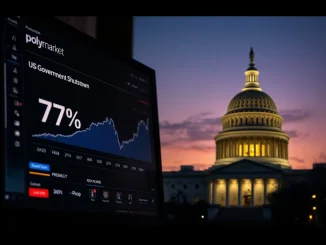
Washington D.C., October 26, 2025: The immediate risk of a partial government shutdown escalated dramatically today. The US Senate blocked a key procedural vote on a stopgap funding measure passed by the House of Representatives. This decisive rejection creates a critical impasse with a Friday midnight deadline looming. Lawmakers now have just days to bridge a deep partisan divide or trigger the first federal funding lapse in over two years.
Senate Rejects House Spending Bill in Key Procedural Vote
The Senate voted 52-48 to block advancement of the House’s continuing resolution, a bill intended to fund federal agencies for 45 days. This procedural vote, known as a cloture motion, required 60 votes to proceed. The failure signals strong bipartisan opposition to the House bill’s provisions in the upper chamber. Senate Majority Leader Charles Schumer (D-NY) called the House bill “a non-starter” and “a vehicle for extreme policies.” He emphasized the Senate’s intent to craft a clean, bipartisan extension. Conversely, House Speaker Mike Johnson (R-LA) stated the Senate’s action “ignores the will of the people” and the need for fiscal restraint. The House bill contained several contentious policy riders related to border security and spending cuts that Democrats and some moderate Republicans in the Senate found unacceptable.
Understanding the Path to a Government Shutdown
A government shutdown occurs when Congress fails to enact appropriations legislation to fund government operations. Non-essential federal functions cease, while essential services continue. The current fiscal year began on October 1, funded by a short-term measure that expires this Friday. The legislative process requires identical bills to pass both the House and Senate before reaching the President’s desk. The current deadlock highlights the fractured nature of this Congress.
- The House Bill: A 45-day continuing resolution with spending cuts and immigration policy changes.
- The Senate Position: A demand for a “clean” extension without policy riders to allow more negotiation time.
- The Sticking Points: Disagreements are not just about spending levels but also policy directives attached to the funding.
Historical Context of Budget Standoffs
Budget impasses leading to shutdowns are not new, but their frequency and political dynamics have evolved. The most recent full shutdown lasted 35 days from December 2018 to January 2019, the longest in history. Historically, shutdowns have resulted in significant economic disruption, delayed government services, and furloughs for hundreds of thousands of federal employees. Analysts often note that these events rarely produce clear political winners and often damage public trust in governmental institutions. The current standoff echoes patterns seen in past divided governments, where one chamber uses the budget deadline as leverage for policy goals.
Immediate Consequences of a Funding Lapse
If a deal is not reached by 11:59 PM ET on Friday, a partial shutdown will begin Saturday morning. The Office of Management and Budget would direct agencies to execute their shutdown plans. The impacts would be swift and widespread.
- Federal Employees: “Non-essential” personnel are furloughed without pay. “Essential” workers, like air traffic controllers and TSA agents, must work without pay until funding is restored.
- Public Services: National parks and museums would likely close. Processing of passports, small business loans, and certain permits would halt.
- Economic Ripple Effects: Economists estimate each week of a shutdown can shave 0.1-0.2% off quarterly GDP growth, primarily due to lost output from furloughed workers and reduced government spending.
Military and public safety personnel continue working, but their pay is delayed. Programs with mandatory funding, like Social Security and Medicare, also continue, though administrative support may be strained.
The Political Calculus and Potential Resolutions
Behind the public statements, intense negotiations are underway. Several potential paths exist to avoid a shutdown. The most likely is a short-term, clean continuing resolution from the Senate, which would require House Speaker Johnson to bring it to the floor with Democratic support, bypassing his party’s right flank. Another option is a bill that strips the policy riders but includes disaster relief funding to attract broader support. The timeline is punishing. The Senate needs unanimous consent to move quickly, and any single senator can slow the process. The House rules also present hurdles for swift action. Leadership in both parties is gauging whether the political pain of a shutdown outweighs the pain of compromising with the opposition.
Expert Analysis on the Stalemate
“This is a classic game of chicken played with the federal government as the vehicle,” said Dr. Eleanor Vance, a political scientist at Georgetown University. “The House leadership is trying to demonstrate strength to its base, while the Senate is holding the line on what it sees as extraneous policy. The variable is always which side believes the public will blame them for the disruption. Historically, the public tends to blame all parties, but the party controlling the House often bears a slightly larger share.” She notes that the narrow majorities in both chambers give small factions outsized influence, making compromise more difficult.
Conclusion
The Senate’s rejection of the House spending bill has undeniably increased the government shutdown risk to its highest level this fiscal year. With the deadline now just days away, the pressure on congressional leaders is immense. The coming hours will test whether pragmatic bipartisan coalitions can form to pass a stopgap measure or whether the nation will brace for another disruptive funding lapse. The outcome will have immediate consequences for millions of Americans and signal the governing capacity of the current Congress for the remainder of its term.
FAQs
Q1: What exactly did the Senate vote on?
The Senate voted on a “cloture” motion to end debate and proceed to a final vote on the House-passed continuing resolution. Failing to get 60 votes means the bill is effectively blocked in the Senate.
Q2: What happens to federal workers during a shutdown?
Employees deemed “non-essential” are furloughed without pay. “Essential” employees must work without pay until funding is restored. Congress has historically approved back pay for all furloughed workers after a shutdown ends.
Q3: Can the President prevent a shutdown?
The President cannot unilaterally fund the government. His role is to sign or veto legislation passed by Congress. He can urge negotiations and outline priorities, but the constitutional power of the purse rests with Congress.
Q4: How long could a potential shutdown last?
There is no predetermined length. It lasts until Congress passes and the President signs appropriations legislation. Past shutdowns have ranged from a single day to over a month.
Q5: Are all government functions affected?
No. Mandatory spending programs (Social Security, Medicare), activities essential to national security and public safety, and some independently funded services continue. The disruption is significant but partial.