Global, March 2025: SpoonOS, an innovative AI operating system built on the Neo Layer 1 blockchain, has launched a transformative Web3 Skill Marketplace that promises to reshape how developers create and deploy artificial intelligence agents. This platform introduces a modular approach to AI development, allowing for reusable skills that could accelerate innovation while providing new utility for the Neo ecosystem’s native tokens.
SpoonOS Web3 Skill Marketplace Architecture and Functionality
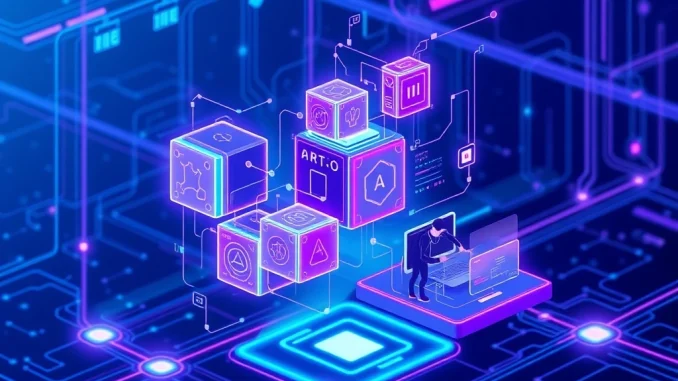
The newly launched marketplace represents a significant evolution in decentralized AI infrastructure. Unlike traditional AI development platforms that require building agents from scratch, SpoonOS enables developers to construct AI agents using pre-verified, modular components called “skills.” These skills function as building blocks that can be combined, modified, and reused across different AI applications. The marketplace operates on Neo’s blockchain, ensuring transparency in skill provenance, usage tracking, and contributor compensation.
Each skill in the marketplace undergoes a verification process before becoming available to developers. The verification system employs both automated testing protocols and community validation mechanisms. This dual approach aims to maintain quality standards while leveraging collective intelligence. Verified skills receive trust scores based on performance metrics, usage frequency, and community feedback, creating a reputation system that guides developers toward reliable components.
Neo Blockchain Integration and Token Utility Enhancement
SpoonOS’s decision to build on the Neo blockchain provides several technical advantages for the Skill Marketplace. Neo’s support for multiple programming languages, including C#, Java, and Python, lowers the barrier to entry for developers from diverse backgrounds. The platform utilizes Neo’s digital identity system to establish verifiable credentials for contributors, while NeoFS (distributed file storage) handles the storage of skill components and training data.
The marketplace introduces a comprehensive incentive mechanism designed to benefit multiple participant categories. Skill creators earn rewards when their modules are utilized in AI agent development, with compensation proportional to usage metrics and performance outcomes. Verifiers receive incentives for accurately assessing skill functionality and identifying potential issues. The system employs both NEO and GAS tokens for different transactional purposes, potentially increasing demand for both assets within the Neo ecosystem.
- NEO Token Utility: Governance participation, staking for network security, and premium marketplace access
- GAS Token Utility: Transaction fees, skill acquisition payments, and verification rewards
- Hybrid Model: Some transactions utilize both tokens for different functional aspects
Comparative Analysis: SpoonOS vs. Traditional AI Development Platforms
| Feature | SpoonOS Web3 Marketplace | Traditional AI Platforms |
|---|---|---|
| Development Approach | Modular, reusable skills | Custom-built from scratch |
| Verification Process | Community-driven with incentives | Centralized quality control |
| Compensation Model | Token-based proportional rewards | Fixed licensing or subscription |
| Ownership Rights | Clear blockchain provenance | Complex IP agreements |
| Interoperability | Designed for cross-application use | Often platform-specific |
Technical Implementation and Development Workflow
The SpoonOS Skill Marketplace employs a sophisticated technical architecture that separates concerns between skill storage, execution environments, and verification systems. Skills are packaged as standardized containers that include both the functional code and metadata describing capabilities, requirements, and compatibility information. When developers combine skills to create AI agents, the platform automatically handles dependency resolution and compatibility checking.
Development on the platform follows a structured workflow. First, creators design skills according to published specifications and submit them to the marketplace. Next, verifiers test these submissions against standardized benchmarks and real-world scenarios. Approved skills become available in the marketplace catalog, where developers can browse, compare, and integrate them into their AI agents. Finally, deployed agents can themselves contribute data back to improve existing skills or inspire new ones, creating a virtuous cycle of improvement.
Historical Context: The Evolution of Modular AI Development
The concept of modular AI development has roots in software engineering principles dating back to the 1970s, when computer scientists first promoted the idea of reusable software components. In artificial intelligence research, modular approaches gained prominence in the 1990s with expert systems that separated knowledge bases from inference engines. More recently, the machine learning community has explored transfer learning and model zoos, where pre-trained models serve as starting points for new applications.
SpoonOS’s innovation lies in combining these modular concepts with blockchain technology to create transparent, incentivized collaboration. Previous attempts at AI marketplaces often struggled with quality control, fair compensation, and intellectual property concerns. By leveraging Neo’s blockchain capabilities, SpoonOS addresses these challenges through verifiable provenance, automated smart contracts for payments, and clear attribution systems.
Market Implications and Future Development Roadmap
The launch of the Web3 Skill Marketplace arrives during a period of significant growth in both AI adoption and blockchain integration. Industry analysts note increasing demand for more efficient AI development tools as businesses across sectors seek to implement artificial intelligence solutions. The modular approach could potentially reduce development timelines and costs while improving reliability through community-verified components.
SpoonOS has outlined a multi-phase development roadmap for the marketplace. Initial focus centers on expanding the skill library across common AI application domains, including natural language processing, computer vision, and predictive analytics. Subsequent phases will introduce more advanced features such as skill composition tools, automated testing frameworks, and integration with external AI services. The company has committed to supporting educational initiatives to help developers transition to the modular development paradigm.
Within the Neo ecosystem, the marketplace represents a strategic application that demonstrates practical utility for blockchain technology beyond financial transactions. By creating tangible value through AI development tools, SpoonOS aims to attract developers who might not previously have engaged with blockchain platforms. This approach aligns with broader industry trends toward “blockchain for good” applications that solve real-world problems rather than focusing solely on speculative aspects.
Conclusion
The SpoonOS Web3 Skill Marketplace introduces a novel approach to AI agent development that combines modular design principles with blockchain-based incentives and verification. Built on the Neo network, this platform could accelerate AI innovation while providing new utility for NEO and GAS tokens. As the marketplace evolves, its success will depend on attracting a critical mass of developers, maintaining skill quality through effective verification, and delivering tangible value compared to traditional development approaches. The initiative represents a significant step toward more collaborative, transparent, and efficient artificial intelligence development ecosystems.
FAQs
Q1: What exactly is the SpoonOS Web3 Skill Marketplace?
The SpoonOS Web3 Skill Marketplace is a decentralized platform built on the Neo blockchain where developers can create, share, and utilize modular AI components called “skills” to build artificial intelligence agents more efficiently.
Q2: How does the verification process work for AI skills?
The verification process combines automated testing against standardized benchmarks with community evaluation. Verified contributors test submitted skills for functionality, reliability, and security before they become available in the marketplace, earning incentives for accurate assessments.
Q3: What role do NEO and GAS tokens play in the marketplace?
NEO tokens are used for governance participation and premium access, while GAS tokens facilitate transactions, skill purchases, and verification rewards. The dual-token model creates multiple utility scenarios for both assets within the Neo ecosystem.
Q4: Can traditional AI developers use this platform without blockchain experience?
Yes, SpoonOS has designed the platform to abstract away much of the blockchain complexity. Developers primarily interact with familiar programming interfaces while the platform handles blockchain transactions, smart contracts, and token mechanics automatically.
Q5: How does this marketplace compare to existing AI development platforms?
Unlike traditional platforms that require building from scratch, SpoonOS emphasizes reusable, modular components. The blockchain foundation adds transparency in provenance, fair compensation through smart contracts, and community-driven quality control not typically found in centralized alternatives.