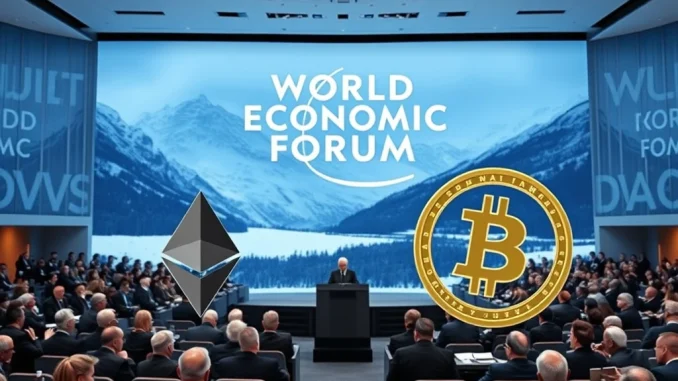
Davos, Switzerland, January 2025: The Trump administration has forcefully reiterated its ambition to position the United States as the undisputed global leader in cryptocurrency and digital assets. This bold vision was a central theme at the recent World Economic Forum (WEF) in Davos, where key advisors outlined a policy framework designed to normalize digital currencies worldwide while fostering a competitive yet symbiotic relationship between traditional finance and crypto-native firms. The commitment signals a potentially transformative shift in the U.S. regulatory and economic landscape for blockchain technology.
Trump’s Crypto Capital Vision Takes Center Stage at Davos
In a detailed interview with CoinDesk, Patrick Witt, the executive director of the White House Digital Asset Advisory Committee, provided critical insights into the administration’s strategic posture. Witt confirmed that the high-profile forum served as a deliberate platform to communicate the U.S.’s renewed and assertive stance on cryptocurrency. He stated that President Trump personally reaffirmed his administration’s promise to establish the United States as the “world’s crypto capital,” a goal first articulated during the 2024 election campaign. This declaration moves beyond political rhetoric, aiming to translate into concrete regulatory and legislative action. The administration’s approach, as described by Witt, is not to replace the existing financial system but to create an environment where innovation can thrive alongside it, ultimately driving consumer benefits and cementing U.S. technological supremacy.
The Regulatory Path to a Symbiotic Financial Ecosystem
The core of the administration’s strategy hinges on providing long-awaited regulatory clarity. For years, the U.S. cryptocurrency industry has operated under a patchwork of state regulations and evolving guidance from multiple federal agencies, including the Securities and Exchange Commission (SEC) and the Commodity Futures Trading Commission (CFTC). This uncertainty has been cited by numerous executives as a primary reason for business relocation to jurisdictions with clearer rules, such as Singapore, the European Union under its Markets in Crypto-Assets (MiCA) regulation, and parts of the Middle East. The Trump administration’s stated goal is to reverse this trend by establishing a coherent national framework. This framework seeks a “symbiotic relationship,” a term Witt emphasized, where traditional banks and new digital asset firms can coexist, compete, and even collaborate. Proponents argue this competition will lower costs, increase access to financial services, and accelerate the development of new products for American consumers.
- Clarity for Institutions: Clear rules would allow major banks and asset managers to engage with digital assets more confidently, potentially leading to broader adoption and integration.
- Innovation Safeguards: A defined regulatory perimeter aims to protect consumers and ensure market integrity without stifling the technological experimentation that defines the crypto sector.
- Global Competitiveness: By setting a clear standard, the U.S. hopes to attract global investment and talent, countering the regulatory head start gained by other nations.
Stablecoins: The “Gateway” to Global Finance Reform
A particularly revealing element of Witt’s commentary was his characterization of stablecoins—digital tokens pegged to stable assets like the U.S. dollar—as a “gateway drug to global finance.” This analogy underscores the administration’s view that stablecoins represent a critical, pragmatic entry point for mainstream financial adoption of blockchain technology. Unlike more volatile cryptocurrencies, stablecoins offer the promise of fast, cheap, and borderless transactions while maintaining price stability, making them suitable for payments, remittances, and as a base currency for trading. The U.S. is actively working on legislation to provide a federal charter for payment stablecoin issuers, which would establish reserve requirements, redemption guarantees, and operational standards. Successfully regulating this sector is seen as a foundational step that could pave the way for broader acceptance of more complex digital assets and decentralized finance (DeFi) applications, solidifying the dollar’s dominance in the digital age.
Historical Context and Global Implications
The Davos announcement marks a significant evolution in the U.S. government’s relationship with cryptocurrency. The journey has been marked by skepticism, enforcement actions, and cautious exploration. Under previous administrations, regulatory focus often centered on consumer protection and preventing illicit finance, sometimes creating an adversarial dynamic with the industry. The Trump administration’s current posture represents a more proactive, economy-focused embrace. This shift does not occur in a vacuum. Globally, central bank digital currencies (CBDCs) are in advanced stages of development in China, the European Union, and elsewhere. Furthermore, nations like El Salvador have adopted Bitcoin as legal tender. The U.S. strategy, as outlined at Davos, appears to favor a private-sector-led innovation model, centered on the dollar via stablecoins, over a government-issued digital dollar in the immediate term. The implications are vast, affecting cross-border trade, monetary policy transmission, and the future architecture of the international financial system.
Conclusion: A Defining Moment for US Crypto Policy
The reaffirmation of the goal to make the United States the world’s crypto capital at Davos 2025 represents a defining moment in the integration of digital assets into the mainstream global economy. The Trump administration’s framework, balancing innovation with responsible regulation through a symbiotic model, sets a clear directional marker. The focus on providing regulatory clarity, particularly for stablecoins as a foundational technology, addresses a key industry demand. The ultimate success of this vision will depend on the passage of concrete legislation, effective inter-agency coordination, and the ability to foster an environment where both Wall Street and Silicon Valley-style crypto innovators can thrive. If realized, this policy could significantly reshape the financial landscape, bolster U.S. technological leadership, and determine whether the next chapter of finance is written under American guidance. The world is watching to see if the promise made at Davos translates into actionable policy that secures the United States’ position as the definitive crypto capital.
FAQs
Q1: What did the Trump administration announce regarding cryptocurrency at Davos?
The administration, through advisor Patrick Witt, reaffirmed its commitment to establishing the United States as the global leader in cryptocurrency (the “crypto capital”) and outlined a policy of fostering a symbiotic relationship between traditional finance and crypto firms through regulatory clarity.
Q2: What is meant by a “symbiotic relationship” in finance?
It refers to a policy goal where established traditional financial institutions (like banks) and new cryptocurrency or blockchain companies can coexist, compete, and collaborate under clear rules, rather than one sector displacing the other.
Q3: Why are stablecoins considered so important in this policy?
Advisor Witt described stablecoins as a “gateway drug to global finance” because their price stability and utility for payments make them a practical entry point for widespread adoption. Regulating them is seen as a critical first step for broader crypto integration.
Q4: How does this U.S. stance compare to other countries’ approaches?
The U.S. is emphasizing a private-sector-led model (e.g., dollar-backed stablecoins), contrasting with approaches like China’s state-controlled digital yuan (CBDC) or the EU’s comprehensive MiCA regulation. The goal is to attract global business by offering clearer rules.
Q5: What are the potential benefits of the U.S. becoming a “crypto capital”?
Potential benefits include attracting global investment and tech talent, driving financial innovation, reducing consumer costs through competition, strengthening the U.S. dollar’s role in digital finance, and boosting economic growth in the fintech sector.