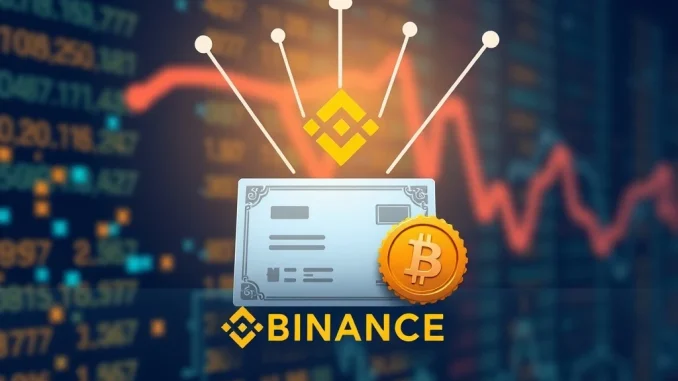
Global, March 2025: Binance, the world’s largest cryptocurrency exchange by trading volume, is preparing to reintroduce tokenized equities to its platform, marking a significant strategic pivot five years after it first launched and then suspended the product. This move represents one of the most substantial efforts to date to bridge traditional financial markets with the digital asset ecosystem, offering users exposure to publicly listed companies through blockchain-based instruments. The planned return comes amid a rapidly expanding tokenized asset market and evolving regulatory landscapes across major jurisdictions.
Binance Tokenized Equities: A Strategic Revival
According to company statements and industry reports, Binance is actively developing the infrastructure to support the return of tokenized stock products. A company spokesperson confirmed to financial publications that these instruments are a core component of Binance’s strategy to connect conventional equity markets with digital assets. The exchange aims to expand investment options for its global user base while maintaining rigorous compliance with existing and emerging regulatory standards. This initiative follows Binance’s recent expansion into other tokenized real-world assets (RWAs) and the launch of regulated traditional finance perpetual contracts settled in stablecoins.
The technical and legal frameworks for this reintroduction appear more mature than during the initial 2021 launch. Industry analysts note that blockchain interoperability, custody solutions, and regulatory reporting tools have advanced considerably. Consequently, Binance can potentially offer a more robust product. The exchange’s interface underwent subtle updates in late 2024 that hinted at the return of digital stock products, including placeholder sections for “stock tokens” within certain institutional trading dashboards.
The History and Hurdles of Digital Stocks on Binance
Binance first ventured into tokenized equities in April 2021, launching zero-commission trading for digital tokens that mirrored the price of major companies like Tesla (TSLA). These tokens, offered in partnership with investment firm CM-Equity, represented a depository receipt of the underlying share. Users could trade fractions of a tokenized stock with cryptocurrency pairs. The platform later expanded to include other technology giants, attracting immediate retail interest.
However, regulatory challenges emerged swiftly. By July 2021, financial authorities in several European jurisdictions, notably Germany’s Federal Financial Supervisory Authority (BaFin), raised concerns. Regulators questioned whether these products constituted securities under local law and if Binance had the proper licenses to offer them. Shortly after, the UK’s Financial Conduct Authority (FCA) issued a consumer warning and restricted Binance Markets Limited, the entity intended to oversee UK operations. Facing this mounting pressure, Binance announced the wind-down of its stock token offerings that same month, ceasing all trading by October 2021.
The Explosive Growth of the Tokenized Asset Market
The landscape for tokenized assets has transformed dramatically since 2021. Data from analytics platform Token Terminal indicates the total market capitalization for tokenized assets now exceeds $324 billion. When excluding stablecoins—which themselves are a form of tokenized fiat currency—the market for other tokenized RWAs stands at approximately $19.65 billion. Within this segment, tokenized equities, gold, and treasury products have seen the most significant growth.
Investment firms like ARK Invest project that the total value of tokenized assets on blockchain networks could reach a staggering $11 trillion by 2030. This growth is driven by several key factors:
- Increased Institutional Adoption: Major financial institutions, including BlackRock and JPMorgan, are actively exploring blockchain for asset tokenization.
- Technological Maturity: Layer-2 scaling solutions and more secure cross-chain protocols have improved the efficiency and security of tokenizing real-world assets.
- Regulatory Clarity (in some regions): Frameworks like the EU’s Markets in Crypto-Assets (MiCA) regulation provide clearer rules for issuing and trading crypto-assets.
- Investor Demand for Accessibility: Tokenization allows for fractional ownership, 24/7 trading, and reduced intermediary costs, appealing to a new generation of investors.
Regulatory Crossroads: The U.S. and Global Landscape
Binance’s relaunch plans coincide with a critical period of regulatory development worldwide, particularly in the United States. U.S. lawmakers are currently debating comprehensive frameworks to regulate digital assets. The Senate Committee on Agriculture, Nutrition, and Forestry and the Senate Committee on Banking, Housing, and Urban Affairs have been reviewing competing proposals. The Agriculture Committee’s draft bill, known as the Digital Commodities Consumer Protection Act, aims to define the jurisdiction of the Commodity Futures Trading Commission (CFTC) over digital commodity markets.
However, the path is not smooth. In January 2025, Coinbase CEO Brian Armstrong publicly criticized specific legislative language, warning that poorly drafted provisions could inadvertently ban tokenized versions of traditional securities. Armstrong argued that a flawed law would be more damaging than no law at all, stifling innovation. The debate highlights the delicate balance regulators must strike between protecting investors and fostering technological advancement in financial markets.
What Tokenized Equities Mean for Investors and Markets
The reintroduction of tokenized equities by a major exchange like Binance could have profound implications. For investors, it promises greater accessibility and flexibility. Users could gain exposure to blue-chip stocks without needing a traditional brokerage account, using crypto holdings as collateral. Trading could occur outside standard market hours, and fractional investing would lower the entry barrier for expensive stocks.
For the broader market, successful adoption could accelerate the convergence of TradFi and DeFi. It would validate blockchain’s utility for representing and transferring ownership of traditional assets. However, significant questions remain regarding settlement finality, corporate action processing (like dividends and stock splits), and investor protections in the event of issuer bankruptcy or exchange insolvency. Binance’s approach to these operational and legal nuances will be closely watched by the industry.
Conclusion: A Calculated Move in a Maturing Ecosystem
Binance’s planned return to tokenized equities is a calculated move that reflects both the exchange’s product ambition and the maturation of the underlying tokenization ecosystem. Unlike the 2021 attempt, today’s environment features more advanced technology, clearer (though still evolving) regulations, and demonstrated market demand. The success of this initiative will depend not only on Binance’s execution but also on how global regulators, particularly in Europe and the U.S., choose to classify and oversee these hybrid financial instruments. If successful, Binance tokenized equities could become a landmark product, further blurring the lines between traditional stock markets and the digital asset economy.
FAQs
Q1: What are tokenized equities?
Tokenized equities are digital tokens on a blockchain that represent ownership in a traditional publicly traded company. Each token is pegged to the value of a real stock, allowing it to be traded like a cryptocurrency while tracking the underlying share price.
Q2: Why did Binance stop offering tokenized stocks in 2021?
Binance suspended its stock token service in mid-2021 due to increased regulatory scrutiny, particularly from financial authorities in Germany and the United Kingdom. Regulators questioned whether Binance had the proper licenses to offer these securities-like products.
Q3: How is the 2025 attempt different from 2021?
The current effort benefits from several years of technological advancement in blockchain, a larger and more mature tokenized asset market, and more defined (though still developing) regulatory frameworks in key jurisdictions like the European Union.
Q4: Are tokenized equities the same as buying real stocks?
No, they are a derivative product. When you buy a tokenized equity, you typically own a token that mirrors the stock’s price, not the actual share itself with its associated shareholder rights (like voting). The legal structure is often that of a depository receipt.
Q5: What are the main risks of trading tokenized equities?
Key risks include regulatory uncertainty, potential illiquidity compared to the primary stock exchange, counterparty risk associated with the issuer of the token, and the technological risk of the underlying blockchain platform or smart contracts.