In a dramatic display of market sentiment overpowering fundamentals, the obscure Solana-based memecoin PENGUIN skyrocketed by an astonishing 564% within a single 24-hour period on January 20, 2026. This explosive rally, which propelled the token’s market capitalization from $387,000 to over $136 million, was triggered not by a technological breakthrough or corporate partnership, but by a seemingly innocuous social media post from the White House. The event serves as a potent case study in how viral narratives and the attention economy can create seismic shifts in the cryptocurrency landscape, often with breathtaking speed and little warning.
PENGUIN Token’s Meteoric Rise and the Viral Catalyst
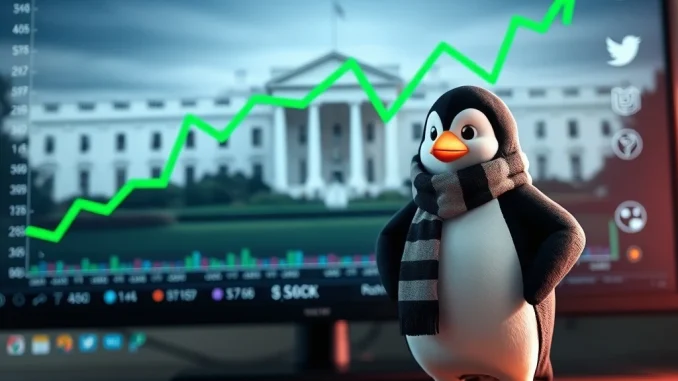
The catalyst for the PENGUIN token’s unprecedented surge was a post on platform X from the official White House account. The post featured an image of President Trump walking in snow, accompanied by a penguin. Although the post was likely intended as lighthearted winter-themed content, the cryptocurrency community swiftly and decisively linked it to the pre-existing, low-capacity PENGUIN token on the Solana blockchain. Consequently, a massive speculative wave ensued almost immediately.
Data from on-chain analytics and decentralized exchange (DEX) aggregators paints a clear picture of the frenzy. Trading volume for PENGUIN on Solana DEXs erupted from under $100,000 to a staggering $244 million. Furthermore, the token’s price soared from a fraction of a cent to approximately $0.14 at its peak. Crucially, this occurred without any official announcement from the token’s creators, updates to its smart contract, or changes to its underlying protocol. The surge was purely driven by market perception and coordinated social momentum.
Key Metrics of the PENGUIN Frenzy
The table below summarizes the core data points from the event, illustrating the scale of the movement:
| Metric | Pre-Surge (Approx.) | Peak (24-Hour Period) | Change |
|---|---|---|---|
| Price | ~$0.0002 | $0.14 | +564% |
| Market Capitalization | $387,000 | $136 Million | +35,000%+ |
| 24h DEX Volume (Solana) | < $100,000 | $244 Million | +244,000%+ |
| Primary Catalyst | White House Social Media Post (Image) | N/A | |
Contextualizing the Surge Within Memecoin and Solana Trends
This isolated explosion did not occur in a vacuum. It happened against a backdrop of a tentative resurgence in the broader memecoin category in early 2026. After a significant correction phase throughout much of 2024 and 2025, the total market capitalization of memecoins had briefly rebounded by approximately 23%. Established Solana-based memecoins like BONK and WEN were showing signs of renewed interest. However, the PENGUIN event dramatically amplified and refocused this activity.
The episode also underscored Solana’s continued dominance as the primary infrastructure for high-speed, low-cost memecoin speculation. During the peak of the PENGUIN trading, volumes on Solana DEXs briefly surpassed those on Ethereum, a notable occurrence highlighting the network’s appeal for this specific use case. The technical architecture of Solana—with its low transaction fees and fast block times—directly facilitates the rapid buying and selling that characterizes such speculative frenzies.
- Network Effect: Over a hundred new or relaunched memecoins emerged on Solana, Ethereum, and Base within 48 hours of PENGUIN’s spike, demonstrating a clear copycat effect.
- Liquidity vs. Volatility: Analysts note that while these events inject short-term liquidity into blockchain ecosystems, they also exponentially increase volatility and risk for retail participants.
- Narrative Dominance: The event reaffirmed that in certain crypto market segments, a compelling viral narrative can completely overshadow traditional fundamental analysis for a period.
Expert Analysis on Market Dynamics and Investor Implications
Market strategists and behavioral finance experts point to the PENGUIN surge as a textbook example of several interconnected phenomena. First, it demonstrates the powerful role of social proof and FOMO (Fear Of Missing Out) in decentralized markets where information spreads at the speed of social media. Second, it highlights the modern attention economy, where a single image or post from a high-profile source can be monetized almost instantaneously by market participants, regardless of its original intent.
From a technical perspective, the lack of smart contract changes provided a perverse sense of safety for some traders, as it removed the risk of a malicious contract upgrade. However, the extreme volatility and typically low liquidity in the initial phases of such pumps create immense risk. Early buyers can reap spectacular gains, while those entering later often face steep, rapid losses when the momentum reverses—a pattern historically observed in countless similar memecoin cycles.
The Regulatory and Ecosystem Perspective
This event inevitably draws attention from regulatory observers. The sheer speed and magnitude of value creation—and potential destruction—from an asset with no cash flow, utility, or formal team underscores the ongoing challenges in regulating the digital asset space. Meanwhile, within the crypto ecosystem, platforms like Pump.fun, which facilitate token creation, continue to grapple with balancing innovation and preventing outright fraud or market manipulation.
For the Solana ecosystem, such events are a double-edged sword. They generate enormous on-chain activity, fee revenue, and mainstream attention. Conversely, they can reinforce a perception of the network being primarily a casino for speculative gambling, potentially deterring more substantive decentralized application (dApp) development and institutional investment.
Conclusion
The stunning 564% surge of the PENGUIN token serves as a powerful reminder of the cryptocurrency market’s unique vulnerabilities and drivers. While technological innovation and macroeconomic factors provide the long-term foundation, short-term price action can be decisively commanded by viral social narratives and collective speculation. This PENGUIN token event, catalyzed by a White House social media post, exemplifies how in the digital age, market dynamics can be reshaped not by earnings reports or economic data, but by memes and the relentless pursuit of rapid gains. For investors, it reinforces the critical importance of risk management, due diligence, and an awareness that in the memecoin arena, fundamentals can be rendered irrelevant by a single, well-timed image.
FAQs
Q1: What caused the PENGUIN token to surge 564%?
The primary catalyst was a viral social media post from the White House on January 20, 2026, featuring an image of a penguin. The crypto community linked this image to the existing PENGUIN memecoin on Solana, triggering a massive speculative buying frenzy.
Q2: Did the PENGUIN token have any fundamental news or development updates?
No. The surge occurred without any official project announcements, partnerships, or technical updates to its smart contract. The price movement was driven purely by social sentiment and trading activity.
Q3: On which blockchain is the PENGUIN token built?
The PENGUIN token is built on the Solana blockchain, which is known for its high throughput and low transaction fees, making it a popular network for memecoin trading and speculation.
Q4: What was the impact on Solana’s network activity?
Trading volume on Solana-based decentralized exchanges (DEXs) skyrocketed to $244 million during the event, briefly surpassing Ethereum’s DEX volume. The frenzy also led to the launch of dozens of copycat memecoins on the network.
Q5: What are the risks associated with investing in viral memecoins like PENGUIN?
Risks are extremely high and include extreme volatility, potential for rapid and total loss, illiquidity (inability to sell large amounts), susceptibility to pump-and-dump schemes, and a complete lack of fundamental value or utility to support the price.