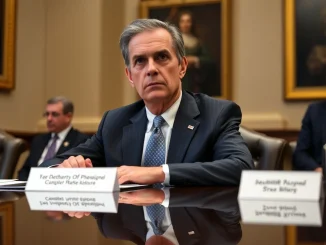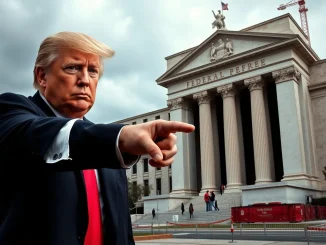
NEW YORK, January 2025 – Financial markets are preparing for next week’s Federal Open Market Committee gathering with unusual calm, as Bank of America Securities projects a meeting unlikely to deliver significant policy shocks. The investment banking division’s analysis suggests Federal Reserve Chair Jerome Powell will navigate political considerations alongside economic data, particularly December’s declining unemployment figures. This anticipated stability comes amid broader market expectations for continued interest rate maintenance through the first quarter.
FOMC Meeting Expectations: Analyzing BofA’s Projections
Bank of America Securities has released detailed analysis indicating minimal policy changes during the upcoming Federal Reserve meeting. The firm’s research department, led by chief economist Michael Gapen, bases this projection on several converging factors. First, recent economic indicators show consistent but not accelerating inflation. Second, labor market data reveals strength without overheating. Third, global economic conditions remain relatively stable. Consequently, the Federal Reserve maintains significant flexibility in its policy approach.
Market participants widely anticipate the committee will maintain the federal funds rate at its current target range. This expectation aligns with recent statements from multiple Federal Reserve officials. Regional bank presidents from Chicago, Atlanta, and San Francisco have all signaled comfort with current policy settings. Furthermore, futures markets currently price in approximately 95% probability of no rate change. This consensus reflects broader economic stability despite ongoing geopolitical uncertainties.
Political Dimensions of Monetary Policy Communication
Bank of America’s analysis highlights an important shift in communication strategy. According to their research team, Chair Powell’s press conference may emphasize political considerations alongside traditional policy discussions. This approach reflects several contextual factors. The Federal Reserve operates during an election year with divided government. Congressional oversight committees maintain active interest in monetary policy decisions. Additionally, public perception of central bank independence remains crucial for policy effectiveness.
Historical precedent supports this analytical perspective. During previous election cycles, Federal Reserve chairs have carefully balanced technical policy discussions with political realities. Former chairs including Janet Yellen and Ben Bernanke navigated similar environments. Their experiences demonstrate how central bank communication evolves during politically sensitive periods. Current economic conditions add complexity to this balancing act. Strong employment data contrasts with moderating inflation, creating nuanced messaging challenges.
Expert Analysis: Unemployment Data Interpretation
Bank of America’s economists specifically highlight December’s unemployment rate decline as a key discussion point. The report notes this data point requires careful interpretation within broader economic context. While lower unemployment typically signals economic strength, other indicators provide complementary information. Labor force participation rates, wage growth patterns, and job creation quality all contribute to complete analysis. Federal Reserve officials consistently emphasize comprehensive data assessment over single metrics.
The relationship between economic activity and neutral interest rates represents another crucial consideration. BofA’s analysis suggests Powell may discuss how strong economic performance influences long-term rate expectations. This discussion connects to broader theoretical frameworks about monetary policy effectiveness. Economists refer to this as the “r-star” concept – the neutral rate that neither stimulates nor restricts economic growth. Current estimates place this rate significantly higher than pre-pandemic levels, justifying current policy settings.
Market Implications and Investor Considerations
Financial markets have largely priced in the expected policy continuity. However, several subtle factors warrant investor attention. First, any changes in the committee’s economic projections could signal future policy shifts. Second, discussions about balance sheet normalization may provide forward guidance. Third, language regarding inflation tolerance thresholds might indicate policy flexibility. Fourth, international economic developments could influence domestic policy considerations.
Key areas for investor focus include:
- Press conference commentary on employment-inflation tradeoffs
- Discussion of financial stability risks beyond traditional metrics
- References to international central bank coordination
- Language regarding policy normalization timelines
- Assessment of banking sector resilience indicators
Historical market reactions to similar meetings provide useful context. During periods of anticipated policy stability, equity markets typically show muted responses to announcements. Fixed income markets often focus on yield curve implications. Currency markets may react to relative policy differentials with other central banks. These patterns suggest prepared investors can navigate the meeting with appropriate risk management strategies.
Comparative Analysis: Current vs. Previous Policy Cycles
The current policy environment differs significantly from recent historical periods. Unlike 2022-2023’s rapid tightening cycle, present conditions suggest extended stability. This shift reflects several economic developments. Inflation has moderated from peak levels while remaining above target. Economic growth continues at sustainable rates without excessive acceleration. Financial conditions have normalized following previous tightening measures. Global supply chains show improved resilience compared to pandemic disruptions.
| Period | Policy Stance | Inflation Rate | Unemployment | Key Challenges |
|---|---|---|---|---|
| 2022-2023 | Aggressive Tightening | 6.5-9.1% | 3.4-3.7% | Supply shocks, rapid inflation |
| 2024 | Moderate Tightening | 3.0-3.7% | 3.5-3.8% | Lag effects, growth balance |
| 2025 Projected | Stable Maintenance | 2.5-3.0% | 3.6-4.0% | Political factors, neutral rate |
This comparative perspective helps explain Bank of America’s expectations. The Federal Reserve has achieved substantial progress toward its dual mandate objectives. Further aggressive action appears unnecessary given current conditions. However, premature easing could risk renewed inflationary pressures. This balanced approach characterizes mature policy cycles following significant economic adjustments.
Conclusion
Bank of America Securities’ analysis provides valuable insight into upcoming FOMC meeting dynamics. Their projection of policy continuity reflects comprehensive assessment of economic conditions, political considerations, and market expectations. Chair Powell’s communication strategy will likely emphasize careful balance between technical policy discussions and political realities. Investors should focus on nuanced aspects of the meeting rather than expecting major surprises. This anticipated stability supports continued economic adjustment toward sustainable growth patterns. The FOMC meeting therefore represents an important checkpoint in ongoing monetary policy normalization rather than a turning point.
FAQs
Q1: What specific factors support BofA’s expectation of no major policy changes?
Bank of America cites several converging factors: stable inflation trends, balanced labor market data, appropriate current policy settings, and global economic conditions that don’t require immediate adjustment.
Q2: How might political considerations influence Federal Reserve communications?
During election years, Federal Reserve chairs typically emphasize institutional independence while acknowledging political oversight realities. Communication often balances technical policy discussions with broader economic stability messaging.
Q3: What is the significance of December’s unemployment rate decline?
While lower unemployment indicates economic strength, Federal Reserve officials analyze comprehensive labor data including participation rates, wage growth, and job quality rather than single metrics.
Q4: How do markets typically react to anticipated policy continuity?
Equity markets usually show muted responses, fixed income markets focus on yield implications, and currency markets consider relative policy differentials with other central banks.
Q5: What longer-term factors might influence future policy decisions?
Sustainable inflation convergence toward 2%, labor market balance maintenance, financial stability preservation, and global economic coordination all represent important considerations for future meetings.