Global cryptocurrency markets face renewed scrutiny as Bitcoin’s risk-adjusted returns deteriorate significantly in early 2025, with the flagship cryptocurrency’s Sharpe Ratio turning negative and echoing concerning patterns from the 2022 bear market. According to recent data analysis from CryptoQuant reported by CoinDesk, Bitcoin currently generates almost no excess returns relative to its volatility, creating challenging conditions for institutional and retail investors alike. This development marks a critical juncture for digital asset markets, particularly as regulatory frameworks continue evolving worldwide.
Bitcoin’s Risk-Adjusted Returns Analysis Reveals Bearish Pattern
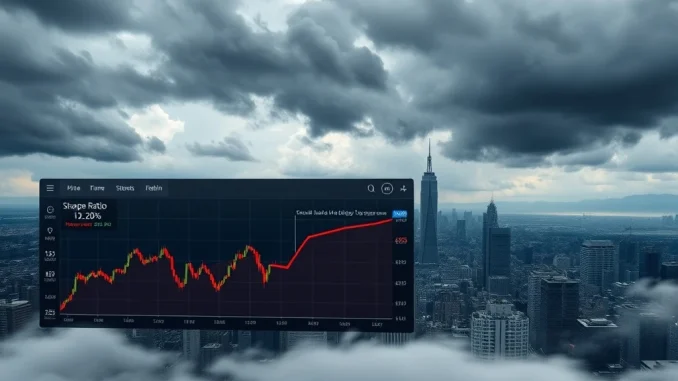
Financial analysts closely monitor Bitcoin’s Sharpe Ratio, which measures excess return per unit of risk. Recently, this crucial metric turned negative, indicating that Bitcoin’s returns no longer compensate investors adequately for the volatility they endure. Consequently, this deterioration suggests changing market dynamics that warrant careful examination. The current negative reading represents a significant shift from the more favorable conditions observed during 2023’s recovery period.
Historical data reveals concerning parallels between current conditions and previous bear markets. Specifically, during late 2018 and throughout 2022, Bitcoin’s Sharpe Ratio remained negative for extended periods. These historical episodes coincided with prolonged price declines and reduced market participation. Therefore, the current pattern suggests potential challenges ahead for cryptocurrency investors seeking consistent returns.
Understanding the Sharpe Ratio in Cryptocurrency Context
The Sharpe Ratio serves as a fundamental tool for evaluating investment performance across traditional and digital asset markets. Developed by Nobel laureate William Sharpe, this metric calculates the average return earned beyond the risk-free rate per unit of volatility. In cryptocurrency markets, analysts typically use the following calculation:
Sharpe Ratio = (Portfolio Return – Risk-Free Rate) / Portfolio Standard Deviation
For Bitcoin specifically, a negative Sharpe Ratio indicates several market conditions:
- Returns failing to exceed risk-free alternatives like Treasury bills
- High volatility without corresponding reward
- Potential capital allocation challenges for institutional investors
- Increased pressure on mining profitability and network security
Recent data shows Bitcoin’s 30-day annualized volatility hovering around 65%, while its returns have stagnated relative to traditional safe-haven assets. This combination creates the negative Sharpe Ratio currently observed in market data.
Historical Comparisons and Market Implications
Examining previous cryptocurrency cycles provides crucial context for current market conditions. During the 2018 bear market, Bitcoin’s Sharpe Ratio remained negative for approximately 11 consecutive months. Similarly, the 2022 downturn featured negative readings for 9 months. These extended periods of unfavorable risk-adjusted returns corresponded with significant price declines and reduced trading volumes.
| Period | Sharpe Ratio Range | BTC Price Change | Duration of Negative Reading |
|---|---|---|---|
| Late 2018 | -0.5 to -1.2 | -74% | 11 months |
| 2022 Bear Market | -0.3 to -0.9 | -65% | 9 months |
| Current (2025) | -0.2 to -0.6 | -28% from peak | 2 months and counting |
Market structure analysis reveals additional concerning factors. Exchange reserves have increased slightly, suggesting potential selling pressure. Meanwhile, derivatives market data shows reduced open interest and funding rates hovering near neutral levels. These conditions typically indicate decreased speculative activity and potential capital outflows.
Institutional Perspective on Current Market Conditions
Institutional investors approach risk-adjusted metrics with particular scrutiny when allocating capital to digital assets. Portfolio managers typically require positive Sharpe Ratios to justify cryptocurrency allocations within diversified portfolios. Consequently, the current negative reading may prompt several institutional responses:
- Reduced allocations from pension funds and endowments
- Increased hedging activity through options and futures
- Greater emphasis on staking yields and alternative revenue streams
- Enhanced due diligence on cryptocurrency correlations with traditional assets
Regulatory developments further complicate the institutional landscape. The SEC’s continued evaluation of spot Bitcoin ETF applications creates additional uncertainty. Meanwhile, global central bank policies regarding digital currencies and stablecoins influence market structure and liquidity conditions.
Technical Analysis and On-Chain Metrics
Beyond the Sharpe Ratio, multiple technical indicators warrant consideration. Bitcoin’s 200-day moving average currently acts as resistance rather than support. Additionally, the Relative Strength Index (RSI) shows neutral readings without extreme oversold conditions that typically precede reversals.
On-chain analytics provide deeper market insights:
- Network activity shows moderate transaction volumes
- Miner revenue has declined approximately 15% month-over-month
- Long-term holder supply remains relatively stable
- Exchange net flows indicate slight accumulation patterns
These mixed signals create a complex environment for market participants. While some metrics suggest potential accumulation, others indicate continued caution among investors.
Macroeconomic Factors Influencing Cryptocurrency Markets
Global economic conditions significantly impact Bitcoin’s risk-adjusted returns. In 2025, several macroeconomic factors contribute to current market dynamics:
Central bank policies continue evolving as inflation concerns persist in certain regions. Interest rate differentials between countries affect capital flows and currency valuations. Consequently, these conditions influence Bitcoin’s appeal as an alternative store of value.
Geopolitical developments create additional market uncertainty. Trade relationships, regulatory coordination, and technological competition all affect cryptocurrency adoption and valuation. Furthermore, energy market fluctuations impact mining economics and network security assumptions.
Conclusion
Bitcoin’s deteriorating risk-adjusted returns present significant considerations for market participants in 2025. The negative Sharpe Ratio echoes patterns from previous bear markets, suggesting potential challenges ahead. However, historical precedent indicates these conditions can persist for several months before meaningful reversals occur. Market participants should monitor multiple indicators beyond single metrics, considering technical, fundamental, and macroeconomic factors. Ultimately, Bitcoin’s long-term value proposition remains distinct from short-term risk-return calculations, though current conditions warrant careful portfolio management and risk assessment.
FAQs
Q1: What does a negative Sharpe Ratio mean for Bitcoin investors?
A negative Sharpe Ratio indicates Bitcoin’s returns no longer adequately compensate for its volatility. This suggests investors might achieve better risk-adjusted returns elsewhere, potentially leading to capital reallocation.
Q2: How long did Bitcoin’s Sharpe Ratio remain negative during previous bear markets?
During the 2018 bear market, the ratio stayed negative for approximately 11 months. In 2022, it remained negative for about 9 months, suggesting these conditions can persist for extended periods.
Q3: Can a negative Sharpe Ratio predict Bitcoin price bottoms?
While some traders view extreme negative readings as potential bottom signals, historical data shows these conditions can persist for months. Therefore, it serves as a poor timing indicator for short-term rebounds.
Q4: How do institutional investors respond to deteriorating risk-adjusted returns?
Institutions typically reduce allocations, increase hedging activity, and enhance due diligence when risk-adjusted metrics deteriorate. Many require positive Sharpe Ratios for meaningful cryptocurrency exposure.
Q5: What other metrics should investors monitor alongside the Sharpe Ratio?
Investors should consider on-chain analytics, exchange flows, derivatives data, macroeconomic indicators, and regulatory developments alongside risk-adjusted return metrics for comprehensive market analysis.