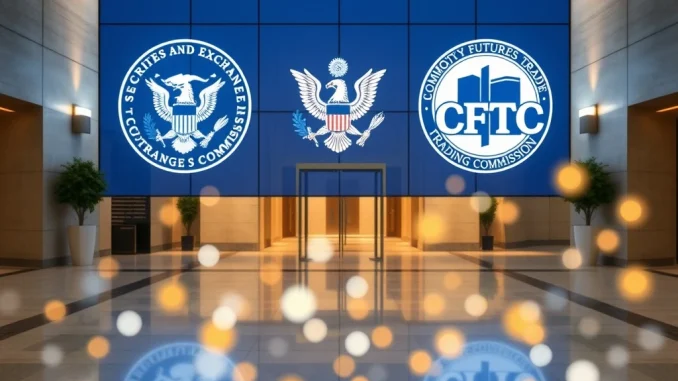
In a significant move for the American digital economy, the U.S. Securities and Exchange Commission (SEC) and the Commodity Futures Trading Commission (CFTC) will convene a pivotal joint crypto event next Thursday, marking a continued evolution in the nation’s regulatory approach to blockchain-based assets. This high-level meeting, first reported by CoinDesk, is scheduled for 3:00 p.m. UTC (10:00 a.m. ET) and represents more than a routine discussion. Consequently, it signals a maturing framework for overseeing a multi-trillion dollar asset class that continues to challenge traditional financial boundaries. The event’s structure, featuring introductory remarks from both agency chairs followed by a panel, underscores its strategic importance for market participants and policymakers alike in 2025.
SEC CFTC Crypto Event Builds on Historic Cooperation
This upcoming SEC CFTC crypto event is not an isolated occurrence. Instead, it follows a deliberate path of increased collaboration between the two primary U.S. financial market watchdogs. Last September, the regulators held a similar foundational meeting specifically designed to signal an end to longstanding jurisdictional disputes. Following that summit, they issued a formal joint statement on enhanced cooperation. Subsequently, they have co-hosted technical roundtables on complex topics like prediction markets and decentralized finance (DeFi). Therefore, next week’s gathering is a direct continuation of this institutional bridge-building.
The historical context is critical for understanding the event’s weight. For years, the question of whether a digital token constitutes a security under the SEC’s purview or a commodity under the CFTC’s remit created a regulatory gray area. This ambiguity often led to enforcement actions that clarified policy only retroactively. The sustained public dialogue between the chairs, however, aims to provide proactive guidance. This shift from reactive enforcement to collaborative oversight is a central theme observers will monitor.
The Practical Impact on Markets and Innovation
The direct impact of this regulatory synchronization is multifaceted. For institutional investors, clearer jurisdictional lines reduce compliance uncertainty, potentially unlocking greater capital inflows into compliant crypto projects. For developers and entrepreneurs, understanding the regulatory perimeter is essential for designing legally sound protocols, especially in the DeFi and tokenization spaces. Moreover, for everyday users, coordinated oversight can enhance consumer protection standards across trading platforms and custodial services. The panel discussion will likely address these practical implications, offering clues about future rulemaking or policy statements.
Analyzing the Regulatory Landscape in 2025
The 2025 regulatory environment for digital assets is markedly different from the early days of cryptocurrency. Globally, jurisdictions like the European Union have implemented comprehensive frameworks like MiCA (Markets in Crypto-Assets). Meanwhile, other major economies are refining their own approaches. The U.S., through actions like this SEC CFTC event, is demonstrating a preference for adapting existing securities and commodities laws within a framework of inter-agency cooperation, rather than creating an entirely new, standalone regulator.
This approach has distinct advantages and challenges. On one hand, it leverages decades of legal precedent and established investor protection mechanisms. On the other hand, it requires constant adaptation of old rules to new technology. The joint roundtables on DeFi exemplify this challenge, as regulators grapple with how to apply concepts like “exchange” or “broker-dealer” to non-custodial, automated protocols. The upcoming event will provide a public window into how these complex discussions are progressing at the highest levels.
Key areas of likely discussion include:
- Stablecoin Oversight: Clarifying which agency oversees different types of payment stablecoins.
- ETF Approvals & Custody: Building on the approval of spot Bitcoin ETFs and looking toward other products.
- DeFi Compliance Pathways: Exploring how decentralized protocols can meet core regulatory principles.
- Cross-Border Coordination: Aligning U.S. actions with international standards to prevent regulatory arbitrage.
Expert Perspectives on Regulatory Convergence
Financial policy experts view this sustained dialogue as a net positive for market integrity. “Public, coordinated guidance from the SEC and CFTC is infinitely more valuable to the ecosystem than contradictory statements or parallel enforcement actions,” notes a former regulatory official specializing in fintech. This perspective is echoed by many legal scholars who argue that regulatory clarity, even if the rules are stringent, is the primary catalyst for responsible innovation. The mere act of holding a joint public event sends a powerful signal to the global market that U.S. agencies are working in concert, which can reduce the perceived risk premium for operating in the American market.
The Path Forward After the Joint Summit
The immediate outcome of the SEC CFTC crypto event will be closely scrutinized. Market participants will analyze the chairs’ remarks for any new policy indications or shifts in tone. Furthermore, the panel discussion may reveal areas of consensus or ongoing debate between staff from the two agencies. The most significant metric of success, however, may be what follows in the weeks and months after the meeting. Will there be a new joint statement, a proposed rule, or a clear guidance document? The pattern established last year suggests that public summits are often precursors to formal policy actions.
This event also occurs within a broader legislative context. While Congress has deliberated on various comprehensive crypto bills, executive agency action through the SEC and CFTC has filled the gap. Their cooperative efforts can shape the practical reality of crypto regulation, influencing everything from exchange listings to custody solutions, regardless of legislative progress. Therefore, the stakes for this discussion are high, extending far beyond the conference room.
Conclusion
The upcoming joint SEC CFTC crypto event is a cornerstone moment for U.S. digital asset policy in 2025. By building on a year of deliberate cooperation, the agencies are moving to provide the market with the stability and clarity it demands. This collaborative approach, focusing on joint statements and public forums, represents a strategic evolution from the earlier era of regulatory uncertainty. While challenges in applying decades-old laws to novel technology remain, the commitment to a unified public dialogue is a critical step forward. The outcomes and tone of this summit will undoubtedly shape the trajectory of cryptocurrency innovation and investment in the United States for the foreseeable future, making it an essential development for anyone involved in the digital asset ecosystem.
FAQs
Q1: What is the main purpose of the SEC and CFTC joint crypto event?
The primary purpose is to demonstrate ongoing regulatory cooperation, provide public guidance on the agencies’ approaches to digital assets, and discuss complex issues like DeFi and market structure in a unified forum, thereby reducing jurisdictional ambiguity for the industry.
Q2: How does this 2025 event differ from their meeting last September?
While the 2024 meeting signaled an end to disputes and established a cooperation framework, this 2025 event is expected to build on that foundation with more substantive discussions on current, pressing topics like stablecoins, custody rules, and the operationalization of their joint oversight following a year of collaborative work.
Q3: Does this mean the SEC and CFTC now agree on how to classify all cryptocurrencies?
Not necessarily. The event signifies a commitment to cooperative oversight despite potential differing views. The focus is on managing their respective jurisdictions clearly and working together where overlaps exist, rather than achieving total agreement on every asset’s classification.
Q4: What should cryptocurrency companies and investors take away from this?
They should see it as a move toward greater regulatory predictability. Public coordination between the agencies reduces the risk of conflicting directives and suggests a more structured environment is emerging, which is generally positive for long-term, compliant business planning and institutional investment.
Q5: Will this event lead to immediate new regulations or laws?
It is unlikely to result in immediate new laws, as that is Congress’s role. However, it could very well precede new joint guidance, policy statements, or proposed rules from the agencies themselves, shaping the enforcement and interpretive landscape for existing statutes.