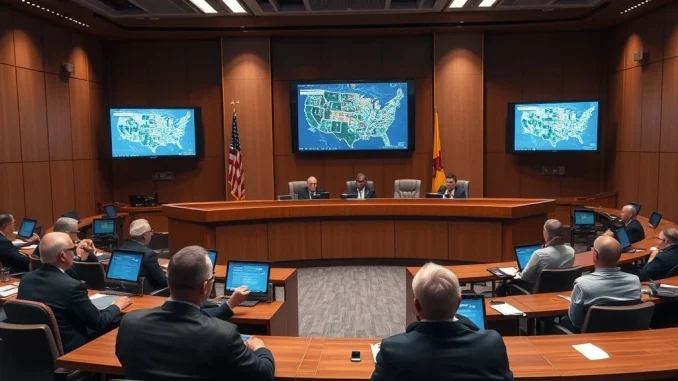
Kingsport, Tennessee – February 2025. The city council has taken a decisive step toward embracing digital infrastructure by approving a zoning ordinance that explicitly allows cryptocurrency mining operations and data centers within designated areas. This regulatory move positions Kingsport as a forward-looking municipality in the evolving landscape of blockchain technology and digital asset creation. The council’s action represents a significant policy shift that could attract substantial technology investment to the region while establishing regulatory frameworks for an industry that has faced zoning challenges nationwide.
Crypto Mining Zoning Ordinance Receives Preliminary Approval
The Kingsport City Council voted to approve the cryptocurrency mining zoning measure during their regular February session. This decision followed months of committee review and public discussion about the appropriate regulatory approach to digital infrastructure development. The ordinance specifically designates certain industrial and commercial zones where cryptocurrency mining facilities can operate legally. Furthermore, it establishes clear operational requirements for these facilities, including noise limitations, energy consumption disclosures, and security protocols. Council members emphasized the need for balanced regulation that encourages economic development while addressing community concerns about industrial operations in residential areas.
According to municipal records, the zoning amendment underwent three separate readings before reaching the final vote. Planning department officials presented extensive research on similar ordinances in other municipalities, including detailed analysis of economic impacts and infrastructure requirements. The council’s decision reflects growing recognition of cryptocurrency mining as a legitimate industrial activity with potential economic benefits for the region. However, the ordinance requires one additional procedural vote before full implementation, providing a final opportunity for public input and potential amendments based on community feedback.
Tennessee’s Evolving Cryptocurrency Regulatory Landscape
Kingsport’s zoning decision occurs within a broader context of cryptocurrency regulation development across Tennessee. The state legislature has considered several bills addressing digital asset mining and blockchain technology over the past three years. In 2023, Tennessee passed legislation recognizing the legal status of blockchain-based smart contracts and electronic signatures. Meanwhile, other Tennessee municipalities have taken varied approaches to cryptocurrency mining operations, creating a patchwork of local regulations across the state.
Several factors make Tennessee particularly attractive for cryptocurrency mining operations. The state offers relatively low electricity costs compared to national averages, with industrial rates approximately 15% below the national median according to 2024 Energy Information Administration data. Additionally, Tennessee’s temperate climate reduces cooling requirements for mining equipment, potentially lowering operational costs by 20-30% compared to warmer regions. The state’s existing technology infrastructure, including multiple major internet exchange points and fiber optic networks, further supports data-intensive operations like cryptocurrency mining.
| Municipality | Regulatory Status | Key Provisions | Year Implemented |
|---|---|---|---|
| Kingsport | Pending Final Approval | Zoning designation, noise limits, energy disclosure | 2025 |
| Chattanooga | Operational with restrictions | Special use permits required, distance from residential areas | 2023 |
| Nashville | Case-by-case review | No specific ordinance, reviewed as data centers | Ongoing |
| Knoxville | Prohibited in residential zones | Allowed in industrial zones with soundproofing requirements | 2024 |
Economic Development Implications for Northeast Tennessee
The approved cryptocurrency mining zoning ordinance represents a strategic economic development initiative for Kingsport and surrounding Sullivan County. Economic development officials project that properly regulated cryptocurrency mining operations could generate several significant benefits for the region:
- Job Creation: Direct employment in facility operations, maintenance, and security positions
- Infrastructure Investment: Upgrades to electrical grids and internet connectivity benefiting all residents
- Tax Revenue: Property taxes from facility improvements and potential local business taxes
- Technology Sector Growth: Attraction of complementary blockchain and technology companies
- Energy Market Stability: Consistent, predictable electricity demand supporting utility planning
Regional economic development organizations have documented increasing interest from cryptocurrency mining companies seeking locations with clear regulatory frameworks. The Tennessee Valley Authority, which supplies electricity to Kingsport, has developed specialized rate structures for high-density computing operations that could benefit both miners and the utility through predictable demand patterns. These economic considerations played a significant role in the council’s deliberations, with multiple members citing job creation and infrastructure investment as primary motivations for supporting the zoning changes.
Technical Requirements and Operational Standards
The Kingsport cryptocurrency mining zoning ordinance establishes specific technical requirements for facilities seeking to operate within the city limits. These standards address common community concerns while ensuring operations meet professional industry benchmarks. The ordinance requires all cryptocurrency mining facilities to implement comprehensive noise mitigation measures, limiting sound emissions to 55 decibels at property lines during daytime hours and 45 decibels at night. Additionally, facilities must submit detailed energy consumption plans to the city’s planning department, including peak demand projections and contingency plans for grid stability.
Security represents another critical component of the regulatory framework. The ordinance mandates 24/7 security monitoring for all cryptocurrency mining operations, with specific requirements for physical security, cybersecurity protocols, and emergency response plans. These provisions address concerns about the high-value equipment typically housed in mining facilities and the importance of protecting digital assets. The zoning amendment also includes environmental considerations, requiring facilities to implement heat management systems that minimize thermal pollution and explore potential waste heat utilization opportunities.
Community Response and Public Engagement Process
The Kingsport City Council conducted extensive public engagement before approving the cryptocurrency mining zoning ordinance. The planning department hosted three community forums where residents could learn about cryptocurrency mining technology and express concerns. Additionally, the council received written comments from over 200 residents during the 60-day public comment period. Community feedback revealed several recurring themes that influenced the final ordinance language.
Residents expressed particular concern about potential noise pollution from cooling systems, leading to the inclusion of specific decibel limits in the ordinance. Energy consumption emerged as another significant issue, with multiple residents questioning the environmental impact of high-energy operations. In response, the council added requirements for energy source disclosure and encouraged facilities to explore renewable energy options. The final ordinance also includes provisions for regular community meetings between mining operators and neighborhood representatives, creating ongoing dialogue channels to address emerging concerns.
National Context of Cryptocurrency Mining Regulation
Kingsport’s zoning decision reflects broader national trends in cryptocurrency mining regulation. Municipalities across the United States have developed diverse approaches to managing the growth of digital asset mining operations. Some jurisdictions have embraced the industry as an economic development opportunity, while others have implemented moratoriums or outright bans due to environmental or community impact concerns. This regulatory diversity creates a complex landscape for cryptocurrency mining companies seeking stable operating environments.
Several states have taken legislative action to provide clearer frameworks for cryptocurrency mining operations. Texas, for example, passed legislation in 2023 establishing statewide standards for cryptocurrency mining facilities while preserving local zoning authority. Wyoming has positioned itself as a cryptocurrency-friendly jurisdiction with multiple laws recognizing digital assets and creating favorable regulatory conditions. These state-level actions provide important context for municipal decisions like Kingsport’s, demonstrating how local regulations fit within broader regulatory ecosystems.
The federal government has also increased attention on cryptocurrency mining operations, particularly regarding energy consumption and environmental impacts. The Energy Information Administration began collecting detailed data on cryptocurrency mining electricity use in 2024, providing more accurate information for regulatory decisions. Additionally, the Environmental Protection Agency has issued guidance on best practices for minimizing the environmental impact of high-density computing operations. These federal initiatives inform local decisions like Kingsport’s zoning ordinance, ensuring municipal regulations align with emerging national standards and data.
Conclusion
The Kingsport City Council’s approval of cryptocurrency mining zoning represents a significant step in municipal adaptation to emerging technologies. This decision balances economic development opportunities with community protection through carefully crafted regulatory provisions. The ordinance’s requirements for noise mitigation, energy disclosure, and security protocols address common concerns while establishing clear operational standards. As cryptocurrency mining continues to evolve as an industry, municipal regulations like Kingsport’s will play crucial roles in shaping its development and integration into communities. The final implementation vote will determine whether this regulatory framework becomes operational, potentially positioning Kingsport as a regional leader in digital infrastructure development.
FAQs
Q1: What exactly did the Kingsport City Council approve regarding cryptocurrency mining?
The council approved a zoning ordinance amendment that allows cryptocurrency mining operations and data centers in designated areas of the city. The measure establishes specific operational requirements and still requires one final procedural vote before full implementation.
Q2: Why is Tennessee attracting cryptocurrency mining operations?
Tennessee offers relatively low electricity costs, temperate climates that reduce cooling expenses, and existing technology infrastructure. These factors combine to create favorable operating conditions for energy-intensive computing operations like cryptocurrency mining.
Q3: What community concerns did the zoning ordinance address?
The ordinance specifically addresses noise pollution through decibel limits, energy consumption through disclosure requirements, and security through monitoring mandates. These provisions resulted from extensive public engagement during the ordinance development process.
Q4: How does this decision fit with broader cryptocurrency regulation trends?
Kingsport’s approach reflects a growing trend of municipalities creating specific regulatory frameworks for cryptocurrency mining rather than applying existing industrial or commercial zoning categories. This provides clearer guidelines for operators while addressing unique aspects of mining operations.
Q5: What economic benefits might Kingsport realize from cryptocurrency mining operations?
Potential benefits include job creation in operations and maintenance, infrastructure improvements to electrical and internet systems, increased tax revenue from facility investments, and attraction of complementary technology businesses to the region.