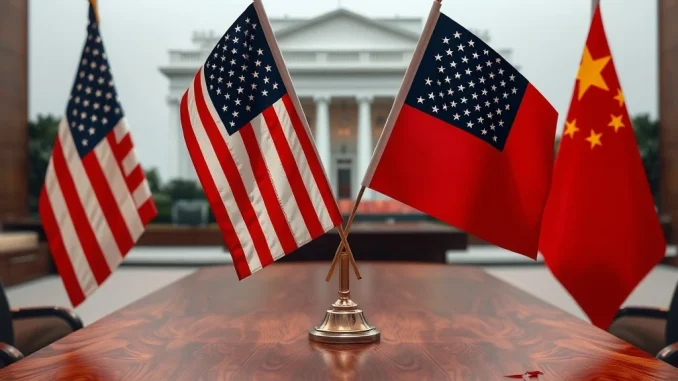
In a revelation that could define the geopolitical landscape for 2025, U.S. Treasury Secretary Scott Bessent has outlined a potentially unprecedented diplomatic calendar, suggesting Presidents Donald Trump and Xi Jinping could engage in four high-stakes meetings this year. This ambitious schedule, reported by Politico from Washington D.C. on March 15, 2025, signals a deliberate and intensified effort to manage the world’s most consequential bilateral relationship through direct, leader-level dialogue.
Analyzing the Potential 2025 Trump Xi Meetings
Treasury Secretary Scott Bessent’s comments provide a rare glimpse into the administration’s diplomatic planning. The prospect of four Trump Xi meetings within a single calendar year represents a significant escalation in diplomatic frequency. Historically, U.S.-China summits have often been annual or biennial events, punctuated by working-level talks. For context, the Obama-Xi era saw formal summits typically once per year, while the first Trump term included several high-profile meetings, notably at Mar-a-Lago and during G20 gatherings. This proposed cadence suggests both administrations may perceive an urgent need for sustained, top-down engagement to navigate complex issues.
Several factors could be driving this proposed intensity. Firstly, the global economic outlook for 2025 remains fragile, with interconnected supply chains and financial markets requiring stable US-China relations. Secondly, unresolved trade and technology disputes from previous years necessitate continuous high-level oversight. Thirdly, regional security concerns in the Indo-Pacific demand clear channels of communication to prevent miscalculation. Each potential Trump Xi meeting would likely have a distinct thematic focus, moving beyond ceremonial dialogue to substantive, action-oriented negotiations.
The Strategic Context of US-China Relations in 2025
The announcement arrives amid a complex backdrop of cooperation and competition. The US-China relationship in 2025 continues to be the defining axis of global politics, influencing everything from climate agreements to semiconductor supply chains. Secretary Bessent, as the nation’s chief financial officer, inherently ties these diplomatic prospects to economic stability. His perspective underscores that leader-level summits are not merely political theater but are critical frameworks for settling disputes that affect trillions in bilateral trade and investment.
Key issue areas likely to dominate the agenda for any Trump Xi meetings include:
- Trade and Tariffs: The status of Phase One and potential Phase Two trade agreements, alongside ongoing disputes over market access and intellectual property.
- Technology Competition: Regulations surrounding artificial intelligence, telecommunications (5G/6G), and export controls on advanced semiconductors.
- Taiwan Strait Stability: Maintaining peace and the status quo in the Taiwan Strait, a perennial flashpoint.
- Global Macroeconomic Coordination: Collaborative efforts on debt relief for developing nations and managing currency fluctuations.
- Climate and Energy: Joint initiatives or commitments on clean energy technology and emissions reductions.
Expert Analysis on the Feasibility and Impact
Diplomatic analysts note that while an ambitious four-meeting schedule is possible, its realization depends on meticulous preparation and a conducive international environment. “The logistics alone are immense,” notes a former State Department official specializing in East Asia. “Each summit requires months of lower-level negotiations to produce deliverables. Four meetings imply a continuous negotiation cycle, not isolated events.” The potential venues could include major international forums like the G20 Summit in South Africa or APEC in South Korea, complemented by standalone state visits.
The economic implications are profound. Financial markets often react positively to news of stabilized US-China relations, as reduced uncertainty benefits global trade. A structured, frequent dialogue schedule could provide the predictability that multinational corporations and investors crave. Conversely, the failure to hold these meetings or a breakdown in talks could trigger volatility. The Treasury Secretary’s forward-looking statement may itself be a tool of economic statecraft, aimed at reassuring markets about the administration’s commitment to managing the relationship proactively rather than reactively.
Historical Precedents and the Path Forward
To understand the potential of four Trump Xi meetings, it is useful to examine the historical pattern of US-China summits. The table below contrasts proposed 2025 engagement with recent historical averages:
| Administration / Period | Average Leader Meetings Per Year | Primary Forum | Key Characteristics |
|---|---|---|---|
| Obama-Xi (2013-2016) | ~1.5 | State Visits, G20 | Strategic & Economic Dialogue framework |
| Trump-Xi (2017-2020) | ~1.5 | Mar-a-Lago, G20 | Direct, transactional approach |
| Proposed 2025 Schedule | 4 | Mixed (State & Multilateral) | High-frequency, agenda-driven |
This proposed frequency indicates a potential shift from episodic crisis management to institutionalized strategic dialogue. The success of such a schedule hinges on both sides’ ability to establish working groups that can make concrete progress between summits. Furthermore, domestic politics in both countries will influence the timing and tone. The U.S. electoral cycle and China’s focus on its economic modernization goals will create windows of opportunity and constraints for diplomacy.
Conclusion
Treasury Secretary Scott Bessent’s revelation about potential 2025 Trump Xi meetings outlines a bold diplomatic pathway for managing US-China relations. The ambitious proposal for four summits within the year reflects an understanding that the complexity of bilateral issues requires sustained, high-level attention. While the realization of this full schedule faces logistical and political hurdles, the statement itself sets a tone of expected engagement. Ultimately, the frequency and substance of these potential Trump Xi meetings will serve as a critical barometer for global stability, economic confidence, and the future of great-power diplomacy in the 21st century.
FAQs
Q1: Who reported the news about the potential four meetings?
The information was initially reported by the U.S. political media outlet Politico, citing comments made by U.S. Treasury Secretary Scott Bessent.
Q2: Why would four meetings in one year be significant?
It represents a much higher frequency of direct leader-level engagement than the historical norm, suggesting both sides may prioritize continuous dialogue to manage complex, interconnected issues rather than holding sporadic, crisis-driven summits.
Q3: What are the main topics likely discussed at these meetings?
Key agendas would likely include trade and tariff disputes, technology competition and security, stability in the Taiwan Strait, global economic coordination, and potentially climate or energy cooperation.
Q4: How does the Treasury Secretary’s role connect to these diplomatic plans?
As the head of the U.S. Treasury, Scott Bessent’s primary focus is economic and financial stability. His comments underscore that stable US-China relations are a foundational requirement for global economic health, making leader-level diplomacy a matter of financial security.
Q5: Have Trump and President Xi met frequently in the past?
During President Trump’s first term, they held several notable meetings, including at Mar-a-Lago in 2017 and on the sidelines of G20 summits. The proposed 2025 schedule, however, suggests an intention to increase the pace and regularity of these interactions significantly.