In a major development for Ethereum scaling, the layer-2 project Taiko has unveiled plans for its groundbreaking Shasta upgrade, a technical overhaul designed to dramatically slash rollup operational costs by as much as twenty-two times. Announced on March 21, 2025, this initiative targets the core economic model of its rollup, promising to deliver unprecedented efficiency gains that could significantly lower barriers for developers and users on the Ethereum network. The proposed changes center on a radical simplification of its smart contract architecture, a move that experts suggest could set a new benchmark for cost-effective layer-2 solutions in the competitive blockchain ecosystem.
Taiko’s Shasta Upgrade: A Deep Dive into the 22x Cost Reduction
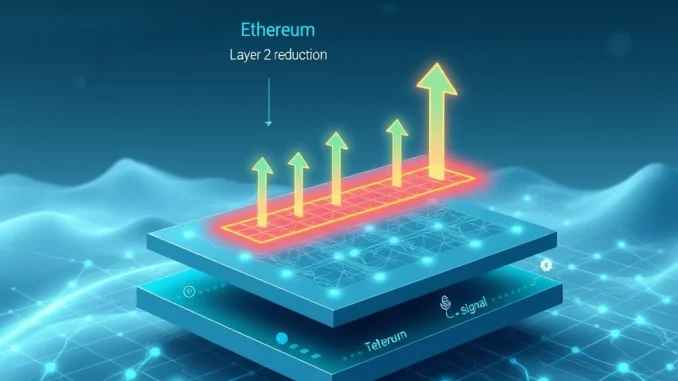
The cornerstone of the Shasta upgrade is a fundamental redesign of Taiko’s rollup infrastructure. Currently, rollups—a primary scaling solution for Ethereum—batch transactions off-chain before submitting a cryptographic proof to the mainnet. This process, while effective, incurs gas costs for both proposing the transaction batch (proposing costs) and verifying its validity (proving costs). Taiko’s existing model requires a complex suite of smart contracts to manage this process. However, the Shasta upgrade proposes a streamlined architecture built on just three core contracts: the inbox, the anchor, and the signal service.
This architectural simplification directly drives the projected cost savings. By reducing contract complexity and interactions, the gas overhead plummets. Taiko’s internal analysis forecasts that proposing costs will drop from approximately one million gas units to just 45,000 gas—a reduction factor of 22.2. Concurrently, proving costs are expected to fall from 500,000 gas to 280,000 gas, a near 50% decrease. For context, gas is the unit of computational effort on Ethereum, and lower gas consumption translates directly to lower fees for end-users and developers deploying applications. This efficiency gain is not merely incremental; it represents a potential paradigm shift in the economic viability of high-frequency, low-value transactions on layer-2 networks.
Technical Architecture and the Path to Mainnet Deployment
The three-pillar contract design of the Shasta upgrade is engineered for maximal efficiency and security. The inbox contract acts as the singular entry point for all transaction data, ensuring orderly and verifiable data submission. The anchor contract serves as the trust root, providing a consistent reference point for the rollup’s state on the Ethereum mainnet, which is crucial for security and finality. Finally, the signal service facilitates cross-layer communication, allowing the Ethereum mainnet to efficiently verify proofs and state updates from the Taiko rollup.
This minimalist approach contrasts with more convoluted rollup designs and aims to minimize attack surfaces and audit complexity. According to the project’s technical roadmap, the Shasta upgrade is currently in the final stages of internal testing. The next major milestone is its deployment on the Hoodi testnet, scheduled within the coming weeks. This testnet phase is critical for public validation, bug bounties, and stress-testing the new economic model under simulated real-world conditions. Crucially, the final deployment to the Taiko mainnet is not automatic; it awaits a formal governance vote and approval from the project’s Decentralized Autonomous Organization (DAO). This process underscores Taiko’s commitment to decentralized governance and community-led protocol evolution.
Expert Analysis: Implications for Ethereum’s Scaling Roadmap
Blockchain scalability analysts point to Taiko’s Shasta upgrade as a significant evolution within the competitive layer-2 landscape. “The pursuit of lower proving costs is the next major frontier for rollups,” notes a researcher from the Ethereum Foundation, who spoke on the condition of anonymity as they are not directly affiliated with Taiko. “While initial rollups focused on data availability and security, the current optimization phase is all about economic efficiency. A 22x reduction in proposing costs isn’t just an improvement—it fundamentally changes the types of applications that can be built economically on layer-2.” This sentiment is echoed by independent audit firms that emphasize how simplified contract code can lead to fewer vulnerabilities and lower long-term security overhead, aligning with the upgrade’s stated goals of enhanced security alongside cost-efficiency.
Furthermore, the timing of this announcement is pivotal. The broader Ethereum ecosystem is preparing for further proto-danksharding implementations (EIP-4844), which are designed to drastically reduce data costs for rollups. Taiko’s Shasta upgrade positions the project to compound these base-layer improvements, potentially achieving multiplicative cost savings. The upgrade’s success could pressure other rollup providers, including Optimism, Arbitrum, and zkSync, to accelerate their own efficiency research, fostering a new wave of innovation focused on affordability and accessibility.
Broader Impact on Decentralization and Developer Adoption
Beyond mere cost figures, Taiko emphasizes that the Shasta upgrade will deliver substantial improvements in decentralization. A simpler, more gas-efficient proving mechanism lowers the financial barrier for independent participants to operate nodes or contribute to proof generation. This can help prevent the centralization of sequencer or prover roles, a concern in some early rollup implementations. By making participation more economically viable for a wider array of actors, the network’s resilience and censorship resistance theoretically increase.
For developers, the implications are equally transformative. High and unpredictable gas costs have long been a deterrent for building complex decentralized applications (dApps). A predictable, low-cost environment enables new use cases in microtransactions, gaming, social media, and decentralized finance (DeFi) that were previously impractical. The projected cost structure could make Taiko a highly attractive platform for projects seeking to offer a seamless user experience without the fee volatility associated with the Ethereum mainnet.
| Cost Type | Current Model | Shasta Upgrade (Projected) | Reduction Factor |
|---|---|---|---|
| Proposing Cost | ~1,000,000 gas | ~45,000 gas | 22x |
| Proving Cost | ~500,000 gas | ~280,000 gas | ~1.8x |
Conclusion
The Taiko Shasta upgrade represents a bold and technically sophisticated step forward in the maturation of Ethereum layer-2 scaling. By targeting a 22x reduction in core rollup costs through architectural simplification, Taiko is addressing one of the most persistent challenges in blockchain adoption: high transaction fees. The upcoming Hoodi testnet deployment and subsequent DAO vote will be critical in validating these ambitious projections. If successful, the Shasta upgrade could significantly alter the economics of building and using decentralized applications, contributing to a more scalable, affordable, and decentralized future for the entire Ethereum ecosystem. The industry will be watching closely as this proposed upgrade moves from internal testing to public validation in the weeks ahead.
FAQs
Q1: What is the primary goal of Taiko’s Shasta upgrade?
The primary goal is to drastically reduce the operational gas costs of the Taiko rollup by simplifying its smart contract architecture, aiming for up to a 22-fold decrease in proposing costs and significant savings in proving costs.
Q2: How does the Shasta upgrade achieve these cost savings?
It achieves savings by overhauling the rollup’s economic structure to use only three core contracts (inbox, anchor, signal service) instead of a more complex system, thereby minimizing computational overhead and gas consumption on the Ethereum mainnet.
Q3: When will the Shasta upgrade go live?
The upgrade is currently in internal testing. It is scheduled for deployment on the Hoodi testnet within a few weeks for public testing. A mainnet launch will only occur after approval from the Taiko DAO through a governance vote.
Q4: What are the potential benefits for developers and users?
Developers can build applications with much lower and more predictable transaction fees, enabling new micro-transaction-based use cases. End-users will benefit from significantly cheaper interactions with dApps deployed on the Taiko layer-2 network.
Q5: How does this upgrade impact Ethereum’s overall scaling?
It contributes directly by making one layer-2 solution substantially more efficient. This increases the total transaction throughput the Ethereum ecosystem can handle affordably and sets a competitive benchmark that may drive efficiency innovations across other scaling projects.