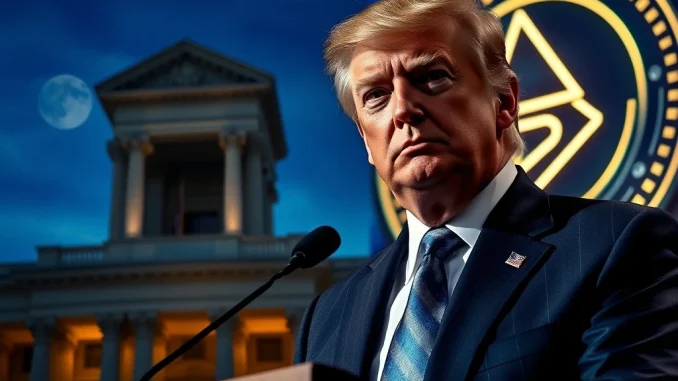
NEW YORK, March 15, 2025 – Eric Trump, executive vice president of The Trump Organization and son of former President Donald Trump, made significant claims during a Fox Business interview this week. He asserted that traditional banking institutions are actively working to block cryptocurrency legislation in the United States. This statement immediately sparked widespread discussion about financial industry influence on emerging digital asset regulations.
Eric Trump Crypto Legislation Claims Explained
During his March 14 interview, Eric Trump specifically addressed the current legislative landscape for digital assets. He stated that banks are “doing everything they can” to prevent the passage of comprehensive cryptocurrency regulations. This allegation comes during a critical period for crypto policy development in Washington D.C. Multiple bills currently sit before congressional committees, including the Digital Asset Market Structure Proposal and the Crypto Consumer Protection Act.
Financial analysts note that traditional banking institutions have expressed concerns about several regulatory approaches. They particularly worry about proposals that might create parallel financial systems or reduce their intermediary roles. Consequently, banking lobbyists have reportedly increased their Capitol Hill presence by 40% since 2023, according to Congressional disclosure records.
Banking Industry’s Historical Position on Cryptocurrency
The relationship between traditional banks and cryptocurrency has remained complex for years. Initially, many major financial institutions dismissed digital assets as speculative instruments with limited real-world utility. However, their position evolved significantly as blockchain technology gained mainstream recognition. Today, most large banks maintain dedicated blockchain research divisions while simultaneously advocating for cautious regulatory approaches.
Regulatory Timeline and Banking Influence
Understanding the current situation requires examining recent regulatory developments. The table below outlines key cryptocurrency legislative milestones and corresponding banking industry responses:
| Year | Legislative Action | Banking Industry Response |
|---|---|---|
| 2022 | Executive Order on Digital Assets | Formed consortium for regulatory input |
| 2023 | Stablecoin Transparency Act introduced | Lobbied for bank-issued stablecoins only |
| 2024 | Digital Commodities Consumer Protection Act | Advocated for stricter custody requirements |
| 2025 | Comprehensive Crypto Framework proposed | Increased lobbying expenditures by 35% |
Banking representatives consistently emphasize consumer protection and financial stability concerns. They frequently cite several key issues in their regulatory discussions:
- Anti-money laundering compliance challenges with decentralized networks
- Systemic risk from potential crypto market volatility
- Investor protection in largely unregulated exchanges
- Operational challenges integrating traditional and digital systems
Political Context of the Trump Family’s Crypto Engagement
Eric Trump’s comments emerge within a broader political framework. His father, former President Donald Trump, has significantly shifted his public stance on cryptocurrency during the current election cycle. After previously criticizing digital assets, the elder Trump now embraces them as campaign fundraising tools and policy discussion points. This evolution mirrors changing Republican Party positions on financial innovation and regulatory approaches.
Political analysts observe that cryptocurrency regulation has become increasingly bipartisan. Both Democratic and Republican legislators recognize the technology’s economic potential. However, they frequently disagree on implementation details and oversight mechanisms. The banking industry’s lobbying efforts reportedly target lawmakers across the political spectrum, focusing particularly on committee members with financial services oversight responsibilities.
Expert Perspectives on Regulatory Obstruction Claims
Financial policy experts offer nuanced interpretations of Eric Trump’s allegations. Dr. Miranda Chen, Georgetown University regulatory scholar, explains, “Banks aren’t necessarily obstructing all cryptocurrency legislation. Instead, they’re advocating for frameworks that maintain their central role in the financial system.” She notes that traditional institutions generally support regulations that would require crypto businesses to partner with banks for various services.
Conversely, blockchain advocates argue that excessive banking influence could stifle innovation. “The fundamental promise of cryptocurrency involves reducing reliance on traditional intermediaries,” states Marcus Johnson, director of the Digital Finance Institute. “Regulations written primarily by banks might preserve outdated structures rather than enabling technological progress.”
Potential Impacts on Crypto Legislation Progress
The current legislative session represents a crucial opportunity for comprehensive digital asset regulation. Several bills have advanced through committee stages with varying degrees of banking industry support. Observers note that legislation receiving bank endorsement typically includes stronger consumer protection provisions but also more restrictive licensing requirements for crypto businesses.
Industry data reveals significant financial resources deployed in this regulatory battle. Banking trade associations reported spending approximately $75 million on lobbying in 2024, with digital asset regulation representing their third-highest priority. Crypto industry groups, while growing in influence, deployed approximately $18 million during the same period according to OpenSecrets.org data.
Congressional staffers indicate that negotiations continue behind the scenes. They seek compromise language that addresses legitimate banking concerns while allowing crypto innovation to flourish. Key negotiation points currently include:
- Custody requirements for digital assets
- Capital reserve standards for crypto businesses
- Examination authority for regulatory agencies
- Interoperability between traditional and digital systems
International Regulatory Comparisons
The United States regulatory approach contrasts significantly with other major economies. The European Union implemented its Markets in Crypto-Assets (MiCA) framework in 2024, establishing comprehensive rules across member states. Asian financial centers like Singapore and Hong Kong have developed progressive regulatory regimes that actively encourage crypto innovation while maintaining oversight.
These international approaches generally involve earlier and more structured bank participation in regulatory design. Consequently, their frameworks typically incorporate traditional financial system safeguards while creating pathways for licensed crypto operations. U.S. observers study these models as potential templates for domestic legislation that might satisfy multiple stakeholders.
Conclusion
Eric Trump’s claims about banks obstructing crypto legislation highlight ongoing tensions in financial regulation development. Traditional banking institutions naturally seek to protect their business models and ensure financial stability. Meanwhile, cryptocurrency advocates push for regulatory frameworks that enable technological innovation and financial inclusion. The eventual legislation will likely reflect compromises between these perspectives, balancing innovation with consumer protection. As the 2025 legislative session progresses, all stakeholders continue advocating for their preferred approaches to digital asset regulation.
FAQs
Q1: What exactly did Eric Trump claim about banks and crypto legislation?
Eric Trump stated during a Fox Business interview that traditional banking institutions are “doing everything they can” to block the passage of cryptocurrency-related legislation in the United States, suggesting active obstruction of regulatory progress.
Q2: Why would banks want to obstruct cryptocurrency legislation?
Banks might resist certain regulatory approaches that could reduce their intermediary roles in financial transactions or create competitive parallel systems. They typically advocate for frameworks that maintain their central position while addressing legitimate concerns about financial stability and consumer protection.
Q3: How has the Trump family’s position on cryptocurrency evolved?
Former President Donald Trump initially criticized cryptocurrency but has recently embraced it for campaign fundraising and policy discussions. Eric Trump’s comments reflect this evolving engagement with digital assets as both a business and political matter.
Q4: What are the main cryptocurrency bills currently before Congress?
Key legislation includes the Digital Asset Market Structure Proposal, the Crypto Consumer Protection Act, and various stablecoin regulation bills. These proposals address different aspects of digital asset oversight, from market structure to consumer safeguards.
Q5: How does U.S. cryptocurrency regulation compare to other countries?
The European Union has implemented comprehensive MiCA regulations, while Asian financial centers like Singapore have developed progressive frameworks. The U.S. approach has been more fragmented, with multiple agencies claiming jurisdiction and slower legislative progress.