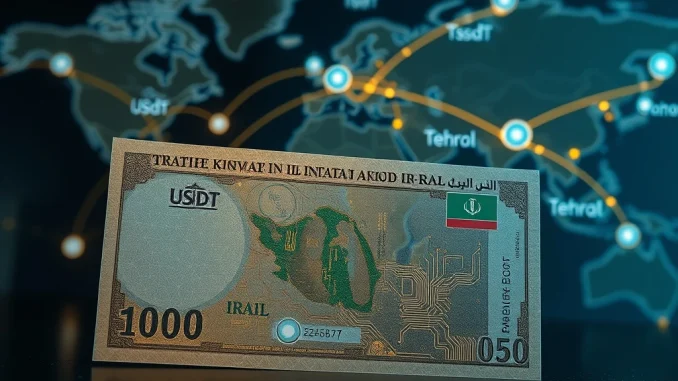
In a significant development for both traditional finance and the digital asset space, Iran’s central bank executed a strategic acquisition of approximately 507 million USDT over the past year. This substantial move, first reported by Decrypt based on findings from blockchain analytics firm Elliptic in March 2025, represents a calculated effort to defend the national rial and navigate complex international trade sanctions. The revelation provides a rare, data-driven window into how national financial institutions are increasingly leveraging cryptocurrency infrastructure for macroeconomic stability.
Iran’s Central Bank Embraces USDT for Strategic Stability
Blockchain analytics firm Elliptic identified a specific cryptocurrency wallet linked to the Central Bank of the Islamic Republic of Iran (CBI). According to their forensic report, this wallet received two major USDT transactions in April and May of the previous year. Subsequently, the central bank channeled most of these digital dollar-pegged assets to Nobitex, a prominent local cryptocurrency exchange. This process highlights a pragmatic shift in central bank asset management, demonstrating a clear operational use case for stablecoins beyond speculative trading.
Furthermore, the funds underwent a conversion process using a cross-chain bridge. This technical step allows assets to move between different blockchain networks, such as from Tron to Ethereum. The central bank continued this operational activity through the end of the year, resulting in a total outflow of 507 million USDT from the identified wallet. This detailed transaction trail, visible on public ledgers but anonymized, allows firms like Elliptic to connect wallet activity to real-world entities through pattern analysis and intelligence gathering.
The Economic Context Behind the Crypto Move
This strategic pivot to USDT did not occur in a vacuum. For years, Iran has faced severe economic pressure from international sanctions, particularly those restricting access to the global US dollar financial system. These sanctions have complicated essential imports and exports, contributing to volatility and depreciation of the Iranian rial. Consequently, the central bank’s mandate to ensure monetary stability and facilitate foreign trade has required innovative, non-traditional solutions.
Stablecoins like Tether’s USDT offer a potential technological workaround. By converting national currency reserves into a digital asset pegged to the US dollar, a central bank can theoretically create a buffer against local currency depreciation. More importantly, it can settle cross-border transactions without directly interfacing with the sanctioned conventional banking network. This method, while not without its own regulatory and counterparty risks, provides a new tool for economic sovereignty in a digitally interconnected world.
Expert Analysis on Central Bank Digital Asset Strategy
Financial analysts and blockchain researchers point to this event as part of a broader trend. “Central banks are no longer just studying digital currencies; they are actively using existing crypto assets as tactical instruments,” explains a senior analyst from a global economic think tank, who spoke on background due to the sensitivity of the topic. “The Elliptic report on Iran is a textbook case. It shows a state actor using the transparency of the blockchain for its own operational efficiency, while relying on the perceived opacity of wallet ownership for deniability.”
The choice of USDT is particularly noteworthy. As the largest stablecoin by market capitalization, it offers deep liquidity and widespread acceptance across global crypto exchanges. This liquidity is crucial for a central bank needing to execute large transactions without causing major price slippage. However, reliance on a privately issued stablecoin also introduces counterparty risk, tying a nation’s financial maneuvers to the health and regulatory compliance of a single corporate entity.
Mechanics of the Transaction and Market Impact
The operational flow described by Elliptic reveals a sophisticated, multi-step process. The central bank likely converted Iranian rials or other held assets into USDT through over-the-counter (OTC) desks or direct purchases. The subsequent transfer to Nobitex, a domestic platform, suggests an intention to onboard the liquidity into the local Iranian digital economy or to convert it into other forms of value.
- Step 1: Acquisition – The CBI acquired 507 million USDT in two lump sums.
- Step 2: On-Ramping – Funds were sent to the local exchange Nobitex.
- Step 3: Asset Conversion – USDT was bridged to other chains and potentially swapped for other assets.
- Step 4: Deployment – The final assets were used for intended purposes, such as import payments.
This activity has several implications. First, it signals to the global market that major state actors are becoming significant holders and users of stablecoins, potentially affecting their demand dynamics. Second, it validates the utility of blockchain analytics for macroeconomic and geopolitical intelligence. Finally, it may encourage other nations facing similar financial isolation to explore parallel paths, potentially increasing the systemic importance of major stablecoins in global finance.
Regulatory and Future Implications
The Iranian central bank’s use of USDT sits at a complex intersection of international law, financial regulation, and technological innovation. While the USDT transactions themselves are visible on public blockchains, the ultimate destination of the funds and the specific goods or services purchased remain unclear. This opacity is a double-edged sword, providing Iran with a financial tool while attracting scrutiny from international regulators concerned about sanctions evasion.
Looking ahead, this event could accelerate two opposing trends. On one hand, it may prompt stricter regulatory frameworks for stablecoin issuers, demanding more robust know-your-customer (KYC) and anti-money laundering (AML) controls on their wholesale platforms. On the other hand, it may incentivize other central banks to develop their own central bank digital currencies (CBDCs) with cross-border functionality, reducing their future reliance on corporate-issued stablecoins for international settlement.
Conclusion
The revelation that Iran’s central bank purchased $507 million in USDT is a landmark moment in the convergence of traditional finance and cryptocurrency. It demonstrates a real-world, high-stakes application of stablecoin technology for national economic defense and trade facilitation. This move, meticulously traced by blockchain analytics, underscores the growing strategic role digital assets play on the global stage. As central banks worldwide observe this case, the incident will likely influence future discussions on monetary sovereignty, financial sanctions, and the regulatory future of stablecoins like USDT.
FAQs
Q1: How did Elliptic know the wallet belonged to Iran’s central bank?
Elliptic uses a combination of blockchain forensic techniques, including analyzing transaction patterns, linking wallet addresses to known exchange deposits and withdrawals (like Nobitex), and correlating this data with external intelligence. They identify clusters of activity that point to entity control rather than personal ownership.
Q2: Why would Iran use USDT instead of another cryptocurrency?
USDT is a stablecoin pegged to the US dollar, minimizing the price volatility associated with assets like Bitcoin. Its massive market capitalization and liquidity make it suitable for large-scale transactions without significantly moving the market, which is essential for a central bank-sized trade.
Q3: Does this mean Iran is circumventing all sanctions?
Not necessarily. While it provides a potential mechanism, using public blockchain networks leaves an auditable trail. The move may facilitate specific types of trade but does not represent a complete bypass of the global financial system’s restrictions. It complicates enforcement but does not eliminate it.
Q4: What is a cross-chain bridge and why was it used?
A cross-chain bridge is a protocol that allows cryptocurrency tokens to move from one blockchain network to another (e.g., from Tron to Ethereum). It was likely used to access decentralized finance (DeFi) applications, different trading pairs, or specific liquidity pools not available on the original chain.
Q5: Could other sanctioned countries use this same method?
Yes, the method is technically replicable. Other nations facing similar financial restrictions are almost certainly observing and evaluating this approach. However, its long-term viability depends on evolving regulations, stablecoin issuer compliance, and the continued development of blockchain analytics by regulatory bodies.