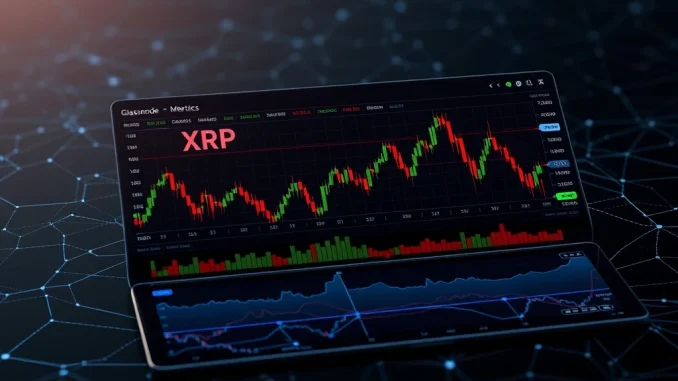
Recent blockchain data analysis reveals a concerning development for XRP investors worldwide: on-chain metrics now mirror patterns observed before the 2022 cryptocurrency bear market. According to Glassnode data cited by industry sources, XRP’s current blockchain indicators show striking similarities to those preceding the 2022 downturn, when the digital asset declined from $0.78 to approximately $0.30. This pattern emerges as XRP continues to struggle around the psychologically significant $2 price level, raising questions about potential market implications for the coming months.
XRP On-Chain Metrics Show Disturbing Parallels
Blockchain analytics firm Glassnode has identified specific on-chain patterns that suggest XRP may be entering a phase similar to early 2022. The analysis reveals that investors who purchased XRP within the last month have accumulated the asset at lower average prices than those who invested six to twelve months ago. Consequently, this creates an asymmetric profit structure where recent buyers find themselves in profit while longer-term holders face unrealized losses. This situation typically creates market tension, as different investor cohorts face contrasting financial realities.
Glassnode analysts explain that when such profit asymmetry develops, market stability becomes increasingly fragile. If price rebounds prove slow to materialize, existing holders facing losses may begin selling to limit further declines. The firm notes this exact pattern preceded XRP’s significant decline in 2022, suggesting historical context provides valuable perspective for current market conditions. Market observers should note that while patterns may repeat, market conditions always contain unique elements that prevent exact historical replication.
Understanding the $2 Psychological Barrier
The $2 price level represents a critical psychological barrier for XRP that has consistently influenced investor behavior since mid-2023. Each retest of this level has triggered substantial market reactions, with weekly losses ranging between $500 million and $1.2 billion according to blockchain data. These figures indicate that many investors have chosen to sell rather than increase their positions when XRP approaches this threshold. The repeated pattern suggests strong resistance at this level, creating what technical analysts describe as a “ceiling effect” on price movements.
Market psychology plays a significant role in how investors respond to specific price levels. The $2 mark represents both a round number and a historical reference point that triggers decision-making among various investor groups. When assets approach such psychologically significant levels, trading volume typically increases as investors reassess their positions. This phenomenon explains why XRP experiences heightened volatility around this particular price point, with blockchain data clearly reflecting these behavioral patterns through on-chain metrics.
Expert Analysis of Holder Behavior Patterns
Cryptocurrency market analysts emphasize that holder behavior provides crucial insights into potential future price movements. The current situation where recent buyers hold profitable positions while longer-term investors face losses creates what economists call “divergent incentive structures.” These structures often precede increased market volatility as different investor groups pursue conflicting objectives. Recent buyers may seek to realize profits quickly, while longer-term holders might either sell to limit losses or hold in anticipation of recovery.
Glassnode’s analysis further indicates that as the disparity between holders’ average costs widens, selling pressure from long-term investors inevitably grows. This dynamic creates what market technicians describe as “overhead supply”—a situation where previous buyers who are now at a loss may sell when prices approach their entry points to break even. This phenomenon can create resistance levels that prove difficult for assets to overcome without substantial new buying pressure from external sources.
Historical Context: The 2022 Comparison
February 2022 provides a relevant historical comparison for current XRP market conditions. During that period, XRP traded at approximately $0.78 before beginning a sustained decline that brought prices to around $0.30 later that year. The on-chain metrics preceding that decline showed patterns remarkably similar to those observed today. Specifically, the profit/loss structure among different investor cohorts displayed comparable asymmetry, with recent buyers in profitable positions while earlier investors faced mounting losses.
Historical analysis reveals that such patterns often develop during transitional market phases when sentiment shifts from bullish to bearish or vice versa. The 2022 example demonstrates how these on-chain metrics can precede significant price movements, though analysts caution against assuming identical outcomes. Market conditions in 2025 differ substantially from those in 2022, with different macroeconomic factors, regulatory environments, and adoption levels influencing cryptocurrency valuations. Nevertheless, the structural similarities warrant careful consideration by market participants.
Market Structure and Potential Implications
The current market structure presents several potential implications for XRP investors and the broader cryptocurrency market. First, the asymmetric profit situation creates conditions where selling pressure could increase if prices fail to advance. Second, the psychological significance of the $2 level means repeated tests of this resistance could exhaust buyer interest. Third, the similarity to 2022 patterns suggests that risk management becomes particularly important during such periods of uncertainty.
Market analysts note that while patterns provide valuable context, they don’t guarantee specific outcomes. The cryptocurrency market has evolved significantly since 2022, with increased institutional participation, regulatory developments, and technological advancements potentially altering historical relationships. However, the fundamental principles of investor psychology and market structure remain relevant, making careful analysis of on-chain data essential for informed decision-making in volatile market conditions.
Broader Cryptocurrency Market Context
XRP’s current situation occurs within a broader cryptocurrency market context that includes several relevant factors. First, regulatory developments continue to influence digital asset markets, with ongoing legal proceedings affecting market sentiment. Second, macroeconomic conditions including interest rates and inflation impact investor risk appetite across all asset classes. Third, technological developments within the XRP ecosystem and competing blockchain networks create both opportunities and challenges for long-term valuation.
The cryptocurrency market has matured significantly since 2022, with increased institutional participation potentially altering historical patterns. However, retail investor behavior often follows recognizable psychological patterns that manifest in on-chain data. This creates a complex market environment where both structural changes and persistent behavioral patterns influence price movements. Analysts must therefore consider both the evolving market context and the enduring principles of investor psychology when interpreting on-chain metrics.
Conclusion
XRP on-chain metrics currently display patterns that resemble those observed before the 2022 bear market, according to Glassnode analysis. The asymmetric profit structure between recent and longer-term investors, combined with psychological resistance around the $2 price level, creates market conditions that warrant careful monitoring. While historical patterns don’t guarantee future outcomes, they provide valuable context for understanding potential market developments. Investors should consider these on-chain metrics alongside broader market factors when making decisions about XRP and other digital assets in the current market environment.
FAQs
Q1: What are on-chain metrics in cryptocurrency analysis?
On-chain metrics refer to data derived directly from blockchain networks, including transaction volumes, wallet activity, profit/loss indicators, and holder behavior patterns that provide insights into market dynamics beyond simple price movements.
Q2: How does the current XRP situation compare to 2022?
The current situation shows similar on-chain patterns to early 2022, particularly regarding profit asymmetry between recent and longer-term investors, though market conditions differ in terms of regulation, adoption, and macroeconomic factors.
Q3: Why is the $2 price level significant for XRP?
The $2 level represents a psychological barrier that has consistently triggered selling pressure since mid-2023, with each approach resulting in substantial weekly losses as investors choose to sell rather than increase positions at this threshold.
Q4: What is asymmetric profit structure in cryptocurrency markets?
Asymmetric profit structure occurs when different investor groups hold positions at substantially different average costs, creating situations where some investors are profitable while others face losses, potentially leading to conflicting market behaviors.
Q5: How reliable are historical patterns for predicting cryptocurrency prices?
While historical patterns provide valuable context, they don’t guarantee specific outcomes due to evolving market conditions, regulatory changes, technological developments, and shifting investor demographics that can alter historical relationships.