In a significant architectural shift for the stablecoin sector, the Noble appchain has announced its pivotal transition from the Cosmos ecosystem to a standalone, Ethereum Virtual Machine-compatible Layer 1 blockchain, with a mainnet launch scheduled for March 18, 2025. This strategic move, first reported by The Block, signals a major evolution in the project’s three-year journey, aiming to unlock new frontiers in decentralized finance infrastructure and developer experience. The decision underscores a broader industry trend where specialized chains reassess their technological foundations to maximize performance, security, and ecosystem growth.
The Noble EVM Launch: A New Chapter for Stablecoin Infrastructure
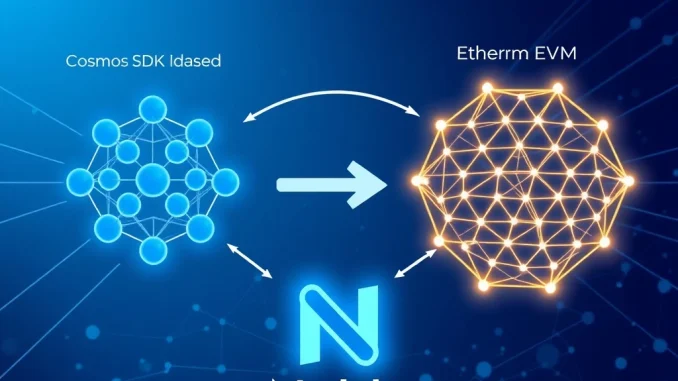
Noble’s transition marks a definitive shift in its technological roadmap. Initially built using the Cosmos SDK and the Inter-Blockchain Communication (IBC) protocol, Noble established itself as a dedicated appchain for native asset issuance, particularly stablecoins. However, the project’s team has now concluded that future growth necessitates a more robust and familiar environment for developers. Consequently, the new Noble EVM will operate as an independent Layer 1 network, fully compatible with the Ethereum development stack.
This compatibility is a crucial advantage. It immediately grants Noble access to the vast ecosystem of Ethereum developers, tools, and smart contracts. Developers can deploy applications using Solidity and leverage existing libraries like OpenZeppelin with minimal friction. The move effectively reduces the barrier to entry for building sophisticated stablecoin-related products, from automated market makers to lending protocols. Furthermore, the standalone architecture allows Noble to optimize its consensus mechanism and fee market specifically for its core use case, potentially offering higher throughput and lower costs than general-purpose chains.
Why Move from Cosmos? Analyzing the Strategic Rationale
The decision to leave the Cosmos ecosystem was not made lightly. In official communications, the Noble team expressed gratitude for the Cosmos stack, which provided a rapid launchpad and seamless interoperability through IBC. Nevertheless, the team identified several compelling reasons for the migration. Primarily, the EVM’s dominance in smart contract development represents an unparalleled network effect. Over 90% of all active Web3 developers are proficient with the EVM environment, according to industry developer reports from late 2024.
Secondly, while Cosmos offers sovereignty, a standalone EVM Layer 1 provides greater control over the entire stack’s performance and security parameters. Noble can now implement custom precompiles, optimize gas costs for stablecoin transactions, and design a validator set tailored for high-value asset security. This level of customization was more constrained within the shared security and tooling model of Cosmos. The transition reflects a maturation from a simple application-specific chain to a foundational settlement layer for a broader suite of financial applications.
Technical Implications and the Developer Experience
The launch of the Noble EVM introduces a new high-performance stack for builders. The core promise is a blockchain that combines Ethereum’s developer familiarity with the throughput and cost-efficiency often associated with alternative Layer 1s. Key technical features expected at launch include:
- EVM Bytecode Compatibility: Full support for existing Ethereum tooling (MetaMask, Hardhat, Foundry).
- Optimized Consensus: A custom proof-of-stake mechanism designed for fast finality in financial transactions.
- Native Stablecoin Infrastructure: Built-in primitives and precompiles for efficient minting, burning, and transferring of stable assets.
- Robbridged Security: A carefully selected and incentivized validator set focused on asset security.
This technical foundation aims to create what Noble calls a “robust foundational product layer.” For example, a developer building a cross-border payment dApp could deploy on Noble EVM to leverage native USD stablecoins while enjoying lower latency and fees than on Ethereum mainnet. The network will also likely feature strong bridging infrastructure to both Ethereum and Cosmos, ensuring its native assets like USDC.noble remain liquid across ecosystems.
Market Impact and the Evolving Appchain Narrative
Noble’s pivot occurs within a dynamic blockchain landscape. The appchain thesis, popularized by Cosmos and Polkadot, emphasized sovereignty and customizability. However, 2024-2025 has seen a pragmatic reassessment, with developer attraction and liquidity becoming paramount. Noble’s move mirrors a broader pattern where projects prioritize ecosystem size over pure architectural ideology. The stablecoin sector, in particular, benefits from deep liquidity pools and composability, which are more readily available within EVM-centric ecosystems like Arbitrum, Polygon, and now, dedicated chains like Noble EVM.
Industry analysts note that this transition could pressure other Cosmos-based financial appchains to evaluate their positioning. Does the benefit of IBC interoperability outweigh the gravitational pull of the EVM’s developer and user base? Noble’s answer appears clear. The success of its EVM launch will be closely watched as a case study. Key metrics will include total value locked (TVL), the number of unique deployed contracts, and the volume of stablecoin transactions within the first six months.
The Roadmap to March 18: Timeline and Expected Outcomes
The scheduled launch date of March 18, 2025, follows an extensive testnet phase. The transition plan involves several critical steps to ensure security and continuity. First, the existing Cosmos-based Noble chain will reach a final state. Then, a secure bridge or migration contract will allow users to move their assets to the new EVM chain. The team has emphasized that this process will be thoroughly audited and conducted with maximum transparency to protect user funds.
Upon launch, the immediate focus will be on onboarding key infrastructure partners: wallets, oracles, block explorers, and bridging services. The long-term vision positions Noble EVM not just as a stablecoin chain, but as the preferred settlement layer for real-world asset (RWA) tokenization and institutional DeFi. By controlling its full stack, Noble can implement compliance primitives and features required by traditional finance, a difficult task on a shared, general-purpose network.
Conclusion
The launch of the Noble EVM represents a strategic and ambitious pivot in the competitive blockchain infrastructure arena. By transitioning from a Cosmos appchain to a standalone EVM Layer 1, Noble is betting that developer familiarity and performance customization will drive the next wave of stablecoin and financial innovation. The March 18, 2025, launch date sets the stage for a new experiment in application-specific blockchain design, one that seeks to merge the best of Ethereum’s ecosystem with the focused utility of a dedicated settlement network. The move will undoubtedly influence how other projects architect their chains in the pursuit of adoption and utility.
FAQs
Q1: What is the main reason for Noble’s transition to an EVM Layer 1?
The primary reason is to tap into the vast Ethereum developer ecosystem and tooling. The EVM standard offers greater developer familiarity, which Noble believes is essential for building a robust foundational product layer and accelerating ecosystem growth beyond what was possible within the Cosmos framework.
Q2: Will my assets on the old Cosmos-based Noble chain be safe during the migration?
Yes, the Noble team has outlined a secure migration process. The existing chain will be finalized, and users will be provided with clear instructions and secure bridge mechanisms to move their assets (like USDC.noble) to the new EVM chain. This process will be audited and communicated well in advance of the transition.
Q3: How will the Noble EVM be different from using Ethereum Layer 2 solutions like Arbitrum?
While both are EVM-compatible, Noble EVM is a standalone Layer 1, not a Layer 2. This means it has its own consensus mechanism and validator set, optimized specifically for stablecoins and financial applications. It offers sovereignty in governance and protocol design, whereas Layer 2s inherit some security and upgrade parameters from Ethereum mainnet.
Q4: Does this mean Noble is abandoning interoperability with Cosmos and IBC?
Not necessarily. While the core chain is moving away from the Cosmos SDK, the project will likely implement bridging solutions to maintain connectivity with the Cosmos ecosystem and IBC. The focus, however, shifts to interoperability with Ethereum and other EVM chains as the primary network effect.
Q5: What are the expected benefits for developers building on Noble EVM?
Developers can expect a high-performance EVM environment with potentially lower transaction fees, faster block times, and custom precompiles tailored for stablecoin operations. They gain access to the entire Ethereum toolchain while building on a network designed from the ground up for financial applications and asset security.