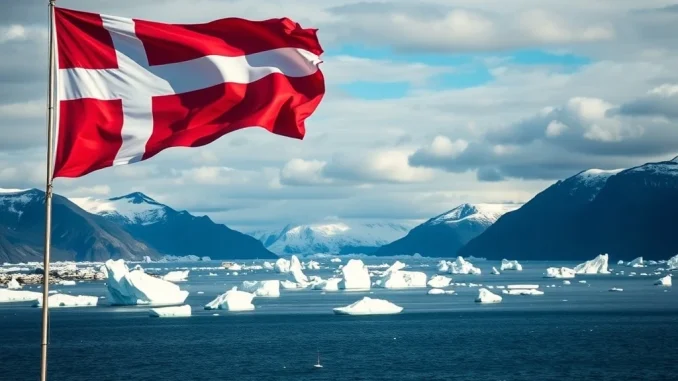
COPENHAGEN, Denmark — In a definitive statement that reverberated through diplomatic circles, Danish Prime Minister Mette Frederiksen has unequivocally declared that Denmark will not relinquish sovereignty over Greenland, thereby rejecting renewed geopolitical pressure regarding the Arctic territory’s status. This firm position follows previous attempts by former U.S. President Donald Trump to purchase Greenland and represents a significant moment in Arctic geopolitics. The announcement, first reported by Walter Bloomberg, underscores Denmark’s commitment to maintaining territorial integrity while navigating complex international relationships.
Greenland Sovereignty: Denmark’s Unwavering Position
Prime Minister Frederiksen’s statement represents more than a simple refusal. It constitutes a strategic declaration of Denmark’s constitutional and historical relationship with Greenland. Denmark has governed Greenland since 1721, initially through colonial administration. However, Greenland gained home rule in 1979 and self-government in 2009. Consequently, Greenland now controls most domestic affairs while Denmark handles foreign policy and defense. This evolving relationship makes any territorial transfer legally and politically complex.
The Danish government consistently emphasizes Greenland’s right to self-determination under current arrangements. Furthermore, Greenland’s 56,000 residents possess Danish citizenship and representation in the Folketing, Denmark’s parliament. Any change to sovereignty status would require Greenlandic approval through referendum. Historical precedent supports this requirement. For instance, Greenland joined the European Economic Community with Denmark in 1973 but withdrew in 1985 after a majority voted against membership.
Historical Context of Greenland Purchase Proposals
The concept of purchasing Greenland is not new in American diplomatic history. In fact, the United States attempted to buy Greenland multiple times before. President Harry Truman offered Denmark $100 million in gold for Greenland in 1946. The Danish government rejected this proposal firmly. Additionally, the U.S. showed interest in acquiring Greenland during the 19th century. These historical attempts establish a pattern of American strategic interest in the territory.
Former President Donald Trump revived this idea publicly in 2019. He confirmed his interest during a White House meeting with Danish officials. Trump later described Greenland as a “large real estate deal” and suggested strategic benefits. His administration reportedly discussed the matter seriously with advisors. The proposal generated immediate controversy and diplomatic tension. Denmark’s then-Prime Minister Lars Løkke Rasmussen called the idea “absurd” at the time.
| Year | U.S. Administration | Offer/Interest | Danish Response |
|---|---|---|---|
| 1867 | Andrew Johnson | Exploratory interest | No formal discussion |
| 1946 | Harry Truman | $100 million offer | Firm rejection |
| 2019 | Donald Trump | Purchase discussion | “Absurd” declaration |
| 2024 | Trump pressure | Tariff threats | Current rejection |
Geopolitical Implications of Arctic Territory
Greenland’s strategic importance has increased dramatically in recent years. Climate change has opened new Arctic shipping routes and resource opportunities. The territory contains substantial mineral resources, including:
- Rare earth elements critical for technology
- Substantial oil and gas reserves
- Gold, zinc, and iron ore deposits
- Potential uranium resources
Additionally, Greenland’s location offers military advantages. The U.S. maintains Thule Air Base in northern Greenland since 1951. This base provides missile warning capabilities and space surveillance. Russia and China have also increased Arctic activities recently. China declared itself a “near-Arctic state” in 2018. It has pursued investment opportunities in Greenland’s infrastructure and resources.
Economic and Diplomatic Considerations
Denmark provides Greenland with an annual block grant of approximately 3.9 billion Danish kroner ($560 million). This subsidy represents about 20% of Greenland’s economy. However, Greenland seeks greater economic independence through resource development. The territory’s government has explored partnerships with international mining companies. These developments create complex economic dependencies beyond the Danish relationship.
Prime Minister Frederiksen’s statement addresses multiple audiences simultaneously. It reassures Greenlandic citizens of Denmark’s commitment. It signals to international actors that sovereignty is non-negotiable. Additionally, it maintains Denmark’s position within NATO and European alliances. The statement comes amid broader European discussions about strategic autonomy. European nations increasingly consider how to protect their interests amid great power competition.
Legal Framework Governing Greenland’s Status
Greenland’s constitutional position within the Kingdom of Denmark creates specific legal protections. The Danish Constitution applies to all parts of the realm unless otherwise specified. The Self-Government Act of 2009 transferred additional powers to Greenland’s government. This act established procedures for potential independence. Specifically, Greenland can initiate independence negotiations if its population approves through referendum.
International law also protects territorial integrity. The United Nations Charter prohibits the acquisition of territory by force. While purchase represents a peaceful transaction, it would still require consent from both Denmark and Greenland. The principle of self-determination gives Greenland’s people decisive influence over their political status. Any sovereignty transfer without their consent would violate international norms.
Expert Analysis on Arctic Sovereignty
Arctic policy experts emphasize Greenland’s growing importance. Dr. Mia Bennett, a political geographer specializing in Arctic development, notes: “Greenland represents the intersection of climate change, resource competition, and geopolitical strategy. Its sovereignty status affects not just Denmark but the entire Arctic governance system.” Similarly, Professor Aki Tonami of Lund University observes: “The Danish statement reflects broader European concerns about external influence in the Arctic. European nations increasingly view the Arctic as a region requiring coordinated policy.”
Military analysts highlight Greenland’s defensive significance. The territory provides early warning capabilities against potential threats from northern approaches. NATO considers the Arctic an area of strategic importance. Denmark’s control of Greenland strengthens NATO’s northern flank. Any change in sovereignty could alter regional security calculations significantly.
Future Implications for Arctic Governance
Denmark’s firm position on Greenland sovereignty will likely influence several ongoing developments. First, it reinforces existing governance structures in the Arctic Council. This intergovernmental forum addresses Arctic issues through consensus among member states. Second, it may affect Greenland’s economic partnerships. Companies considering investments will note the stability of current arrangements. Third, it sets precedent for how Arctic states respond to external interest in their territories.
The statement also has implications for U.S.-Denmark relations. Denmark remains a close NATO ally of the United States. The two countries collaborate on defense through Greenland’s Thule Air Base. However, sovereignty disputes could strain this partnership. Denmark must balance its alliance commitments with its territorial integrity. This balancing act requires careful diplomatic navigation.
Conclusion
Denmark’s definitive statement on Greenland sovereignty represents a significant moment in Arctic affairs. Prime Minister Frederiksen has clearly communicated that Greenland remains an integral part of the Kingdom of Denmark. This position reflects historical continuity, legal reality, and strategic calculation. The Greenland sovereignty question involves complex layers of history, law, economics, and geopolitics. As climate change transforms the Arctic, Greenland’s importance will likely increase further. Denmark’s commitment to maintaining sovereignty provides stability amid regional changes. The statement ultimately reinforces that territorial integrity remains fundamental to international relations, even amid shifting geopolitical pressures.
FAQs
Q1: Why does Denmark control Greenland?
Denmark has governed Greenland since 1721 through historical colonial expansion. Greenland remains part of the Kingdom of Denmark but has extensive self-government since 2009. The relationship has evolved from colonial administration to a constitutional partnership with increasing Greenlandic autonomy.
Q2: Can Greenland become independent from Denmark?
Yes, Greenland has a legal pathway to independence. The Self-Government Act of 2009 allows Greenland to initiate independence negotiations if its population approves through a referendum. Greenland already controls most domestic policy areas, with Denmark handling foreign affairs and defense.
Q3: Why is Greenland strategically important?
Greenland offers several strategic advantages: its location provides early warning capabilities for North American defense, it contains valuable mineral resources including rare earth elements, melting ice opens new shipping routes, and its territory influences Arctic governance discussions.
Q4: Has the U.S. tried to buy Greenland before?
Yes, the United States has shown interest in purchasing Greenland multiple times. President Harry Truman formally offered $100 million for Greenland in 1946, which Denmark rejected. The U.S. also expressed interest during the 19th century, and former President Donald Trump revived the idea in 2019.
Q5: What economic relationship exists between Denmark and Greenland?
Denmark provides Greenland with an annual block grant of approximately 3.9 billion Danish kroner ($560 million), representing about 20% of Greenland’s economy. Greenland seeks greater economic independence through resource development while maintaining current constitutional arrangements.