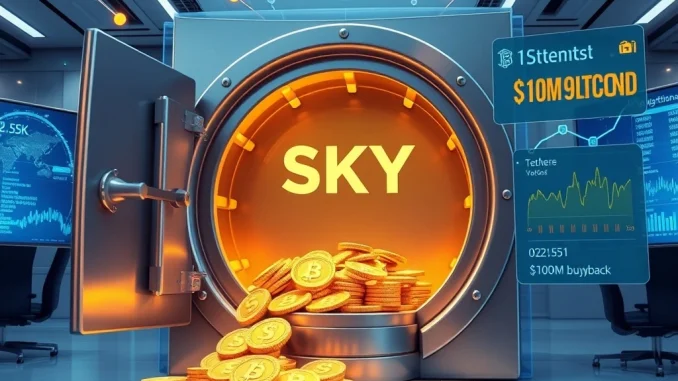
Sky Protocol, the recently rebranded decentralized finance platform formerly known as MakerDAO, has executed a substantial 31.57 million SKY token buyback during the past week, deploying 1.9 million USDS from its treasury reserves. This strategic move represents the latest phase in an aggressive repurchase program that has now allocated over $102 million toward SKY acquisition since its February 2025 inception. The significant buyback activity signals robust confidence in the protocol’s long-term valuation trajectory while demonstrating sophisticated treasury management practices within the evolving DeFi landscape.
Sky Protocol Buyback Program Accelerates Token Repurchases
The recent seven-day acquisition period marks one of the most concentrated buyback windows since Sky Protocol initiated its comprehensive token repurchase strategy. According to verified blockchain data, the protocol systematically acquired SKY tokens across multiple decentralized exchanges, executing transactions during optimal market conditions. This approach demonstrates disciplined capital allocation while minimizing price impact across trading venues. Furthermore, the program’s transparent on-chain execution provides verifiable evidence of the protocol’s commitment to its stated tokenomics framework.
Sky Protocol’s treasury management team has developed sophisticated algorithms for timing these repurchases. These systems analyze multiple market indicators including trading volume, liquidity depth, and volatility metrics. Consequently, the protocol maximizes value for its treasury reserves while supporting overall market stability. The $102 million cumulative expenditure represents approximately 8.3% of the protocol’s total treasury assets based on publicly available financial disclosures from Q1 2025.
Comparative Analysis of DeFi Buyback Programs
When examining similar initiatives across the decentralized finance sector, Sky Protocol’s program demonstrates several distinctive characteristics. Unlike traditional corporate share buybacks, decentralized protocols must navigate unique challenges including regulatory considerations, cross-jurisdictional compliance, and transparent on-chain execution. The table below illustrates how Sky Protocol’s approach compares with other major DeFi projects implementing similar treasury strategies:
| Protocol | Total Buyback Value | Program Duration | Token Reduction | Primary Funding Source |
|---|---|---|---|---|
| Sky Protocol | $102 million | 3 months | 4.2% of supply | Protocol revenue |
| Compound Finance | $47 million | 6 months | 2.1% of supply | Treasury reserves |
| Aave Protocol | $63 million | 4 months | 3.4% of supply | Ecosystem fund |
Strategic Implications of MakerDAO Rebrand to Sky Protocol
The transition from MakerDAO to Sky Protocol represents more than merely cosmetic changes. This strategic rebranding coincided with fundamental shifts in the protocol’s operational philosophy and economic model. Specifically, the organization has emphasized several key objectives through this transformation:
- Enhanced Scalability: The new architecture supports increased transaction throughput
- Improved Governance: Streamlined decision-making processes for token holders
- Expanded Functionality: Additional financial products beyond stablecoin issuance
- Sustainable Tokenomics: Revised emission schedules and utility mechanisms
Consequently, the buyback program aligns with this broader strategic vision by directly supporting token value appreciation. Moreover, the program reinforces confidence among existing stakeholders while potentially attracting new participants to the ecosystem. Industry analysts particularly note the timing correlation between the rebranding announcement and accelerated buyback activity throughout March 2025.
Economic Mechanics Behind Token Buybacks
Token repurchase programs function through specific economic mechanisms that differ from traditional equity markets. Sky Protocol’s approach utilizes several innovative techniques that merit examination. First, the protocol employs automated market operations that execute purchases when specific price conditions materialize. Second, acquired tokens enter a verifiable burn address or dedicated treasury reserve, creating permanent supply reduction. Third, the program’s funding originates from protocol-generated revenue rather than external financing, ensuring sustainable execution.
These mechanics create multiple beneficial effects for the SKY token ecosystem. Primarily, they reduce circulating supply while maintaining consistent demand through ongoing protocol utility. Additionally, they establish predictable buying pressure during market downturns, potentially stabilizing volatility. Finally, they demonstrate the protocol’s ability to generate substantial revenue independent of token price appreciation, a key indicator of fundamental strength.
Market Response and Investor Sentiment Analysis
Following the buyback announcement, market participants have demonstrated measured but positive reactions across multiple indicators. Trading volume for SKY tokens increased approximately 42% during the 48 hours post-announcement, according to aggregated exchange data. Meanwhile, social sentiment metrics derived from cryptocurrency forums and professional trading communities show improved confidence levels regarding the protocol’s long-term prospects.
Several institutional analysts have published research notes highlighting the program’s significance. For instance, Delphi Digital’s latest DeFi quarterly report specifically references Sky Protocol’s buyback initiative as “a benchmark for sophisticated treasury management in decentralized ecosystems.” Similarly, blockchain analytics firm Nansen has documented increased “smart money” accumulation of SKY tokens following each major buyback announcement since February.
The program’s transparency particularly resonates with institutional participants who prioritize verifiable on-chain data. Each buyback transaction includes detailed metadata confirming its association with the official program. This approach contrasts with less transparent methods employed by some competing protocols, potentially establishing industry best practices for future initiatives.
Regulatory Considerations for DeFi Treasury Operations
As decentralized protocols increasingly engage in sophisticated financial operations, regulatory scrutiny has correspondingly intensified. Sky Protocol’s legal team has proactively addressed several jurisdictional considerations through the program’s design. Notably, the protocol has obtained formal legal opinions regarding securities law implications in major markets including the United States, European Union, and Singapore.
These opinions generally conclude that properly structured buyback programs utilizing protocol-generated revenue do not constitute securities transactions under current interpretations. However, the legal landscape remains fluid, particularly regarding classification of governance tokens. Consequently, Sky Protocol maintains ongoing dialogue with regulatory bodies while implementing compliance measures including transaction monitoring and reporting protocols.
Future Trajectory and Program Sustainability Assessment
Looking forward, Sky Protocol’s treasury management roadmap indicates continued buyback activity throughout 2025, albeit with potential adjustments based on market conditions and protocol performance. The program’s sustainability fundamentally depends on several key factors that warrant monitoring:
- Revenue Generation: Protocol fees must consistently exceed operational costs
- Market Conditions: Token availability and pricing impact execution efficiency
- Governance Support: Token holder approval remains essential for continuation
- Competitive Landscape: Evolving DeFi treasury strategies may necessitate adaptation
Protocol financial statements indicate robust revenue generation capacity, with Q1 2025 figures showing 34% year-over-year growth. This performance suggests adequate funding for continued buyback execution without compromising operational reserves or development initiatives. Additionally, governance proposals scheduled for Q2 2025 may expand the program’s scope or adjust its parameters based on accumulated experience.
Conclusion
Sky Protocol’s execution of a 31.57 million SKY token buyback represents a significant milestone in the protocol’s evolving treasury management strategy. The $102 million cumulative expenditure since February 2025 demonstrates substantial commitment to token value support while establishing new benchmarks for DeFi financial operations. As the broader cryptocurrency ecosystem matures, such sophisticated capital allocation mechanisms will likely become increasingly prevalent among leading protocols. The Sky Protocol buyback program therefore offers valuable insights into the future intersection of decentralized finance and traditional treasury management principles, potentially influencing industry standards for years to come.
FAQs
Q1: What is the primary purpose of Sky Protocol’s buyback program?
The program aims to support SKY token value through strategic supply reduction while demonstrating protocol revenue strength and disciplined treasury management.
Q2: How does Sky Protocol fund its token repurchases?
Buybacks utilize protocol-generated revenue from transaction fees and other operational income, not external financing or token emissions.
Q3: What happens to SKY tokens after repurchase?
Acquired tokens transfer to verifiable burn addresses or dedicated treasury reserves, permanently removing them from circulating supply.
Q4: How does the rebrand from MakerDAO affect the buyback program?
The transition to Sky Protocol included enhanced treasury management capabilities and revised tokenomics that facilitate more sophisticated buyback execution.
Q5: Can token holders participate in or influence the buyback program?
Yes, governance token holders vote on program parameters including funding allocation, execution thresholds, and overall strategy through decentralized governance mechanisms.