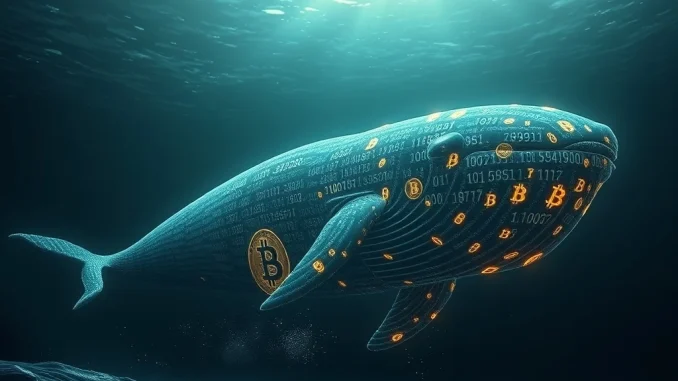
In a stunning development that has sent ripples through the cryptocurrency community, a long-dormant Bitcoin whale has awoken. Blockchain analysts at Lookonchain reported a seismic transfer of 909.38 BTC, valued at approximately $84.62 million, from an address that had shown no activity for over thirteen years. This monumental move, occurring just hours ago, represents one of the most significant reactivations of early Bitcoin wealth in recent memory, immediately triggering intense scrutiny and market speculation.
Bitcoin Whale Emerges From 13-Year Slumber
The transaction originated from a wallet first activated in 2011, a period when Bitcoin traded for mere dollars and was largely the domain of cypherpunks and tech pioneers. Consequently, the movement of such a substantial holding after more than a decade of complete inactivity represents a major event. Blockchain analytics firms swiftly confirmed the transfer’s details, noting the funds moved to a fresh, previously unused address. This action highlights the enduring nature of early cryptocurrency investments and the powerful, often silent, influence of original holders.
Furthermore, the timing of this transfer invites immediate analysis. Market participants often watch dormant whale movements for signals about holder sentiment. A transfer of this magnitude from a veteran holder can influence short-term market psychology, even if the ultimate intent remains unclear. Analysts are now meticulously tracing the new destination address for any subsequent activity that might reveal the whale’s strategy.
Historical Context of Early Bitcoin Accumulation
To understand the significance of this event, one must consider the Bitcoin landscape of 2011. The network was in its infancy, with a much smaller community and minimal institutional interest. Acquiring 909 BTC at that time required foresight that few possessed. Therefore, this wallet belongs to a cohort of early adopters who recognized Bitcoin’s potential long before mainstream acceptance.
- 2011 Price Environment: Bitcoin’s price fluctuated between $0.30 and $30 throughout the year.
- Mining Accessibility: Individuals could mine significant amounts using consumer-grade computer hardware.
- Acquisition Methods: Early BTC was often obtained through mining, direct purchases on nascent exchanges like Mt. Gox, or peer-to-peer trades.
This historical context underscores the astronomical appreciation of this specific holding. A $1,000 investment in Bitcoin at a 2011 average price of $10 would now be worth millions. The whale’s patience has resulted in one of the most successful long-term investments in financial history.
Expert Analysis on Dormant Supply Dynamics
Cryptocurrency analysts emphasize the importance of dormant supply. A significant portion of Bitcoin’s total supply has not moved in over five years, often referred to as “lost” or deeply held coins. The reactivation of such an old wallet reduces the truly dormant supply, which can have subtle implications for market economics. According to data from various blockchain intelligence platforms, the percentage of BTC that hasn’t moved in over a decade has been steadily decreasing, suggesting early holders are gradually becoming active.
Market strategists point out that not all movements from old wallets lead to sell pressure. Often, these transfers are for consolidation, security upgrades like moving to a modern hardware wallet, or estate planning. However, the market typically reacts nervously until the holder’s intent becomes clearer. The sheer size of this transfer means it will be monitored closely by exchanges and large traders for any indication of an impending sale.
Potential Impacts on the 2025 Cryptocurrency Market
The immediate market impact of this transfer is psychological. News of a massive, dormant wallet stirring can create short-term volatility as traders assess the potential for new selling pressure. In the current 2025 market environment, characterized by greater institutional participation and regulatory clarity, such events are digested differently than in Bitcoin’s more speculative past. Nevertheless, they remain powerful narratives.
Moreover, this event serves as a potent reminder of Bitcoin’s foundational distribution. It underscores the concentration of wealth among early adopters and the ongoing process of that wealth potentially being redistributed through sales, gifts, or other transactions. Each reactivation adds liquidity and history to the circulating supply, slowly shifting the ownership base over time.
Conclusion
The awakening of a Bitcoin whale dormant for thirteen years, resulting in an $84.6 million transfer, is a landmark event that blends cryptocurrency history with modern market dynamics. This transaction highlights the incredible foresight of early adopters and the lasting power of the Bitcoin network. While the immediate market implications may be limited to sentiment, the movement provides invaluable data for analysts studying holder behavior and supply distribution. Ultimately, it reinforces a core narrative of cryptocurrency: patient conviction in innovative technology can yield extraordinary results, and the blockchain preserves a transparent, immutable record of that journey for all to see.
FAQs
Q1: What is a “Bitcoin whale”?
A Bitcoin whale is an individual or entity that holds a sufficiently large amount of Bitcoin to potentially influence market prices through their trading activity. There is no official threshold, but holdings of 1,000 BTC or more are commonly considered whale-sized.
Q2: Why would a wallet be dormant for 13 years?
Common reasons include loss of private keys, long-term “HODLing” strategy with no intention to sell, inheritance issues, or simply forgetting about the investment. For early adopters, the coins may have been mined or purchased at very low prices and held through immense volatility.
Q3: Does this transfer mean the whale will sell their Bitcoin?
Not necessarily. Transferring funds to a new address is often a precursor to other actions like improving security, consolidating wallets, or using the funds in decentralized finance (DeFi). It does not automatically indicate an imminent sale on an exchange.
Q4: How can analysts track such old Bitcoin transactions?
All Bitcoin transactions are recorded permanently on the public blockchain. Analytics firms use sophisticated software to cluster addresses, track fund flows, and label wallets based on their activity history and connections to known entities like exchanges.
Q5: What percentage of Bitcoin is considered lost or dormant?
Estimates vary, but some analyses suggest that up to 20% of the total Bitcoin supply may be permanently lost due to lost keys, and a significant additional portion hasn’t moved in over five years. The reactivation of very old wallets slowly chips away at this dormant supply.