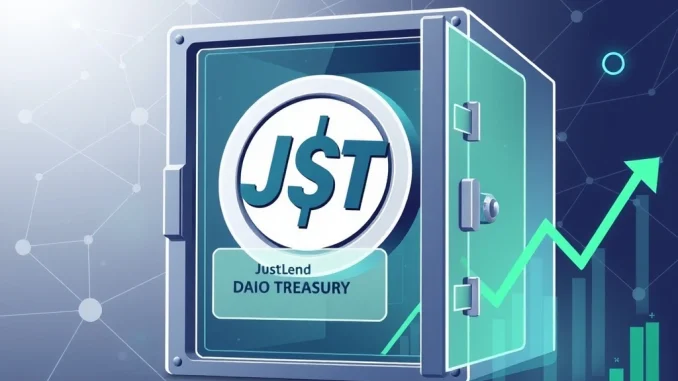
In a decisive move underscoring its long-term vision, the JustLend DAO governance community has executed a substantial $21 million buyback of its native JST token, a strategic action with immediate implications for the Tron ecosystem and the broader decentralized finance landscape. This significant capital allocation, finalized in Q1 2025, involved the acquisition of 525 million JST tokens from the open market, directly influencing the token’s circulating supply and investor sentiment. Consequently, this event provides a critical case study in modern DeFi treasury management and tokenomic strategy.
Analyzing the JustLend DAO JST Buyback Mechanics
The JustLend DAO operates as the official money market protocol on the Tron blockchain, facilitating lending and borrowing of digital assets. Its governance token, JST, empowers holders to vote on key protocol parameters. The recent buyback initiative represents a direct application of the protocol’s accumulated treasury funds. By deploying capital to repurchase JST, the decentralized autonomous organization effectively returns value to its community and token holders. This mechanism reduces the number of JST tokens in public circulation, a process often associated with a deflationary economic model.
Market analysts immediately noted the transaction’s scale. A $21 million buyback ranks as one of the more significant token repurchase events in the DeFi sector for the year. The action follows a period of robust fee generation for the JustLend protocol, funded by interest rate spreads and transaction fees. Therefore, the buyback demonstrates a practical use of protocol revenue beyond simple treasury accumulation. It signals a mature approach to capital allocation, mirroring strategies seen in traditional corporate finance but executed through decentralized, on-chain governance.
The Broader Context of DeFi Treasury Management
This event does not occur in a vacuum. Over the past two years, leading DeFi protocols have increasingly explored sophisticated treasury management strategies. These strategies include token buybacks, staking rewards, and strategic ecosystem grants. The JustLend DAO’s move aligns with an industry-wide trend where protocols leverage their native treasuries to enhance token utility and stability. For instance, other major lending protocols have implemented similar programs, though the scale and execution method vary. The table below provides a concise comparison of recent notable DeFi buyback events.
| Protocol | Token | Approx. Value | Year | Primary Funding Source |
|---|---|---|---|---|
| JustLend DAO | JST | $21 Million | 2025 | Protocol Revenue |
| Compound Finance | COMP | $50 Million (Program) | 2024 | Treasury Reserves |
| Aave Protocol | AAVE | $25 Million (Program) | 2023 | Ecosystem Reserve |
This comparative data highlights the JustLend DAO’s commitment to a proactive treasury policy. The use of direct protocol revenue, rather than pre-minted treasury reserves, links the buyback’s success directly to the platform’s operational performance. This creates a virtuous cycle where strong protocol usage funds community incentives.
Immediate Market Impact and Tokenomic Implications
The announcement of the JST buyback generated measurable reactions across cryptocurrency markets. Typically, a buyback of this magnitude can influence several key metrics:
- Supply Dynamics: Removing 525 million JST from circulation directly reduces the sell-side pressure on the token. This can positively impact the token’s price stability.
- Holder Confidence: The action is widely interpreted as a strong signal of self-confidence from the protocol’s governance body. It demonstrates a belief that the native token is undervalued relative to the protocol’s future prospects.
- Governance Participation: Often, repurchased tokens are allocated to community incentive programs or are permanently burned. JustLend DAO has indicated these tokens will be managed under community governance, potentially for future ecosystem grants or staking rewards.
Data from on-chain analytics platforms showed a noticeable shift in exchange flow balances following the news. Specifically, the net flow of JST tokens from exchanges to private wallets increased, suggesting a near-term holder sentiment shift from trading to holding. Furthermore, the buyback provides a tangible example of value accrual to the JST token, a concept crucial for sustainable DeFi economic models. Protocols that successfully channel revenue back to token holders often see improved long-term alignment between users, stakeholders, and developers.
Expert Perspectives on Strategic DeFi Moves
Industry observers emphasize the importance of transparency in such operations. “A well-executed, transparent buyback can be a powerful tool for a DAO,” notes a blockchain economist from a major crypto research firm. “It converts abstract treasury value into direct, on-chain action that benefits the token holder base. The critical factor is that the decision emerges from clear, community-led governance, not a centralized mandate.” The JustLend DAO proposal and subsequent vote were publicly recorded on the Tron blockchain, fulfilling this transparency requirement.
This governance-first approach differentiates DAO-led buybacks from corporate share repurchases. Every step, from the initial proposal to the final execution of the market purchase, is subject to community debate and vote. This process inherently incorporates a layer of market sentiment and collective strategic thinking. Therefore, the $21 million buyback is as much a story about decentralized governance maturity as it is about financial strategy.
The Road Ahead for JustLend and DeFi Governance
The completion of this buyback likely sets a precedent for the JustLend DAO’s future treasury operations. Community forums are already discussing potential next steps, including the establishment of a recurring buyback program tied to a percentage of protocol revenue. Such a program would automate value return and further solidify the JST token’s deflationary characteristics. Additionally, the effective use of treasury funds strengthens the protocol’s position within the competitive Tron DeFi ecosystem and the wider multi-chain DeFi world.
Looking forward, the success of this initiative will be measured by several factors. Key performance indicators will include sustained growth in Total Value Locked (TVL), increased governance participation rates, and the long-term price stability of the JST token relative to the broader market. The move also places pressure on competing protocols to articulate and execute their own value-accrual strategies. In essence, JustLend DAO has raised the bar for treasury management expectations in decentralized finance.
Conclusion
The JustLend DAO’s $21 million JST buyback represents a significant milestone in the evolution of decentralized finance. This strategic action demonstrates a sophisticated application of protocol revenue, a commitment to token holder value, and the operational capacity of on-chain governance. By successfully executing this large-scale repurchase, JustLend DAO not only impacts the immediate supply dynamics of its JST token but also contributes to the broader narrative of mature, sustainable, and community-driven economic models within the blockchain industry. The event will undoubtedly serve as a reference point for other DAOs considering similar treasury strategies in 2025 and beyond.
FAQs
Q1: What is a token buyback in the context of a DAO?
A token buyback occurs when a decentralized autonomous organization uses its treasury funds to purchase its own native token from the open market. This reduces the circulating supply and can signal confidence in the project’s future.
Q2: Where did JustLend DAO get the $21 million for the JST buyback?
The funds were sourced from the protocol’s accumulated revenue, generated primarily through lending interest rate spreads and transaction fees paid by users of the JustLend money market.
Q3: What happens to the JST tokens that were bought back?
The repurchased tokens are held in the JustLend DAO treasury. Their future use will be determined by community governance votes, with potential options including ecosystem grants, staking rewards, or permanent removal from supply (burning).
Q4: How does a buyback affect the price of a token like JST?
While not guaranteed, a buyback can reduce selling pressure and increase demand, potentially supporting the token’s price. It also often improves investor sentiment regarding the token’s long-term value.
Q5: Is this a common practice in DeFi?
Yes, token buybacks and burns have become an increasingly common treasury management tool for mature DeFi protocols seeking to create sustainable, deflationary tokenomics and return value to their communities.