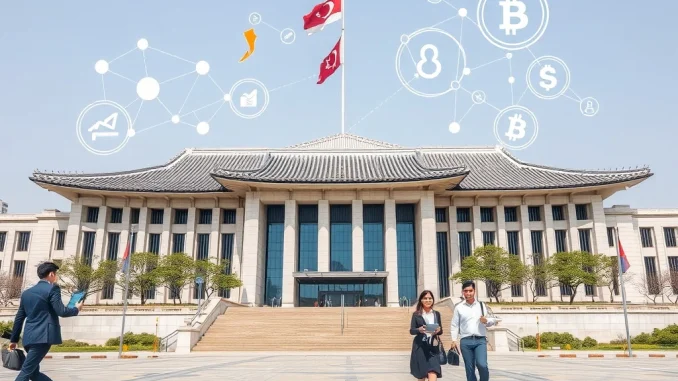
SEOUL, South Korea – December 2024 marks a pivotal moment in Asian financial regulation as South Korea’s National Assembly passes comprehensive amendments to the Capital Markets Act and Electronic Securities Act, establishing the nation’s first legal framework for token securities and security token offerings (STOs). This groundbreaking legislation, which passed during a plenary session after approximately three years of regulatory development, officially defines the digitization of securities using distributed ledger technology and creates new institutional structures for digital asset management. The bill’s passage represents South Korea’s most significant regulatory advancement in digital assets since its initial cryptocurrency exchange regulations, positioning the nation as a potential leader in Asia’s institutional blockchain adoption.
South Korean Token Securities Legislation: A Three-Year Regulatory Journey
The newly passed legislation culminates a meticulous regulatory process that financial authorities initiated in late 2021. Initially, South Korea’s Financial Services Commission released preliminary guidelines for security token offerings, creating a foundation for today’s comprehensive legal framework. Subsequently, the legislation underwent multiple revisions and committee reviews before reaching the National Assembly floor. This careful development process ensured alignment with existing financial regulations while addressing the unique characteristics of blockchain-based securities.
Furthermore, the amendments establish clear legal definitions for token securities under the Capital Markets Act. Specifically, the legislation defines token securities as digital representations of traditional securities recorded on distributed ledgers. Additionally, the bill integrates these digital assets into South Korea’s existing electronic registration system. This integration creates a bridge between conventional financial infrastructure and emerging blockchain technology.
The legislation also establishes a new category of financial institutions called issuer account management institutions. These specialized entities will oversee the issuance, recording, and management of token securities on distributed ledgers. Consequently, qualified issuers gain the ability to directly manage their digital securities through authorized platforms. This structural innovation represents a significant departure from traditional securities management systems.
Capital Markets Act Amendments: Technical Framework and Implementation
The amended Capital Markets Act provides specific technical requirements for token securities issuance and management. First, the legislation mandates that all token securities must comply with existing securities regulations regarding disclosure, investor protection, and market conduct. Second, the amendments establish technical standards for distributed ledger implementation, ensuring security, transparency, and interoperability. Third, the legislation creates clear guidelines for secondary market trading of token securities.
Moreover, the Electronic Securities Act amendments facilitate the integration of token securities into South Korea’s financial infrastructure. These changes enable traditional financial institutions to participate in the token securities ecosystem while maintaining regulatory compliance. The legislation also addresses cross-border considerations, establishing protocols for international token securities transactions involving South Korean entities.
The following table outlines key components of the legislation:
| Component | Description | Implementation Timeline |
|---|---|---|
| Legal Definition | Formal recognition of token securities under Capital Markets Act | Upon promulgation |
| Issuer Account Management | New category of financial institutions for STO management | 6 months post-promulgation |
| Technical Standards | DLT implementation requirements for security tokens | 3 months post-promulgation |
| Investor Protection | Enhanced disclosure and suitability requirements | Upon promulgation |
Expert Analysis: Implications for Asian Financial Markets
Financial technology experts highlight several significant implications from South Korea’s legislative advancement. First, the legislation creates a regulatory model that other Asian nations may emulate, particularly Japan and Singapore which have developed their own digital asset frameworks. Second, the clear legal definitions reduce regulatory uncertainty that previously hindered institutional investment in South Korean blockchain projects. Third, the legislation positions South Korean financial institutions to develop innovative products combining traditional finance with blockchain technology.
Additionally, market analysts project substantial economic impact from the legislation. Industry estimates suggest the South Korean token securities market could reach approximately $10 billion within three years of full implementation. This growth would primarily come from real estate tokenization, corporate bond digitization, and investment fund tokenization. The legislation also creates opportunities for technology providers specializing in blockchain infrastructure for financial applications.
Global Context: South Korea’s Position in International STO Development
South Korea’s legislative advancement occurs within a rapidly evolving global landscape for security token regulations. Comparatively, the United States has developed a patchwork regulatory approach through SEC enforcement actions and state-level initiatives. Meanwhile, the European Union progresses with its Markets in Crypto-Assets (MiCA) regulation, which includes provisions for tokenized securities. Switzerland and Singapore have established comprehensive frameworks that South Korean regulators studied during their development process.
However, South Korea’s approach contains distinctive elements that differentiate it from other jurisdictions. Specifically, the legislation emphasizes integration with existing financial infrastructure rather than creating parallel systems. This approach minimizes disruption while enabling innovation. Additionally, South Korea’s framework includes particularly robust investor protection measures, reflecting lessons from previous cryptocurrency market volatility in the nation.
The legislation also addresses several technical challenges that have hindered security token adoption globally:
- Interoperability: Standards for different blockchain platforms to interact
- Settlement Finality: Clear rules for when token securities transactions become irreversible
- Custody Solutions: Regulatory framework for digital asset custodians
- Disclosure Requirements: Specific information that must accompany token securities offerings
Implementation Timeline and Next Steps for Token Securities
The passed legislation now proceeds through several implementation stages before becoming fully operational. First, the bill requires Cabinet approval, which typically occurs within 30 days of National Assembly passage. Second, presidential promulgation officially enacts the legislation, usually within 15 days of Cabinet approval. Third, regulatory agencies must develop detailed implementation rules and technical standards.
Financial authorities estimate that full implementation will require approximately six to nine months after promulgation. During this period, the Financial Services Commission will establish specific licensing requirements for issuer account management institutions. Simultaneously, the Korea Exchange will develop technical specifications for token securities trading platforms. Market participants can begin preparing applications and developing compliant systems during this implementation phase.
Industry observers identify several immediate effects from the legislation’s passage. First, existing blockchain projects with security token elements can now proceed with greater regulatory certainty. Second, traditional financial institutions can accelerate their digital asset strategies with clear guidelines. Third, international firms seeking to offer token securities in South Korea can begin compliance preparations. Fourth, educational institutions and training providers will develop programs focused on token securities compliance and technology.
Conclusion
South Korea’s passage of comprehensive token securities legislation represents a watershed moment for digital asset regulation in Asia. The National Assembly’s approval of amendments to the Capital Markets Act and Electronic Securities Act establishes a clear, integrated framework for security token offerings and blockchain-based securities. This legislation, developed over three years of regulatory refinement, positions South Korea as a potential leader in institutional blockchain adoption while maintaining robust investor protections. As the bill proceeds through Cabinet approval and promulgation, market participants can anticipate significant opportunities in tokenized real estate, digital bonds, and innovative financial products. South Korea’s thoughtful approach to token securities regulation may serve as a model for other nations navigating the intersection of traditional finance and blockchain innovation.
FAQs
Q1: What exactly are token securities according to South Korea’s new legislation?
A1: The legislation defines token securities as digital representations of traditional securities recorded on distributed ledger technology. These include tokenized versions of stocks, bonds, investment fund units, and other financial instruments that would normally qualify as securities under existing capital markets regulations.
Q2: How does this legislation differ from South Korea’s previous cryptocurrency regulations?
A2: While previous regulations focused primarily on cryptocurrency exchanges and anti-money laundering compliance, this legislation specifically addresses security tokens representing traditional financial instruments. The new framework integrates token securities into existing financial regulations rather than treating them as entirely separate asset classes.
Q3: When will the token securities legislation become fully operational?
A3: The legislation requires Cabinet approval and presidential promulgation, followed by a 6-9 month implementation period for detailed regulations and technical standards. Full operational status is expected approximately 9-12 months from the National Assembly passage date.
Q4: Can international companies issue token securities in South Korea under this new framework?
A4: Yes, the legislation includes provisions for cross-border token securities offerings, though international issuers must comply with South Korean regulations and may need to work through licensed local institutions for certain aspects of issuance and distribution.
Q5: What types of financial institutions can become issuer account management institutions?
A5: The legislation allows various financial institutions to apply for this designation, including securities firms, banks with appropriate licenses, and specialized financial technology companies that meet capital requirements, technical capabilities, and compliance standards established by financial regulators.