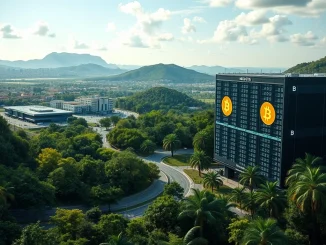
JAKARTA, Indonesia – In a significant move for both infrastructure finance and blockchain adoption, the Global Settlement Network (GSN) has launched a pioneering pilot program to tokenize water purification facilities. This ambitious initiative, first reported by Cointelegraph, marks a concrete step toward GSN’s broader goal of a $200 million tokenization project across Southeast Asia. The program uniquely blends real-world asset (RWA) digitization with local currency stablecoin development, targeting critical public utility assets.
GSN’s Tokenization Strategy for Water Infrastructure
The Global Settlement Network will begin its landmark project in Jakarta. Consequently, the firm plans to digitize eight government-contracted water purification plants. This initial phase aims to raise $35 million in capital. Furthermore, GSN will concurrently pilot a rupiah-based stablecoin payment system over the next year. This dual-track approach demonstrates a comprehensive strategy for modernizing infrastructure finance.
Tokenization involves creating digital tokens on a blockchain that represent ownership or a stake in a physical asset. For infrastructure, this process can unlock liquidity, enable fractional ownership, and streamline complex financing. The water sector in Southeast Asia faces immense pressure from rapid urbanization and climate change. Therefore, innovative funding mechanisms are critically needed.
The Broader Context of Real-World Asset Tokenization
The financial technology sector has increasingly focused on RWAs. Major institutions like BlackRock have highlighted tokenization as a key future trend. However, most projects target bonds, treasury products, or private equity. GSN’s focus on essential public utilities represents a more complex and impactful application. Successfully tokenizing operational facilities requires robust legal frameworks, accurate valuation models, and regulatory cooperation.
Analysts note that Southeast Asia presents a unique opportunity for such innovation. The region has high digital adoption rates but also faces significant infrastructure funding gaps. According to the Asian Development Bank, the region needs over $3 trillion in climate-adjusted infrastructure investment by 2030. Blockchain-based solutions could help bridge this financing shortfall by attracting global digital asset investors to local projects.
Expert Analysis on Regulatory and Technical Hurdles
Industry experts point to several critical success factors for GSN’s project. First, the legal structure defining token holder rights must be ironclad. Second, the valuation of the water facilities must be transparent and auditable. Third, the integration of the rupiah stablecoin requires close work with Indonesian financial authorities to ensure compliance with monetary policy.
“Tokenizing infrastructure is not merely a technical exercise,” explains Dr. Anya Sharma, a fintech researcher at the Singapore Institute of Technology. “It’s a multidisciplinary challenge involving law, finance, engineering, and governance. The pilot’s 12-month timeline for the stablecoin component is particularly ambitious, as it involves building trust in a new digital payment rail for utility settlements.”
Potential Impacts and Future Roadmap
If successful, the GSN pilot could create a replicable blueprint. Other nations in the region with similar challenges, such as Vietnam or the Philippines, might adopt the model. The potential impacts are multifaceted:
- Increased Investment: Fractional tokens could allow smaller investors to participate in infrastructure projects traditionally reserved for large institutions.
- Operational Efficiency: Smart contracts could automate revenue distribution, maintenance funding, and compliance reporting.
- Currency Innovation: A functioning rupiah stablecoin could reduce forex volatility for international investors and lower transaction costs.
The project’s timeline suggests a phased expansion. Following the Jakarta pilot, GSN will likely assess the model’s performance before scaling to the full $200 million target. This could involve different asset types or expansion into neighboring countries. The long-term vision appears to be creating a digital ecosystem for infrastructure finance across Southeast Asia.
Conclusion
The Global Settlement Network’s pursuit of a $200 million tokenization project for Southeast Asian water facilities represents a bold convergence of blockchain technology and essential public utility financing. Starting with a focused pilot in Jakarta, the initiative tackles both asset digitization and payment system innovation. While significant regulatory and technical hurdles remain, the project highlights the growing maturity of real-world asset tokenization. Its progress will be closely watched as a potential model for addressing the global infrastructure deficit through digital finance.
FAQs
Q1: What does it mean to tokenize a water facility?
Tokenization creates digital tokens on a blockchain that represent ownership or a financial stake in the physical water purification plant. These tokens can be traded or held, potentially opening the asset to a wider pool of investors.
Q2: Why is GSN starting this project in Southeast Asia?
Southeast Asia has a high demand for infrastructure investment, supportive digital adoption rates, and pressing needs in water security, making it a strategic testing ground for this innovative financing model.
Q3: What is the purpose of the rupiah-based stablecoin?
The stablecoin is designed to facilitate payments and settlements within the tokenized ecosystem. It aims to provide a digital representation of the Indonesian rupiah, reducing currency risk for participants and streamlining transactions.
Q4: What are the main challenges for this type of project?
Key challenges include establishing clear legal frameworks for digital ownership, ensuring accurate and transparent asset valuation, obtaining regulatory approvals, and integrating the technology with existing utility operations.
Q5: How could this project benefit local communities?
By potentially unlocking new funding, the tokenization model could accelerate the development and maintenance of clean water infrastructure, directly impacting public health and quality of life. The stablecoin pilot could also advance local digital payment capabilities.