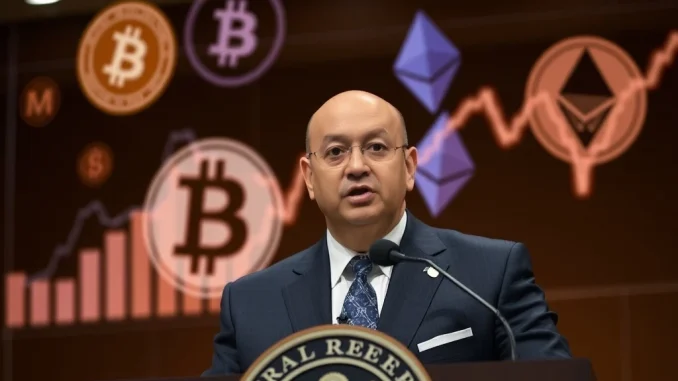
MINNEAPOLIS, March 2025 – In a striking declaration that reverberated through financial circles, Minneapolis Federal Reserve President Neel Kashkari delivered a blunt assessment of cryptocurrency’s fundamental value proposition, stating digital assets remain “useless to consumers” despite years of market development and technological advancement. This cryptocurrency criticism from one of the Federal Reserve’s most prominent skeptics arrives at a pivotal moment for digital asset regulation and adoption, challenging industry narratives about blockchain technology’s consumer benefits.
Neel Kashkari’s Cryptocurrency Criticism and Regulatory Context
Federal Reserve President Neel Kashkari articulated his position during a monetary policy forum in Minneapolis last week. Consequently, his remarks represent the latest chapter in an ongoing debate about cryptocurrency’s practical utility beyond speculative trading. Moreover, Kashkari’s perspective carries significant weight given his role within the U.S. central banking system and his previous positions in financial regulation.
Kashkari specifically questioned whether cryptocurrencies solve genuine consumer problems that traditional financial systems cannot address. He highlighted several areas where digital assets allegedly fail consumers:
- Transaction efficiency: Many cryptocurrencies process transactions slower than established payment networks
- Cost effectiveness: Network fees often exceed those of conventional banking services
- Price stability: Extreme volatility undermines cryptocurrency’s function as a reliable store of value
- Security concerns: Consumers face substantial risks from hacking, scams, and irreversible transactions
- Regulatory uncertainty: Inconsistent oversight creates consumer protection gaps
These cryptocurrency consumer utility concerns emerge as global regulators intensify their scrutiny of digital asset markets. Furthermore, Kashkari’s comments align with broader Federal Reserve skepticism about private cryptocurrencies potentially destabilizing financial systems.
Historical Perspective on Central Bank Digital Currency Positions
The Federal Reserve has maintained a cautious approach toward cryptocurrency adoption for nearly a decade. Initially, central bankers expressed curiosity about blockchain technology’s potential. However, their stance hardened as market volatility increased and consumer protection issues multiplied. Notably, Kashkari represents a particularly skeptical faction within the Federal Reserve System regarding digital assets.
This digital asset regulation debate intensified following several high-profile cryptocurrency failures in 2022-2023. Subsequently, regulators worldwide accelerated efforts to establish clearer frameworks for digital asset oversight. The table below illustrates key regulatory developments:
| Year | Regulatory Action | Impact on Consumer Protection |
|---|---|---|
| 2022 | Executive Order on Digital Assets | Coordinated U.S. government approach to cryptocurrency regulation |
| 2023 | SEC enforcement actions against exchanges | Increased scrutiny of trading platforms and token offerings |
| 2024 | Basel Committee crypto asset standards | International banking standards for cryptocurrency exposures |
| 2025 | Fed CBDC research publication | Central bank exploration of digital currency alternatives |
Kashkari’s recent comments reflect this evolving regulatory landscape. Additionally, they highlight persistent tensions between innovation advocates and financial stability guardians.
Expert Analysis of Cryptocurrency Utility Claims
Financial technology researchers have produced conflicting assessments of cryptocurrency’s consumer benefits. Some studies suggest blockchain technology enables financial inclusion for unbanked populations. Conversely, other research indicates cryptocurrency adoption remains concentrated among wealthy, technologically sophisticated users. This disparity fuels ongoing debate about digital assets’ real-world impact.
Consumer advocacy organizations report increasing complaints about cryptocurrency-related issues. Specifically, they document problems with transaction reversibility, wallet security, and misleading marketing claims. These consumer protection concerns validate some regulatory skepticism about cryptocurrency markets.
Cryptocurrency Market Response and Industry Perspectives
Cryptocurrency industry representatives quickly challenged Kashkari’s assessment. They emphasized blockchain technology’s potential to reduce cross-border payment costs and increase financial transparency. Moreover, they highlighted decentralized finance applications that provide alternative lending and investment opportunities. However, industry advocates acknowledge significant usability challenges for mainstream consumers.
Market data reveals interesting cryptocurrency adoption patterns. While transaction volumes have increased steadily, consumer usage remains fragmented across applications. Payment adoption lags significantly behind investment and trading activities. This usage pattern supports arguments about cryptocurrency’s limited utility for everyday transactions.
Several factors contribute to cryptocurrency’s consumer adoption challenges:
- Technical complexity: Managing private keys and understanding blockchain mechanics present barriers
- Tax implications: Cryptocurrency transactions create complex reporting requirements
- Merchant acceptance: Limited retail integration reduces practical utility
- Educational gaps: Consumers lack reliable information about digital asset risks and benefits
These cryptocurrency consumer utility limitations persist despite substantial industry investment in user experience improvements.
Central Bank Digital Currency as Potential Alternative
Federal Reserve officials, including Kashkari, often contrast private cryptocurrencies with potential central bank digital currencies. CBDCs would provide digital payment benefits without cryptocurrency’s volatility and security risks. However, CBDC development raises complex policy questions about privacy, financial intermediation, and monetary policy transmission.
The Federal Reserve continues researching CBDC possibilities while maintaining its cautious approach. This research acknowledges digital payment innovations while prioritizing financial stability and consumer protection. Consequently, the CBDC versus cryptocurrency debate represents a central tension in modern monetary system evolution.
International developments inform the U.S. approach to digital currency policy. Several countries have launched or piloted CBDC systems with varying designs and success rates. These experiments provide valuable data about digital currency implementation challenges and opportunities.
Consumer Behavior and Digital Asset Adoption Patterns
Consumer surveys reveal nuanced attitudes toward cryptocurrency adoption. While interest remains substantial, practical usage remains limited. Most cryptocurrency holders view digital assets primarily as investments rather than transaction mediums. This behavioral pattern supports arguments about cryptocurrency’s limited utility for everyday financial activities.
Demographic analysis shows cryptocurrency adoption varies significantly across population segments. Younger, technologically literate consumers demonstrate higher engagement levels. However, even within this group, cryptocurrency usage for routine transactions remains relatively uncommon. These adoption patterns suggest cryptocurrency’s consumer utility may evolve gradually rather than disruptively.
Conclusion
Minneapolis Federal Reserve President Neel Kashkari’s declaration that cryptocurrency remains “useless to consumers” highlights persistent questions about digital assets’ practical utility. This cryptocurrency criticism emerges from legitimate concerns about volatility, security, and consumer protection. While blockchain technology continues evolving, significant barriers hinder mainstream cryptocurrency adoption for everyday financial activities. The ongoing debate between innovation advocates and stability guardians will shape digital asset regulation and development for years. Ultimately, cryptocurrency’s consumer value proposition must address real-world needs beyond speculative trading to achieve broader acceptance.
FAQs
Q1: What specific criticisms did Neel Kashkari make about cryptocurrency?
Neel Kashkari argued that cryptocurrency fails to solve genuine consumer problems, citing issues with transaction speed, cost effectiveness, price stability, security, and regulatory uncertainty as fundamental limitations.
Q2: How does Kashkari’s position fit within broader Federal Reserve views on cryptocurrency?
Kashkari represents a skeptical faction within the Federal Reserve System, though the institution generally maintains cautious skepticism about private cryptocurrencies while researching central bank digital currency alternatives.
Q3: What consumer protection issues are associated with cryptocurrency usage?
Major concerns include irreversible transactions, hacking vulnerabilities, scam prevalence, misleading marketing, tax complexity, and inadequate dispute resolution mechanisms compared to traditional financial systems.
Q4: How have cryptocurrency markets responded to regulatory skepticism?
Industry representatives emphasize blockchain’s potential benefits while acknowledging usability challenges. Market data shows increasing transaction volumes but limited adoption for everyday payments versus investment activities.
Q5: What alternatives to private cryptocurrency does the Federal Reserve consider?
The Federal Reserve researches central bank digital currencies that could provide digital payment benefits without cryptocurrency’s volatility and security risks, though CBDC implementation raises complex policy questions.