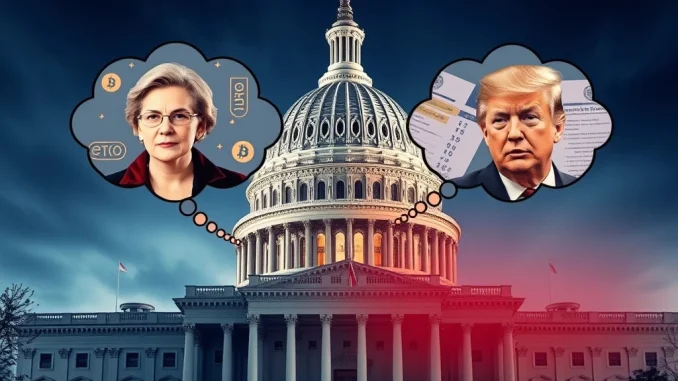
WASHINGTON, D.C. – March 2025: In a dramatic escalation of regulatory scrutiny, Senator Elizabeth Warren has demanded an immediate suspension of the WorldLibertyFinancial bank charter process, citing what she describes as an “unprecedented” financial conflict of interest involving former President Donald Trump. This explosive development comes as cryptocurrency banking faces its most significant ethical test since the passage of the landmark Genius Act last year.
Warren’s Urgent Demand on WLFI Bank Charter
Senator Elizabeth Warren, the Massachusetts Democrat known for her stringent regulatory stance on financial matters, has formally requested that Comptroller of the Currency Jonathan Gould halt the chartering process for WorldLibertyFinancial’s proposed banking entity. According to her detailed letter obtained by multiple news outlets, Warren argues the situation presents extraordinary ethical concerns. She specifically notes that President Trump maintains substantial financial interests connected to WLFI’s operations. Consequently, this creates potential regulatory conflicts that could undermine public trust in financial institutions. The senator’s intervention marks a significant moment in the ongoing debate about cryptocurrency integration into traditional banking systems.
Warren’s letter outlines several specific concerns about the WLFI bank charter approval process. First, she highlights the direct connection between regulatory decisions and presidential financial interests. Second, she emphasizes the potential for rule-making that could specifically benefit Trump’s business holdings. Finally, she notes the structural problem of a president effectively overseeing regulations affecting his own companies. These concerns emerge against the backdrop of increasing cryptocurrency adoption by mainstream financial institutions. Moreover, they reflect broader anxieties about regulatory capture in emerging financial technologies.
Historical Context of Crypto Banking Conflicts
The current controversy surrounding the WLFI bank charter represents the latest chapter in a complex relationship between cryptocurrency and traditional banking regulation. Over the past decade, numerous cryptocurrency firms have sought banking charters to legitimize their operations. However, regulatory approval has proceeded cautiously due to concerns about money laundering, consumer protection, and financial stability. The Office of the Comptroller of the Currency (OCC) has granted limited charters to cryptocurrency-focused entities under specific conditions. These approvals typically require enhanced compliance measures and capital requirements exceeding traditional banking standards.
WorldLibertyFinancial’s application for a national bank charter follows this established pattern but introduces novel complications. Unlike previous cryptocurrency banking applicants, WLFI maintains documented financial connections to a former president currently seeking re-election. This creates what legal experts describe as a “unique constitutional dilemma” regarding separation of powers and financial ethics. Historical precedents from previous administrations show that presidents typically divest from businesses presenting clear conflicts. However, the rapid evolution of cryptocurrency markets has created regulatory gray areas that existing ethics frameworks struggle to address adequately.
Comparative Analysis of Presidential Financial Conflicts
| Administration | Conflict Type | Resolution Method | Regulatory Outcome |
|---|---|---|---|
| Trump (Previous Term) | Hotel Business & Foreign Payments | Voluntary Donation of Profits | Limited Congressional Action |
| Biden | Family Business Dealings | Blind Trust Establishment | Enhanced Disclosure Requirements |
| Current WLFI Situation | Direct Crypto Banking Interest | Pending Regulatory Decision | Potential Charter Suspension |
The table above illustrates how different administrations have addressed presidential financial conflicts. Notably, the WLFI situation represents the first instance where a presidential financial interest directly intersects with cryptocurrency banking regulation. This novel circumstance explains why Senator Warren characterizes the conflict as “unprecedented” in her correspondence with regulatory authorities. Legal scholars note that existing ethics laws, designed before cryptocurrency’s emergence, may lack specific provisions for this scenario. Consequently, regulatory agencies face interpretative challenges when applying traditional conflict-of-interest frameworks to digital asset businesses.
The Genius Act and Legislative Gaps
Senator Warren’s letter explicitly references what she describes as congressional failure to address this specific conflict during the passage of the Genius Act. This comprehensive legislation, passed in late 2024, established the first federal framework for cryptocurrency market structure and regulation. The Genius Act created new classifications for digital assets, defined regulatory jurisdictions, and established consumer protection standards. However, according to Warren’s analysis, the legislation contained insufficient provisions regarding presidential financial interests in regulated cryptocurrency entities. This legislative gap now creates significant challenges for regulators considering WLFI’s bank charter application.
The Senate currently deliberates on follow-up legislation to the Genius Act, specifically addressing market structure concerns in cryptocurrency trading and banking. Warren argues this legislative process provides an opportunity to rectify the identified ethical shortcomings. Her letter suggests several potential amendments to pending legislation, including:
- Enhanced disclosure requirements for presidential financial interests in regulated crypto entities
- Mandatory recusal mechanisms for regulators considering applications involving presidential connections
- Independent review panels for high-profile cryptocurrency banking applications
- Transparency mandates for all communications between presidential offices and financial regulators
These proposed measures reflect growing concerns about regulatory integrity in cryptocurrency markets. Furthermore, they address specific vulnerabilities identified in the WLFI charter review process. Congressional staffers indicate that Warren’s proposals have gained traction among legislators from both parties who worry about public perception of cryptocurrency regulation.
Regulatory Implications for Crypto Banking
The controversy surrounding the WLFI bank charter carries significant implications for the broader cryptocurrency banking sector. Regulatory experts note that approval or rejection of WLFI’s application will establish important precedents for future cryptocurrency banking charters. Specifically, regulators must determine whether presidential financial connections constitute grounds for application denial under existing banking laws. This determination requires careful analysis of multiple legal frameworks, including the Bank Holding Company Act, the National Bank Act, and various ethics statutes. Additionally, regulators must consider international standards for banking supervision and anti-corruption measures.
Industry observers highlight several potential outcomes from this regulatory review process. First, the OCC could approve WLFI’s charter with specific conditions addressing conflict-of-interest concerns. Second, regulators might deny the application based on ethical considerations rather than financial viability. Third, the process could enter extended review while Congress addresses legislative gaps. Each scenario carries different implications for cryptocurrency banking development. Approval with conditions might encourage other crypto firms to pursue banking charters while implementing enhanced ethics protocols. Conversely, denial based on ethical concerns could discourage politically connected entities from seeking banking licenses, potentially limiting cryptocurrency integration with traditional finance.
Expert Perspectives on Regulatory Ethics
Financial ethics experts emphasize that the WLFI situation tests the resilience of existing regulatory frameworks. Dr. Amanda Chen, Professor of Financial Regulation at Georgetown University, notes: “This case represents a convergence of multiple regulatory challenges—cryptocurrency innovation, presidential ethics, and banking supervision. Regulators must balance legitimate business development against fundamental principles of regulatory integrity.” Chen’s analysis suggests that traditional conflict-of-interest frameworks may require adaptation for cryptocurrency contexts. Specifically, she identifies three areas needing clarification: definition of “financial interest” in decentralized finance structures, application of ethics rules to digital asset holdings, and jurisdictional questions in cross-border cryptocurrency operations.
Meanwhile, cryptocurrency industry representatives express concern about regulatory uncertainty. Michael Torres, CEO of a competing digital asset platform, states: “Clear, consistent regulation benefits everyone in this space. When specific applications become entangled in political considerations, it creates uncertainty for the entire industry.” Torres emphasizes that most cryptocurrency firms seek regulatory clarity rather than special treatment. He notes that ethical concerns should be addressed through transparent processes applicable to all market participants rather than case-specific interventions.
Political Dimensions and Election Implications
The WLFI bank charter controversy emerges during a heated presidential election cycle, adding significant political dimensions to regulatory decision-making. Political analysts note that cryptocurrency regulation has become increasingly polarized along partisan lines. Democrats generally advocate for stricter oversight and consumer protections, while Republicans often emphasize innovation and market development. This partisan divide complicates legislative efforts to address the specific ethical concerns raised by Senator Warren. Furthermore, President Trump’s potential re-election campaign creates additional complexities for regulators considering time-sensitive decisions.
Historical analysis shows that regulatory decisions involving presidential interests often face heightened scrutiny during election years. The WLFI situation presents particular challenges because cryptocurrency itself remains a politically contentious issue. Recent polling indicates divided public opinion about cryptocurrency regulation, with significant variations across demographic groups. Regulatory agencies must navigate these political complexities while maintaining procedural integrity and public confidence. Experts suggest that transparent decision-making processes and clear rationale documentation will be essential for whatever determination emerges regarding WLFI’s bank charter application.
Conclusion
Senator Elizabeth Warren’s demand to halt the WLFI bank charter process highlights significant ethical challenges at the intersection of cryptocurrency banking and presidential financial interests. This unprecedented situation tests existing regulatory frameworks and raises important questions about conflict-of-interest standards in emerging financial technologies. The controversy underscores the need for legislative clarity regarding presidential connections to regulated cryptocurrency entities. Furthermore, it emphasizes the importance of transparent regulatory processes that maintain public confidence in financial institutions. As cryptocurrency continues integrating with traditional banking systems, regulators must develop robust ethical frameworks that address novel challenges while supporting legitimate innovation. The WLFI bank charter decision will establish important precedents for future cryptocurrency banking applications and potentially shape regulatory approaches for years to come.
FAQs
Q1: What specific conflict of interest does Senator Warren identify in the WLFI bank charter process?
Senator Warren identifies a direct financial connection between President Trump and WorldLibertyFinancial, creating a situation where regulatory decisions about WLFI’s banking charter could affect the president’s personal financial interests. She argues this represents an unprecedented conflict requiring suspension of the chartering process until resolved.
Q2: How does the Genius Act relate to this controversy?
The Genius Act established the first comprehensive federal framework for cryptocurrency regulation but, according to Warren, failed to adequately address presidential financial interests in regulated crypto entities. She argues this legislative gap necessitates congressional action through pending crypto market structure legislation.
Q3: What authority does the Comptroller of the Currency have in this situation?
The Office of the Comptroller of the Currency (OCC) oversees national bank charter applications and maintains authority to approve, deny, or conditionally approve banking licenses. The Comptroller must consider various factors including financial viability, regulatory compliance, and potentially ethical considerations like conflict of interest.
Q4: How might this situation affect other cryptocurrency firms seeking banking charters?
The WLFI decision will establish important precedents for how regulators address ethical considerations in cryptocurrency banking applications. Approval with conditions might encourage similar applications with enhanced ethics protocols, while denial based on ethical concerns could discourage politically connected entities from seeking charters.
Q5: What legislative solutions has Senator Warren proposed?
Warren has suggested several potential amendments to pending cryptocurrency legislation, including enhanced disclosure requirements for presidential financial interests, mandatory recusal mechanisms for regulators, independent review panels for high-profile applications, and transparency mandates for communications between presidential offices and financial regulators.