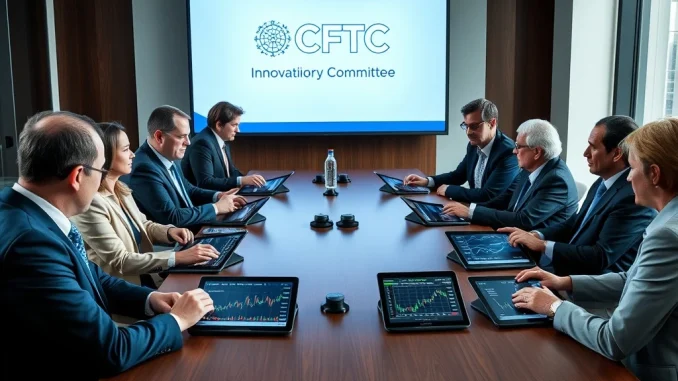
In a significant move to modernize financial oversight, the U.S. Commodity Futures Trading Commission announced on January 15, 2025, the formation of its Innovation Advisory Committee. This strategic initiative aims to guide regulatory approaches for emerging technologies transforming financial services, particularly cryptocurrency markets. The committee represents a deliberate effort to bridge the gap between rapid technological innovation and effective market oversight.
CFTC Innovation Advisory Committee Structure and Mandate
The newly formed Innovation Advisory Committee replaces the former Technology Advisory Committee with expanded responsibilities and broader representation. CFTC Chair Mike Selig will sponsor the committee directly, ensuring high-level engagement and oversight. The IAC’s charter specifically outlines its role in providing guidance on technological developments across financial services, derivatives, and commodity markets.
This committee will help the CFTC align its regulatory framework with current market conditions while maintaining fair and transparent markets. Members will share insights on technology adoption and integration strategies for market participants. Additionally, they will inform the Commission about necessary tools and investments for effective monitoring and oversight capabilities.
Committee Composition and Leadership Selection
The CFTC plans to appoint twelve initial members from the CEO Innovation Council, creating a balanced representation across traditional finance and cryptocurrency sectors. From the digital asset industry, confirmed participants include Tyler Winklevoss of Gemini, Shayne Coplan of Polymarket, Tarek Mansour of Kalshi, and Kris Marszalek of Crypto.com. Arjun Sethi, co-CEO of Kraken, also joins this distinguished group.
Traditional financial executives bring complementary perspectives, including Jeff Sprecher of Intercontinental Exchange, Craig Donohue of Cboe Global Markets, and Adena Friedman of Nasdaq. This diverse composition ensures the committee considers multiple viewpoints when advising on regulatory matters. The CFTC also encourages public participation through nominations and topic suggestions until January 31, 2026.
Regulatory Context and Historical Background
The CFTC’s initiative arrives at a critical juncture in financial regulation history. Over the past decade, technological advancements have dramatically transformed trading platforms, settlement systems, and financial products. Cryptocurrency markets, decentralized finance protocols, and artificial intelligence applications now represent substantial segments of global finance.
Previously, regulatory agencies often struggled to keep pace with innovation, creating regulatory gaps and compliance uncertainties. The 2008 financial crisis demonstrated how rapidly evolving financial products could outpace existing oversight mechanisms. Consequently, the CFTC’s proactive approach seeks to prevent similar disconnects in emerging technology sectors.
Several key developments prompted this regulatory evolution:
- Market Growth: Global cryptocurrency market capitalization exceeded $2.5 trillion in 2024
- Regulatory Gaps: Multiple jurisdictions have struggled with consistent digital asset classification
- Technological Convergence: Blockchain, AI, and traditional finance increasingly intersect
- International Competition: Other financial centers are developing comprehensive crypto frameworks
Jurisdictional Considerations and Market Impact
The CFTC maintains primary oversight over derivatives markets, including cryptocurrency futures and options. However, jurisdictional boundaries between the CFTC and Securities and Exchange Commission remain fluid for certain digital assets. This committee will likely address these jurisdictional questions while developing practical regulatory approaches.
Market participants generally welcome the committee’s formation as a positive development for regulatory clarity. Clear guidelines help legitimate businesses operate confidently while protecting investors from fraudulent activities. Furthermore, consistent regulations reduce compliance costs and encourage responsible innovation across financial sectors.
Strategic Importance for United States Financial Leadership
Venture capital firm Andreessen Horowitz recently emphasized cryptocurrency innovation’s importance for American economic strength and global standing. The firm warned that falling behind in technological development could have significant consequences for national competitiveness. Other nations, including the European Union and United Kingdom, have already implemented comprehensive digital asset frameworks.
The Innovation Advisory Committee represents a strategic response to these competitive pressures. By engaging industry leaders directly, the CFTC can develop regulations that support innovation while maintaining market integrity. This balanced approach may help the United States retain its position as a global financial leader during technological transformation.
Several factors underscore the committee’s strategic significance:
| Factor | Impact | Timeline |
|---|---|---|
| Technological Adoption | Accelerating integration of blockchain in finance | 2024-2027 |
| Regulatory Competition | Multiple jurisdictions developing crypto frameworks | Ongoing |
| Market Evolution | New products and platforms emerging rapidly | Continuous |
| Investor Protection | Need for updated safeguards in digital markets | Immediate |
Practical Implementation and Expected Outcomes
The committee will likely focus initially on several priority areas, including decentralized finance protocols, cryptocurrency derivatives, and artificial intelligence applications in trading. Practical recommendations may address position limits, reporting requirements, and risk management standards for digital asset markets. Additionally, the committee will probably examine cross-border regulatory coordination and international standards development.
Market structure regulations represent another critical focus area, particularly for emerging trading platforms and settlement systems. The committee’s diverse membership ensures consideration of both traditional market principles and innovative technological approaches. This balanced perspective should produce practical recommendations that regulators can implement effectively.
Broader Implications for Financial Technology Regulation
The Innovation Advisory Committee’s formation signals a broader shift in regulatory philosophy toward collaborative engagement. Rather than reacting to market developments, the CFTC seeks to anticipate technological trends and prepare appropriate regulatory responses. This proactive approach may become a model for other regulatory agencies facing similar technological challenges.
Financial technology companies particularly benefit from regulatory clarity and consistent standards. Clear guidelines reduce compliance uncertainty and encourage responsible innovation. Furthermore, established regulatory frameworks help legitimate businesses distinguish themselves from fraudulent operators, ultimately benefiting consumers and market integrity.
Several regulatory trends will likely influence the committee’s work:
- Principles-Based Regulation: Flexible frameworks adaptable to technological change
- Technology-Neutral Approaches: Regulations focusing on economic functions rather than specific technologies
- International Coordination: Efforts to harmonize standards across jurisdictions
- Stakeholder Engagement: Continued collaboration between regulators and industry participants
Timeline and Implementation Expectations
The committee will begin formal operations following member appointments in early 2025. Initial meetings will likely establish working groups focused on specific technological areas and regulatory challenges. Public reports and recommendations should emerge within twelve to eighteen months, providing concrete guidance for regulatory development.
Implementation of committee recommendations will depend on formal rulemaking processes, including public comment periods and Commission approvals. However, the committee’s direct engagement with CFTC leadership should facilitate efficient consideration of its proposals. Market participants can expect gradual regulatory evolution rather than sudden, disruptive changes.
Conclusion
The CFTC Innovation Advisory Committee represents a crucial development in financial technology regulation, particularly for cryptocurrency markets. By bringing together diverse experts from traditional finance and digital asset sectors, the committee can develop practical, forward-looking regulatory approaches. This initiative demonstrates regulatory adaptability in response to technological transformation while maintaining market integrity and investor protection. As financial markets continue evolving, such collaborative efforts between regulators and industry will prove essential for balanced, effective oversight.
FAQs
Q1: What is the CFTC Innovation Advisory Committee’s primary purpose?
The committee advises the CFTC on emerging technologies transforming financial services, helping develop practical regulations for cryptocurrency and other innovative markets while ensuring fair, transparent, and well-functioning financial systems.
Q2: Who will serve on the Innovation Advisory Committee?
The committee includes leaders from both cryptocurrency and traditional finance sectors, such as Tyler Winklevoss (Gemini), Kris Marszalek (Crypto.com), Jeff Sprecher (Intercontinental Exchange), and Adena Friedman (Nasdaq), providing balanced perspectives across financial technology domains.
Q3: How will this committee affect cryptocurrency regulation?
The committee will help shape clearer regulatory guidelines for digital asset markets, potentially addressing derivatives trading, decentralized finance protocols, and market structure issues while balancing innovation with investor protection requirements.
Q4: Can the public participate in the committee’s work?
Yes, the CFTC encourages public nominations for committee membership and accepts topic suggestions until January 31, 2026, allowing broader stakeholder input into regulatory development processes.
Q5: How does this initiative fit into broader U.S. financial regulatory trends?
The committee represents a proactive, collaborative approach to regulation that engages industry experts directly, contrasting with reactive regulatory models and aligning with international efforts to develop comprehensive digital asset frameworks.