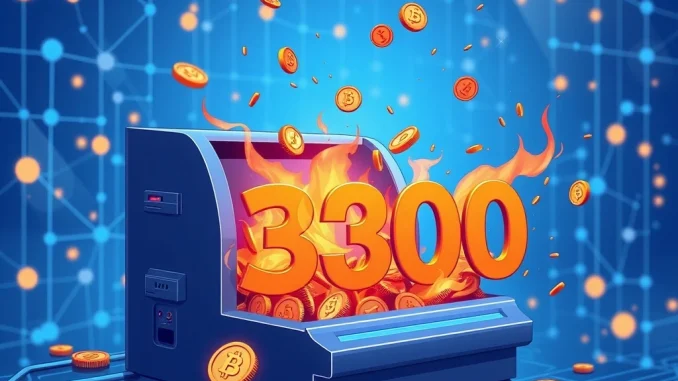
In a decisive governance vote that concluded this week, the WOO Network community has unanimously approved a landmark proposal to permanently remove 300 million WOO tokens from circulation. This substantial token burn, representing approximately 15% of the total supply, marks one of the most significant supply reduction events in the decentralized finance sector this year. The approved measure demonstrates growing maturity in cryptocurrency governance systems while addressing fundamental tokenomics concerns that have emerged across digital asset markets.
WOO Token Burn Governance Process and Approval
The governance proposal achieved remarkable consensus with 100% approval from participating token holders. This unanimous decision reflects strong community alignment around the strategic move to enhance token value through controlled supply reduction. The voting mechanism utilized WOO Network’s established governance framework, which requires token holders to stake their assets to participate in decision-making processes. Consequently, the outcome represents the collective will of economically invested stakeholders rather than casual observers.
Governance proposals in cryptocurrency ecosystems typically follow structured processes that include discussion phases, formal proposal submission, voting periods, and implementation timelines. The WOO token burn proposal progressed through all these stages systematically. Community members first debated the concept extensively in official forums before formalizing the specific parameters. The final proposal specified both the quantity of tokens to be burned and the technical mechanism for their permanent removal from circulation.
Technical Implementation of the Token Burn
The 300 million WOO tokens will be transferred to a verifiably unspendable address within the next few days, effectively removing them from the circulating supply forever. This technical process involves sending the tokens to a blockchain address with no known private key, making them permanently inaccessible. The transaction will be recorded on the Ethereum blockchain, providing transparent, immutable proof of the burn event that anyone can verify independently.
Token burning represents a fundamental mechanism in cryptocurrency economics where projects permanently remove coins from circulation. This action typically increases scarcity relative to demand, potentially influencing market dynamics. The WOO Network’s approach follows established best practices for transparent token burns, ensuring the process remains publicly verifiable and technically irreversible. The network’s development team has committed to providing real-time updates as the burn progresses through its technical phases.
Historical Context of Major Token Burns
Major cryptocurrency projects have implemented token burns with varying market impacts throughout blockchain history. For instance, Binance conducts quarterly BNB burns based on exchange performance metrics. Similarly, Ethereum implemented EIP-1559 in 2021, introducing a continuous burn mechanism for transaction fees. The WOO token burn of 300 million units represents one of the largest single-event supply reductions by percentage in recent memory, comparable only to early Bitcoin halving events in terms of proportional supply impact.
The table below compares recent significant token burn events across major cryptocurrency projects:
| Project | Tokens Burned | Percentage of Supply | Year |
|---|---|---|---|
| WOO Network | 300 million | ~15% | 2025 |
| Binance (Q4 2024) | 2.1 million BNB | ~1.4% | 2024 |
| Shiba Inu | 40 billion | ~0.07% | 2023 |
| PancakeSwap | 8.5 million CAKE | ~2.8% | 2023 |
Economic Implications of Supply Reduction
The removal of 300 million WOO tokens from circulation creates immediate changes to the project’s fundamental economic metrics. With approximately 15% of total supply permanently eliminated, the remaining tokens immediately represent a larger proportional claim on the network’s value and future revenue streams. This supply shock typically influences market dynamics through several interconnected mechanisms that economists have observed across both traditional and digital asset markets.
Key economic factors affected by the token burn include:
- Scarcity Increase: Fixed or reduced supply against growing demand creates natural upward price pressure
- Holder Dilution Protection: Existing token holders experience increased ownership percentage
- Inflation Rate Adjustment: Future token emissions represent larger percentages of reduced supply
- Market Psychology: Demonstrated commitment to value accrual builds investor confidence
Market analysts generally categorize token burns as either inflationary adjustments or value accrual mechanisms. The WOO Network’s approach clearly falls into the latter category, representing a deliberate strategy to enhance token holder value through controlled supply management. Historical data from similar events suggests that markets typically price in these fundamental changes over weeks rather than days, as participants digest both the immediate supply reduction and its longer-term implications.
Governance Trends in Decentralized Finance
The unanimous approval of this substantial token burn reflects broader trends in decentralized finance governance. Modern DeFi projects increasingly rely on sophisticated voting mechanisms that balance stakeholder influence with protocol security. The WOO Network’s governance system exemplifies this evolution, requiring token staking for voting rights while maintaining security through established blockchain consensus mechanisms. This approach ensures that decision-makers have genuine economic skin in the game, aligning their interests with the network’s long-term success.
Recent years have witnessed significant maturation in cryptocurrency governance models. Early systems often suffered from voter apathy or manipulation, but contemporary frameworks like WOO Network’s have implemented safeguards against these issues. The 100% approval rate for this proposal suggests both exceptional community consensus and potentially high voter participation thresholds. Such outcomes typically indicate well-designed governance systems that facilitate meaningful stakeholder engagement while preventing trivial or malicious proposals from achieving passage.
Expert Perspectives on Token Burn Strategies
Cryptocurrency economists generally recognize token burns as legitimate mechanisms for value accrual when implemented transparently and strategically. According to blockchain tokenomics researchers, effective burn programs should align with fundamental project metrics rather than serving as short-term market manipulation tools. The WOO Network’s approach appears consistent with this principle, as the 300 million token burn represents a substantial but sustainable percentage of total supply rather than an arbitrary or excessive amount.
Industry analysts note that successful token burn events typically share several characteristics:
- Clear communication of rationale and mechanics
- Transparent, verifiable implementation
- Appropriate scale relative to circulating supply
- Alignment with broader tokenomics strategy
- Consideration of long-term ecosystem health
The WOO token burn proposal appears to satisfy these criteria based on available documentation and community discussion records. This methodological approach distinguishes substantive supply management from superficial market tactics, potentially establishing a precedent for other projects considering similar measures. The coming weeks will provide empirical data on how markets ultimately price this fundamental supply change.
Market Response and Future Projections
Initial market reactions to governance approvals typically involve speculative positioning as traders anticipate implementation. However, substantial token burns like WOO Network’s 300 million unit reduction generally influence markets through multiple channels beyond immediate speculation. The permanent supply reduction creates lasting fundamental changes that may affect trading patterns, investment theses, and valuation models for the foreseeable future. Market participants must now recalibrate their assessment frameworks to account for the new supply reality.
Historical analysis of similar events reveals several consistent patterns:
- Short-term volatility often increases around implementation dates
- Medium-term price discovery reflects new supply-demand equilibrium
- Long-term value accrual depends on underlying network growth
- Investor sentiment typically improves toward projects demonstrating value-focused governance
The WOO Network’s decision arrives during a period of increasing sophistication in cryptocurrency markets, where fundamental analysis gains prominence alongside technical trading. This environment may amplify the market impact of verifiable supply reductions compared to earlier market cycles dominated primarily by momentum trading. The coming months will reveal how contemporary markets process this substantial tokenomics adjustment.
Conclusion
The unanimous approval of the WOO token burn proposal represents a significant milestone in decentralized finance governance and tokenomics management. The permanent removal of 300 million tokens, approximately 15% of total supply, demonstrates sophisticated community coordination and strategic value accrual planning. This WOO token burn event establishes important precedents for transparent, community-driven supply management while potentially influencing broader market perceptions of responsible tokenomics. As the cryptocurrency sector continues maturing, such deliberate governance decisions may increasingly distinguish sustainable projects from speculative ventures, ultimately benefiting ecosystem participants through enhanced value preservation mechanisms.
FAQs
Q1: What exactly does “token burning” mean in cryptocurrency?
Token burning refers to the permanent removal of cryptocurrency tokens from circulation by sending them to an unspendable address. This process reduces the total supply, potentially increasing scarcity and value for remaining tokens.
Q2: How will the WOO token burn affect existing token holders?
Existing WOO token holders will own a larger percentage of the total supply after the burn. With 15% of tokens permanently removed, each remaining token represents proportionally more ownership of the network.
Q3: When will the 300 million WOO tokens actually be burned?
The approved proposal schedules the token burn to occur within the next few days. The process will be transparently recorded on the blockchain for public verification.
Q4: Why would a cryptocurrency project choose to burn its own tokens?
Projects typically burn tokens to manage supply, increase scarcity, enhance token value, or align incentives between developers and holders. It represents a commitment to value accrual rather than dilution.
Q5: How does this token burn compare to other major cryptocurrency supply reductions?
The 15% supply reduction represents one of the largest proportional burns in recent cryptocurrency history. Most major burns range from 0.5% to 5% of supply, making WOO Network’s 15% reduction particularly significant.