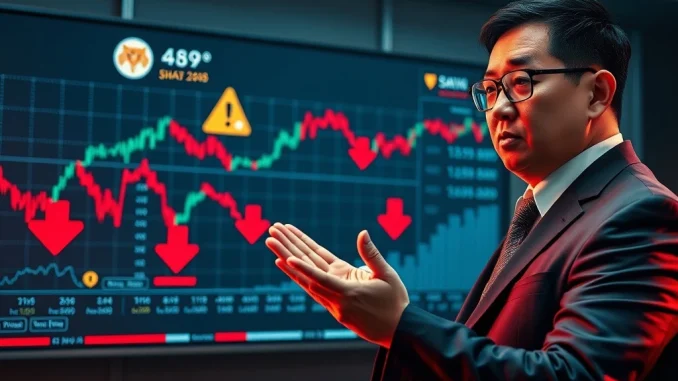
In a sobering statement that reverberated across the cryptocurrency landscape, Binance founder Changpeng Zhao has issued a critical warning to investors about the dangers of reckless memecoin creation and indiscriminate investment. The former CEO of the world’s largest crypto exchange, often known simply as CZ, delivered his cautionary message via social media platform X, sparking immediate discussion among traders, developers, and financial analysts. His comments arrive during a period of heightened memecoin activity and significant market volatility, making his experienced perspective particularly timely for the global crypto community.
Changpeng Zhao Clarifies His Stance on Memecoins
Changpeng Zhao’s recent statements provide crucial clarity on his position regarding the memecoin phenomenon. Importantly, he explicitly stated he is not fundamentally opposed to memecoins as an asset class. However, he strongly opposes their indiscriminate issuance and the impulsive investment behavior they often inspire. This nuanced position reflects a mature understanding of market dynamics, distinguishing between organic innovation and speculative frenzy. Zhao emphasized that while he personally enjoys certain aspects of memecoin culture, he recognizes the substantial risks they pose to uninformed investors.
Furthermore, Zhao addressed a specific concern regarding his own social media influence. He noted that investors would certainly incur losses if they attempted to invest in every memecoin created in response to his posts. This direct acknowledgment of his market-moving power demonstrates a responsible approach to his public communications. The Binance founder added context by stating that his tweets are simply his usual unfunny jokes and that he does not spend time contemplating memes, thereby distancing his casual commentary from formal investment advice.
The Broader Context of Crypto Market Volatility
Zhao’s warning emerges against a backdrop of significant memecoin speculation. For instance, the 2021 cycle saw assets like Dogecoin and Shiba Inu achieve staggering, yet highly unstable, market capitalizations. According to data from CoinMarketCap, the total market cap for memecoins has frequently exceeded $50 billion during peak periods, only to contract violently during corrections. This volatility underscores the core of Zhao’s message: without fundamental utility or rigorous development, these assets represent pure speculation.
Industry analysts frequently compare memecoin mania to historical speculative bubbles. The pattern of rapid creation, influencer-driven pumps, and subsequent collapses has repeated multiple times, often leaving retail investors with substantial losses. Zhao’s intervention can be seen as an attempt to inject a note of caution into this cycle, leveraging his authoritative position to promote more measured investment strategies.
Analyzing the Impact of Influencer Statements
The cryptocurrency market remains uniquely susceptible to statements from major figures like Changpeng Zhao. His comments on X immediately influenced trading volumes and social media sentiment. Data analytics firms tracking crypto social sentiment often record significant spikes in discussion volume following posts from key industry leaders. This influence carries immense responsibility, a point Zhao himself highlighted by warning against basing investment decisions solely on his casual remarks.
Several documented cases show new tokens being created within minutes of a viral post from a prominent figure, aiming to capitalize on the momentary hype. This ecosystem of rapid token generation presents clear risks, including rug pulls, liquidity issues, and outright scams. By preemptively stating that his jokes should not be construed as endorsements, Zhao is attempting to mitigate this harmful side effect of his public platform.
Key risks associated with reactive memecoin investment include:
- Liquidity traps: New tokens often lack sufficient liquidity for safe entry and exit.
- Smart contract vulnerabilities: Hastily launched projects may contain critical security flaws.
- Pump-and-dump schemes: Coordinated groups often exploit hype to manipulate prices.
- Regulatory scrutiny: Reckless projects attract attention from financial authorities worldwide.
Expert Perspectives on Sustainable Crypto Investment
Financial experts and veteran blockchain developers often echo Zhao’s cautious stance. They advocate for an investment framework based on fundamental analysis rather than social media trends. Sustainable projects typically demonstrate clear use cases, active development teams, transparent governance, and long-term roadmaps. In contrast, many memecoins lack these foundational elements, relying instead on community sentiment and viral marketing.
A comparative analysis reveals stark differences. For example, established cryptocurrencies like Bitcoin and Ethereum provide public blockchain utilities, whereas most memecoins function primarily as speculative tokens. The table below illustrates this contrast in investment profile:
| Investment Factor | Established Cryptocurrency (e.g., Bitcoin) | Typical Memecoin |
|---|---|---|
| Primary Value Driver | Network utility, scarcity, adoption | Community hype, social media trends |
| Development Activity | Continuous, open-source, peer-reviewed | Often minimal or non-existent after launch |
| Market Volatility | High, but with long-term upward trend | Extremely high, prone to 90%+ corrections |
| Regulatory Status | Increasingly defined and institutionalized | Unclear, high risk of being deemed a security |
This framework helps investors distinguish between different types of digital assets. Consequently, Zhao’s warning serves as a reminder to apply critical thinking and rigorous due diligence, regardless of an asset’s origin or viral popularity.
The Evolution of Regulatory Scrutiny
Global regulatory bodies have intensified their focus on the cryptocurrency sector, with memecoins drawing particular attention due to their association with consumer harm. Authorities like the U.S. Securities and Exchange Commission (SEC) and the UK’s Financial Conduct Authority (FCA) have repeatedly warned investors about the risks of speculative crypto assets. In this context, statements from industry leaders like Changpeng Zhao that promote caution align with broader regulatory goals of investor protection and market integrity.
Recent enforcement actions have targeted fraudulent token offerings and market manipulation schemes, often centered around memecoins. These actions demonstrate a growing regulatory capacity to police the digital asset space. Zhao’s public stance against reckless creation may therefore also be viewed as a proactive measure to foster a healthier, more compliant ecosystem that can achieve mainstream adoption.
Practical Advice for Crypto Investors
Building on Zhao’s warning, several core principles can guide safer cryptocurrency participation. First, investors should always conduct independent research, looking beyond social media hype to examine a project’s whitepaper, team, tokenomics, and community health. Second, portfolio diversification remains a timeless strategy to mitigate risk; allocating only a small, discretionary portion to high-risk assets like memecoins can prevent catastrophic losses. Third, understanding the technology behind an asset provides insight into its long-term potential versus its short-term speculative appeal.
Finally, maintaining emotional discipline is paramount. The fear of missing out (FOMO) drives much of the impulsive investment in trending memecoins. By setting clear investment goals, using stop-loss orders, and avoiding decisions based solely on influencer posts, individuals can navigate the market more rationally. Zhao’s message ultimately reinforces that in the high-stakes world of digital assets, personal responsibility and education are an investor’s most valuable tools.
Conclusion
Changpeng Zhao’s explicit warning against reckless memecoin creation and investment provides a vital reality check for the cryptocurrency market. His distinction between enjoying memecoin culture and endorsing speculative investment offers a nuanced framework for participants. As the industry matures and regulatory landscapes solidify, such calls for responsibility from authoritative figures become increasingly significant. Ultimately, sustainable growth in the blockchain space depends on balancing innovation with investor protection, a balance Zhao’s comments directly encourage. The memecoin warning from the Binance founder serves as a timely reminder that in finance, whether traditional or digital, informed caution must always temper enthusiastic speculation.
FAQs
Q1: What exactly did Changpeng Zhao say about memecoins?
Changpeng Zhao stated on X that while he is not against memecoins as a concept, he strongly opposes their indiscriminate issuance and the practice of investing in every new token that appears. He warned that investors would incur losses if they invested based solely on reactions to his social media posts.
Q2: Why is Changpeng Zhao’s warning significant for the crypto market?
As the founder of Binance, formerly the world’s largest cryptocurrency exchange, Zhao holds considerable influence. His public statements often impact market sentiment. His warning carries weight because it comes from a position of deep experience and aims to curb impulsive, high-risk investment behavior that can lead to substantial financial losses.
Q3: What are the main risks of investing in newly created memecoins?
The primary risks include extreme price volatility, liquidity traps where you cannot sell your holdings, smart contract vulnerabilities that could lead to fund loss, prevalence of pump-and-dump schemes, and a high likelihood of the project being abandoned by developers shortly after launch.
Q4: How should an investor approach memecoins after this warning?
Investors should treat memecoins as high-risk, speculative assets. They should only allocate a very small portion of their portfolio that they are prepared to lose entirely, conduct thorough independent research beyond social media hype, and never invest based solely on an influencer’s post or joke.
Q5: Does this mean all memecoins are bad investments?
Not necessarily. The warning is against “reckless” creation and “indiscriminate” investment. Some memecoins develop strong, lasting communities and utility. The key is differentiation and due diligence. However, statistically, the vast majority fail, so they inherently carry much higher risk than assets with established fundamentals and use cases.
Q6: How does this relate to broader cryptocurrency regulation?
Regulatory bodies worldwide are increasingly focused on protecting investors from harm in crypto markets. Warnings from industry leaders like Zhao about specific high-risk practices align with regulatory goals. Such statements may help shape a more responsible ecosystem and potentially preempt more heavy-handed regulatory interventions.