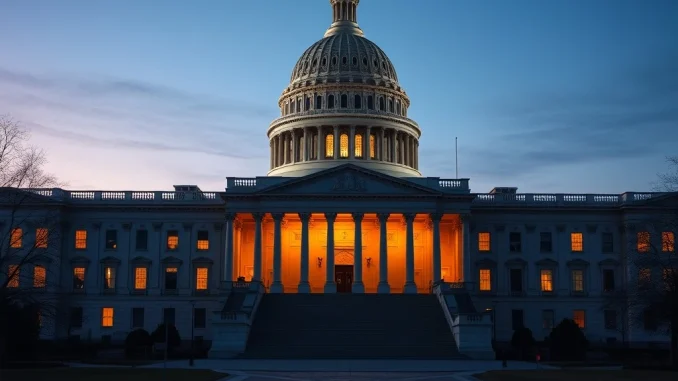
WASHINGTON, D.C. – In a significant move for the digital asset industry, U.S. Senators Ron Wyden (D-OR) and Cynthia Lummis (R-WY) have introduced the pivotal Blockchain Regulatory Certainty Act (BRCA). This bipartisan legislation aims to establish clear federal protections for software developers and individuals who self-custody their cryptocurrency holdings. Consequently, this bill represents a direct response to years of regulatory ambiguity that has clouded the American blockchain ecosystem.
The Core Provisions of the Blockchain Regulatory Certainty Act
The Blockchain Regulatory Certainty Act focuses on two fundamental rights within the digital asset space. First, it explicitly protects the right of developers to publish and distribute blockchain code. Second, it safeguards the right of individuals to maintain control of their digital assets through self-custody wallets, without requiring licensure as a financial institution. These provisions originated in the House of Representatives, championed by Republican Majority Whip Tom Emmer, and were later incorporated into the broader Crypto-Asset National Security Enhancement and Enforcement (CLARITY) Act.
Senator Cynthia Lummis, a known advocate for clear crypto regulation, emphasized the bill’s necessity. She stated that innovation should not migrate overseas due to regulatory uncertainty. Meanwhile, Senator Ron Wyden highlighted the importance of protecting speech and innovation in the digital age. The legislation currently sits within Senate negotiations for a larger market structure bill, though its final inclusion remains uncertain amidst complex political deliberations.
Historical Context and Regulatory Journey
The push for the BRCA did not emerge in a vacuum. For nearly a decade, developers and companies have operated under a patchwork of state regulations and evolving federal guidance. Landmark cases, such as the SEC’s actions against Ripple Labs, have highlighted the urgent need for legislative clarity. Furthermore, the Biden Administration’s 2022 Executive Order on Ensuring Responsible Development of Digital Assets called for a coordinated government approach. This bill directly answers that call by proposing statutory definitions rather than relying solely on agency enforcement.
Comparing the BRCA to Existing Regulatory Frameworks
Understanding the BRCA requires examining how it differs from current regulatory interpretations. The table below outlines key distinctions.
| Regulatory Aspect | Current Ambiguity | BRCA’s Proposed Clarity |
|---|---|---|
| Developer Liability | Potential liability for code used by third parties in illicit activities. | Shields developers from liability unless they actively participate in criminal acts. |
| Self-Custody Wallets | Often treated with suspicion; potential classification as money transmitters. | Explicitly excludes non-custodial software providers from money transmitter laws. |
| Code as Speech | First Amendment protections are argued in court but not codified. | Legislatively affirms that publishing code is a protected form of speech. |
This legislative approach seeks to resolve conflicts between different regulatory bodies. For instance, the Securities and Exchange Commission (SEC) and the Commodity Futures Trading Commission (CFTC) have overlapping jurisdictions. The BRCA provides a baseline exemption that could simplify compliance for pure software development activities.
Potential Impact on the U.S. Crypto Industry
The introduction of the BRCA carries substantial implications for multiple stakeholders. Primarily, blockchain developers and open-source projects would gain a safer legal environment to operate. This protection could reverse the trend of developer talent and startup formation moving to jurisdictions with clearer rules, such as Singapore or Switzerland. Additionally, the bill reinforces the principle of individual financial sovereignty, a cornerstone of the cryptocurrency movement.
Industry groups have reacted positively but cautiously. The Blockchain Association praised the bill’s intent but noted the long legislative road ahead. Conversely, some consumer protection advocates have expressed concerns about ensuring the bill does not inadvertently shield bad actors. The legislation’s fate is now tied to the broader Senate negotiations, where competing priorities like consumer protection and national security will be debated.
Expert Analysis and Legal Precedent
Legal scholars point to the bill’s alignment with existing precedent. For example, the 1996 case Bernstein v. U.S. Department of Justice established that software code is speech protected by the First Amendment. The BRCA codifies this principle specifically for blockchain code. Financial technology experts also note the bill’s timing is critical. With the European Union implementing its Markets in Crypto-Assets (MiCA) regulation, the United States risks falling behind in establishing a competitive regulatory framework without such legislative action.
The Legislative Path Forward and Political Considerations
The BRCA now enters a complex phase of congressional negotiation. Its proponents are advocating for its inclusion in the must-pass market structure bill. However, several challenges exist. Key committees must reconcile the BRCA with other legislative priorities, including stablecoin regulation and measures to prevent illicit finance. Moreover, the bipartisan nature of the bill, while a strength, does not guarantee passage in a divided Congress. Observers will closely watch the Senate Banking Committee’s mark-up process for signals of the bill’s viability.
The bill’s supporters have outlined its critical benefits:
- Promotes Innovation: Provides legal certainty for U.S. blockchain developers.
- Protects Rights: Affirms constitutional protections for code and self-custody.
- Enhances Competitiveness: Helps the U.S. retain its edge in financial technology.
- Clarifies Jurisdiction: Helps delineate boundaries between regulators.
Ultimately, the bill’s success may depend on building a broader coalition. This coalition must address concerns from both sides of the aisle regarding national security, tax compliance, and investor protection. The coming months will be decisive for determining whether the Blockchain Regulatory Certainty Act becomes law or remains a proposal.
Conclusion
The introduction of the Blockchain Regulatory Certainty Act marks a pivotal moment in the quest for sensible digital asset regulation. By focusing on developer rights and self-custody protections, Senators Wyden and Lummis have addressed core issues that have long stifled innovation. The bill’s progression through Congress will serve as a key indicator of the United States’ commitment to fostering a secure and competitive blockchain ecosystem. As the global regulatory landscape evolves, the clarity offered by the BRCA could prove essential for maintaining American leadership in the burgeoning digital economy.
FAQs
Q1: What is the main goal of the Blockchain Regulatory Certainty Act?
The primary goal is to provide legal clarity and protection for blockchain software developers and individuals who use non-custodial wallets to hold their own digital assets, shielding them from being classified as financial institutions under certain laws.
Q2: Who introduced the BRCA in the Senate?
The bill was introduced by Senator Cynthia Lummis (R-WY) and Senator Ron Wyden (D-OR), making it a bipartisan effort.
Q3: How does this bill relate to the CLARITY Act?
The provisions of the BRCA were previously included as part of the larger, House-originated Crypto-Asset National Security Enhancement and Enforcement (CLARITY) Act. The Senate version is now a standalone bill being considered for inclusion in broader market structure legislation.
Q4: Does the bill prevent all regulation of cryptocurrency?
No. The bill is narrowly focused on protecting specific activities—code development and self-custody. It does not prevent the regulation of cryptocurrency exchanges, stablecoin issuers, or other intermediaries that act as custodians of customer funds.
Q5: What are the chances the BRCA becomes law?
Its passage is uncertain. While it has bipartisan support, it must navigate a complex legislative process and be reconciled with other regulatory priorities in Congress. Its proponents are actively working to include it in must-pass legislation to improve its chances.