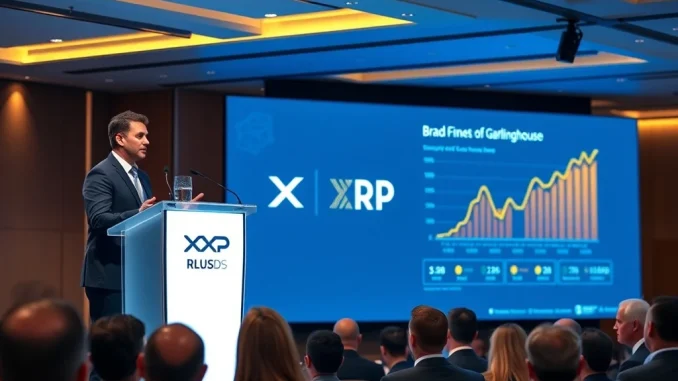
In a significant announcement from San Francisco, California on January 15, 2025, Ripple CEO Brad Garlinghouse unveiled a comprehensive strategic vision for the coming year, emphasizing long-term value creation for both XRP and the company’s upcoming RLUSD stablecoin. This announcement comes at a pivotal moment for the cryptocurrency industry, as regulatory frameworks continue to evolve globally. Garlinghouse’s statement on social media platform X signals Ripple’s commitment to sustainable expansion rather than short-term market fluctuations. The company’s focus on regulatory progress and financial infrastructure development represents a mature approach within the digital asset sector, potentially influencing broader industry trends throughout 2025.
Ripple’s Strategic Expansion Framework for 2025
Brad Garlinghouse’s announcement outlines three primary pillars for Ripple’s 2025 strategy. First, the company will pursue strategic expansion through targeted partnerships and technological development. Second, regulatory progress remains a cornerstone of their approach, particularly following recent legal developments. Third, Ripple plans to expand sustainable financial infrastructure that supports both traditional and digital finance systems. This tripartite strategy demonstrates Ripple’s evolution from a payments-focused company to a comprehensive blockchain solutions provider. Industry analysts note that this approach aligns with broader trends toward institutional adoption of blockchain technology.
Garlinghouse specifically emphasized creating long-term value for XRP, Ripple’s native digital asset that facilitates cross-border transactions. Simultaneously, he highlighted growth opportunities for RLUSD, Ripple’s forthcoming U.S. dollar-pegged stablecoin. This dual focus suggests Ripple recognizes the complementary nature of volatile and stable digital assets within modern financial ecosystems. The company’s experience with financial institutions through RippleNet provides practical insights into market needs. Consequently, their 2025 strategy appears grounded in real-world application rather than theoretical possibilities.
Regulatory Landscape and Market Positioning
The regulatory environment for cryptocurrencies has undergone significant transformation since 2023. Ripple’s partial legal victory against the U.S. Securities and Exchange Commission in 2023 created important precedents for digital asset classification. However, regulatory clarity remains incomplete in many jurisdictions. Garlinghouse’s emphasis on regulatory progress acknowledges this ongoing challenge while positioning Ripple as an industry leader in compliance. The company has consistently advocated for clear regulatory frameworks that protect consumers while fostering innovation.
Ripple’s regulatory strategy involves several key components:
- Active engagement with policymakers in major markets including the United States, European Union, and Asia-Pacific regions
- Compliance-first approach to product development, particularly for RLUSD stablecoin
- Transparent operations that exceed minimum regulatory requirements
- Collaboration with traditional financial institutions to bridge regulatory understanding gaps
This comprehensive regulatory strategy differentiates Ripple from many cryptocurrency projects that prioritize technological development over compliance. Financial technology experts suggest this approach may accelerate institutional adoption. Furthermore, it positions Ripple favorably as global standards for digital assets continue to crystallize throughout 2025.
Comparative Analysis: Ripple’s Approach Versus Industry Trends
Ripple’s 2025 strategy emerges within a competitive cryptocurrency landscape. The following table illustrates how Ripple’s approach compares to broader industry trends:
| Strategic Element | Ripple’s 2025 Approach | Industry Average Approach |
|---|---|---|
| Regulatory Engagement | Proactive, compliance-first | Reactive, often adversarial |
| Product Development | Institution-focused, infrastructure | Retail-focused, speculative |
| Technology Emphasis | Practical scalability solutions | Theoretical maximum capabilities |
| Market Communication | Transparent, long-term focused | Hype-driven, short-term focused |
This comparative analysis reveals Ripple’s distinctive positioning within the cryptocurrency sector. Their institutional focus and regulatory engagement strategy reflect lessons learned from nearly a decade of operation. Blockchain researcher Dr. Elena Martinez notes, “Ripple’s experience with financial institutions provides practical insights that purely technological projects often lack. Their 2025 strategy demonstrates maturation beyond the industry’s early speculative phase.”
XRP’s Evolving Role in Global Finance
XRP serves as the native digital asset on the XRP Ledger, functioning primarily as a bridge currency in cross-border transactions. Throughout 2024, XRP demonstrated increased utility beyond simple value transfer. The asset now facilitates complex financial operations including liquidity provision and settlement finality. Garlinghouse’s emphasis on long-term XRP growth suggests further expansion of these utility functions. Ripple’s On-Demand Liquidity product, which utilizes XRP for instant cross-border settlements, has processed billions in transaction volume since its inception.
Several factors contribute to XRP’s potential growth in 2025:
- Increasing adoption by financial institutions seeking efficient cross-border solutions
- Technological upgrades to the XRP Ledger enhancing scalability and functionality
- Regulatory clarity improving institutional confidence in XRP’s legal status
- Market differentiation from purely speculative digital assets through demonstrated utility
Market data from 2024 indicates growing institutional interest in XRP despite broader cryptocurrency volatility. This trend likely informs Garlinghouse’s optimistic outlook. Additionally, the potential integration between XRP and RLUSD could create synergistic effects. For instance, RLUSD might provide stability for certain transaction phases while XRP facilitates rapid cross-border movement. Such complementary functionality represents a sophisticated understanding of financial market needs.
RLUSD Stablecoin: Strategic Implications
Ripple’s development of RLUSD represents a strategic expansion into the stablecoin market, which has experienced exponential growth since 2020. Unlike volatile cryptocurrencies, stablecoins maintain consistent value through collateralization with traditional assets. RLUSD will reportedly maintain a 1:1 peg with the U.S. dollar through transparent reserve management. This approach addresses growing regulatory concerns about reserve transparency in the stablecoin sector. Garlinghouse’s emphasis on RLUSD growth reflects recognition of stablecoins’ increasing importance in digital finance.
RLUSD enters a competitive market dominated by established players like Tether (USDT) and USD Coin (USDC). However, Ripple brings distinct advantages to this competition. Their existing relationships with financial institutions through RippleNet provide immediate potential distribution channels. Furthermore, Ripple’s regulatory engagement strategy may position RLUSD favorably as stablecoin regulations develop. Industry observers suggest RLUSD could particularly appeal to institutions already using Ripple’s products who seek dollar-denominated digital assets with similar compliance standards.
The stablecoin market serves multiple functions within cryptocurrency ecosystems:
- Trading pairs providing stability against volatile assets
- Settlement mechanisms for traditional finance integrations
- Value storage during market uncertainty
- Remittance vehicles with stable value characteristics
RLUSD’s success will depend on several factors including regulatory approval, reserve transparency, and market adoption. Garlinghouse’s public emphasis on the project suggests confidence in these areas. Additionally, RLUSD’s integration with Ripple’s existing products could create network effects that accelerate adoption throughout 2025.
Expert Perspectives on Ripple’s 2025 Strategy
Financial technology analysts have responded to Garlinghouse’s announcement with measured optimism. Dr. Michael Chen, blockchain researcher at Stanford University, observes, “Ripple’s dual focus on XRP and RLUSD reflects sophisticated understanding of digital asset markets. Volatile and stable assets serve different but complementary purposes in financial systems.” Chen further notes that Ripple’s institutional experience provides practical insights often lacking in cryptocurrency projects.
Regulatory experts highlight the timing of this announcement. Sarah Johnson, former financial regulator and current fintech consultant, explains, “2025 represents a crucial year for cryptocurrency regulation globally. Ripple’s emphasis on regulatory progress demonstrates strategic awareness of this timeline. Their experience with the SEC case provides valuable insights for navigating evolving frameworks.” Johnson suggests that Ripple’s compliance-focused approach may become increasingly valuable as regulations crystallize.
Market analysts point to several indicators supporting Garlinghouse’s optimistic outlook. Trading volume data shows increasing institutional participation in XRP markets throughout 2024. Additionally, Ripple’s partnership announcements indicate expanding global reach. These factors combine to create a foundation for potential growth in 2025. However, analysts caution that cryptocurrency markets remain influenced by broader economic conditions including interest rates and geopolitical factors.
Conclusion
Ripple CEO Brad Garlinghouse’s 2025 strategy announcement outlines a comprehensive approach to driving growth for both XRP and RLUSD. The emphasis on regulatory progress, sustainable infrastructure, and long-term value creation reflects Ripple’s maturation within the cryptocurrency industry. This strategy leverages the company’s institutional experience and regulatory insights while addressing evolving market needs. As digital assets continue integrating with traditional finance, Ripple’s focus on compliance and utility may position them favorably. The coming year will test this strategic vision amid evolving regulatory landscapes and competitive markets. Ultimately, Ripple’s 2025 approach demonstrates how cryptocurrency companies can transition from speculative ventures to sustainable financial infrastructure providers.
FAQs
Q1: What are the main components of Ripple’s 2025 strategy?
Ripple’s 2025 strategy focuses on three primary areas: strategic expansion through partnerships and technology, regulatory progress engagement, and development of sustainable financial infrastructure. The company specifically emphasizes creating long-term value for both XRP and their upcoming RLUSD stablecoin.
Q2: How does RLUSD differ from other stablecoins like USDT or USDC?
RLUSD will maintain a 1:1 peg with the U.S. dollar through transparent reserve management. While similar to other major stablecoins in this regard, RLUSD benefits from Ripple’s existing relationships with financial institutions and their compliance-focused approach to product development.
Q3: Why is regulatory progress so important to Ripple’s strategy?
Regulatory clarity directly impacts institutional adoption of digital assets. Ripple’s experience with the SEC case highlighted the importance of regulatory engagement. Clear frameworks enable financial institutions to confidently utilize products like XRP and RLUSD within compliance requirements.
Q4: How might XRP and RLUSD work together within Ripple’s ecosystem?
XRP and RLUSD could serve complementary functions. XRP might facilitate rapid cross-border value movement, while RLUSD could provide stability for certain transaction phases or serve as a settlement mechanism. This combination addresses different needs within financial workflows.
Q5: What challenges might Ripple face in executing this 2025 strategy?
Potential challenges include evolving regulatory requirements across different jurisdictions, competitive pressure in both cryptocurrency and stablecoin markets, technological implementation hurdles, and broader economic factors that influence digital asset adoption. Ripple’s experience and institutional focus may help address these challenges.