The cryptocurrency world often experiences rapid shifts. A recent incident on Hyperliquid has certainly captured significant attention. The platform’s bridge recently halted Hyperliquid USDC withdrawals. This action followed a substantial financial setback. Users are naturally concerned about the immediate implications. Understanding the details of this event is crucial for anyone involved in decentralized finance (DeFi).
Hyperliquid USDC Withdrawals Halted: A Shocking Development
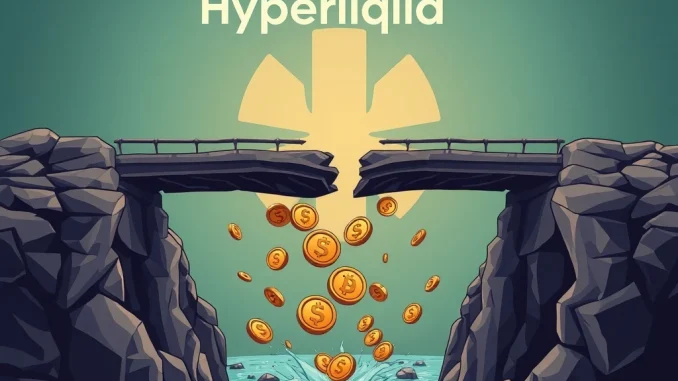
Hyperliquid, a prominent decentralized exchange (DEX), recently paused Hyperliquid USDC withdrawals. This suspension began around 4:00 p.m. UTC. U.Today first reported this critical development. The immediate impact affected users attempting to move their USDC holdings. While USDC withdrawals ceased, reports suggested that other asset withdrawals might still be possible. Deposits to the platform, importantly, remained unaffected throughout this period. This selective halt pointed to a specific issue rather than a platform-wide collapse.
The decision to halt Hyperliquid withdrawals was not taken lightly. It stemmed from a significant market event. This incident involved substantial financial losses. Platforms often implement such measures to prevent further damage. They also aim to protect remaining user funds. The immediate concern for many users was the duration of the halt. Furthermore, they questioned the security of their assets. This situation underscored the inherent volatility and risks within the crypto market, especially in DeFi environments.
Unpacking the POPCAT Manipulation Incident
The root cause of the withdrawal suspension traces back to a brazen market manipulation incident. This event centered around POPCAT, a popular memecoin. An unidentified trader executed a sophisticated scheme. This individual initially withdrew $3 million in USDC from OKX. They then transferred these funds to Hyperliquid. The purpose was to open a massive long position on POPCAT. This action aimed to artificially inflate the token’s price. Such tactics are unfortunately not uncommon in the highly speculative memecoin market.
The trader strategically placed a large ‘buy wall.’ This wall created an illusion of strong demand for POPCAT. Consequently, other traders observed this apparent demand. They then entered the market, pushing the price even higher. The initial $3 million position quickly ballooned. It reached an astounding $30 million in value. This rapid escalation demonstrated the effectiveness of the manipulation. However, this artificial pump was unsustainable. The entire scheme relied on the manipulator’s control over liquidity and market perception. This POPCAT manipulation highlights the dangers of illiquid assets.
The Mechanics of the $4.9 Million Crypto Market Loss
Once the POPCAT price reached its manipulated peak, the trader made their move. They swiftly removed the massive buy wall. This action instantly evaporated the artificial demand. Without the support, POPCAT’s price crashed dramatically. The sudden drop triggered a cascade of liquidations. Many traders holding long positions on POPCAT faced significant losses. This event exposed a critical vulnerability within the market. Hyperliquid’s market-making vault, known as HLP, played a crucial role here. HLP acts as a liquidity provider of last resort. It steps in to manage positions that cannot be liquidated through normal market mechanisms.
Due to the sheer size of the manipulated position, HLP was forced to take it over. The vault absorbed the enormous liquidated position. Subsequently, HLP attempted to close this position in the rapidly declining market. However, the market conditions were extremely unfavorable. HLP ultimately closed the position at a substantial deficit. The total loss incurred by HLP amounted to a staggering $4.9 million crypto market loss. This loss directly impacted the vault’s capital. Consequently, it led to the decision to halt USDC withdrawals. The platform needed time to assess and stabilize its financial position.
Hyperliquid’s Response and Immediate Measures
Following the incident, Hyperliquid’s team acted quickly. They prioritized containing the damage. Halting Hyperliquid withdrawals for USDC was a critical first step. This measure prevented further outflow of funds. It also allowed the platform to conduct a thorough investigation. Transparency during such events is paramount for user trust. The team likely initiated an internal review of the trading activity. They also assessed the resilience of their liquidation mechanisms. Such incidents often lead to immediate policy adjustments. This helps to prevent similar occurrences in the future. The community watched closely for official statements and updates.
The platform also focused on maintaining the integrity of its other operations. Ensuring that deposits and other asset withdrawals remained functional was key. This strategy aimed to minimize broader panic. It also isolated the issue to the specific vulnerability exploited. The incident served as a stark reminder of the challenges in decentralized trading. Robust risk management systems are essential. These systems must handle extreme market conditions. They must also detect and counter sophisticated manipulation attempts effectively.
Impact on Users and the Broader Ecosystem
For Hyperliquid users, the immediate impact was clear. They could not access their USDC funds. This created understandable frustration and concern. Users depend on the ability to withdraw their assets freely. A halt, even temporary, erodes confidence. It forces users to question the security and reliability of the platform. Furthermore, the incident raised questions about the broader implications for decentralized exchanges. If a major DEX can suffer such a significant crypto market loss, what does it mean for others?
The incident also reverberated through the wider DeFi ecosystem. It highlighted the inherent risks of trading highly volatile, illiquid assets like memecoins. Such tokens are often targets for pump-and-dump schemes. They pose unique challenges for DEXs. Platforms must balance open access with robust protective measures. The incident serves as a cautionary tale. It emphasizes the need for continuous improvement in DeFi security protocols. Trust is the bedrock of decentralized finance. Maintaining that trust requires constant vigilance and adaptation.
Addressing DeFi Security Concerns on Hyperliquid
This event underscores critical DeFi security challenges. Decentralized exchanges operate without central intermediaries. This structure offers many benefits. However, it also introduces unique vulnerabilities. Market manipulation, as seen with POPCAT, is one such risk. The incident revealed that even advanced DEXs can be exploited. This happens when sophisticated actors target specific market conditions or asset types. The reliance on automated market makers (AMMs) and liquidation engines means that code dictates outcomes. Any flaw or oversight can lead to significant financial repercussions.
Ensuring robust DeFi security requires a multi-faceted approach. Platforms must implement advanced monitoring systems. These systems should detect unusual trading patterns. They should also identify large, concentrated positions. Furthermore, risk parameters for highly volatile assets need careful calibration. Circuit breakers, for example, can automatically pause trading. This happens when prices move too rapidly. This gives platforms time to intervene. Regular security audits are also indispensable. These audits identify potential vulnerabilities before they are exploited. The goal is to build a more resilient and trustworthy ecosystem for all participants.
Mitigating Risks: Protecting Against Market Manipulation
Both platforms and individual traders have roles in mitigating market manipulation. For platforms like Hyperliquid, enhancing risk management frameworks is paramount. This includes improving liquidity monitoring tools. It also involves developing more sophisticated anomaly detection algorithms. Furthermore, platforms might consider implementing dynamic margin requirements. These requirements could adjust based on asset volatility and liquidity. This helps to prevent single large positions from destabilizing the market. Collaboration with security firms can also bolster defenses. Sharing intelligence on common attack vectors strengthens the entire industry.
For traders, vigilance is key. Understanding the risks associated with memecoins is crucial. These assets often lack fundamental value. Their prices are driven purely by speculation and community sentiment. Diversifying portfolios helps to spread risk. Avoiding overexposure to single, highly volatile assets is also wise. Always conduct thorough due diligence before trading any asset. Look for signs of artificial price movements. These might include sudden, unexplained pumps on low-volume tokens. Education remains one of the most powerful tools against manipulation. Informed traders are less likely to fall victim to such schemes. Ultimately, a collective effort from platforms, regulators, and users is needed to create a safer trading environment.
The Hyperliquid incident serves as a powerful reminder of the inherent risks in the fast-paced world of decentralized finance. The halt of Hyperliquid USDC withdrawals due to a significant POPCAT manipulation leading to a $4.9 million crypto market loss highlights the constant need for enhanced DeFi security. While the situation remains under active management, it prompts crucial discussions about market integrity, risk management, and user protection in the DeFi space. Platforms must continuously adapt and strengthen their defenses. Users, too, must remain educated and cautious. Only through collective effort can the crypto ecosystem truly mature and become more resilient against malicious actors.
Frequently Asked Questions (FAQs)
1. Why did Hyperliquid halt USDC withdrawals?
Hyperliquid halted USDC withdrawals after its market-making vault (HLP) incurred a $4.9 million loss. This loss resulted from a large-scale market manipulation incident involving the memecoin POPCAT.
2. What was the POPCAT manipulation incident?
An unidentified trader withdrew $3 million in USDC from OKX to open a massive long position on POPCAT on Hyperliquid. This artificially inflated POPCAT’s price. The trader then removed the ‘buy wall,’ causing a price crash and leading to a significant liquidation that HLP had to absorb.
3. Are other assets on Hyperliquid affected by the withdrawal halt?
According to initial reports, only USDC withdrawals were halted. Withdrawals for other assets may still be possible, and deposits to the platform remain unaffected.
4. What is HLP and its role in this incident?
HLP is Hyperliquid’s market-making vault. It acts as a liquidity provider of last resort. In this case, HLP was forced to take over and close the manipulated POPCAT position after it could not be liquidated normally, resulting in the $4.9 million loss.
5. What does this incident mean for DeFi security?
The incident highlights the ongoing challenges in DeFi security, particularly concerning market manipulation and the risks associated with highly volatile, illiquid assets like memecoins. It underscores the need for robust risk management, advanced monitoring, and improved liquidation mechanisms on decentralized exchanges.
6. What steps can users take to protect themselves from similar incidents?
Users should exercise caution when trading highly volatile assets, conduct thorough due diligence, diversify their portfolios, and avoid overexposure to single tokens. Staying informed about market dynamics and potential manipulation tactics is also crucial.